How much food have you thrown away simply because of the date on the package?
For many people, the answer is probably more than they realize.
A yogurt disappears into the trash the morning after its printed date. A carton of milk is poured down the sink without being opened. Pasta, rice, canned goods, and other pantry staples are discarded because the calendar says they’re “expired.”
Yet in many cases, that date doesn’t mean the food suddenly became unsafe overnight.
One of the biggest misconceptions about food labeling is that every printed date marks a strict deadline for safety. In reality, most dates found on grocery products are intended to indicate when the manufacturer believes the food will be at its best quality—not necessarily the moment it becomes dangerous to eat.
Understanding the difference can help reduce unnecessary food waste while still keeping your household safe.
Labels such as “Best if Used By” or “Best Before” generally refer to flavor, texture, or overall quality. After that date, a product may gradually lose freshness or taste, but it may still be perfectly usable if it has been stored properly and shows no signs of spoilage.
A “Sell By” date is primarily for retailers, helping stores manage inventory and rotate products on the shelves. It is not usually intended as a safety deadline for consumers.
Some products also carry a “Use By” date. While this often relates to quality as well, certain highly perishable foods and products such as infant formula should always be handled according to the manufacturer’s instructions. Infant formula, in particular, should not be used after its expiration date.
That distinction matters.
Instead of relying only on the calendar, it’s often helpful to consider the condition of the food itself—provided it has been stored safely throughout its life.
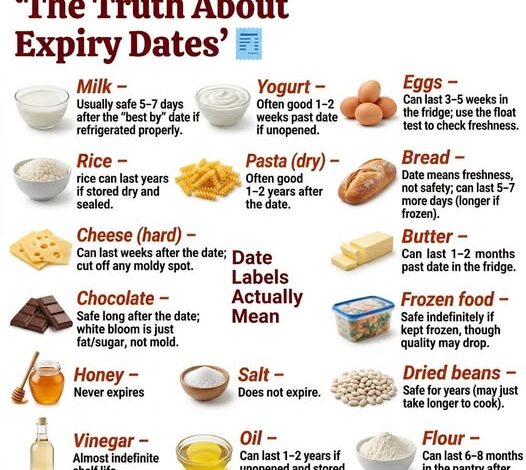
Milk, for example, may remain good beyond its printed date if it has been continuously refrigerated. Before discarding it, check for obvious signs of spoilage such as a sour odor, curdling, or an unusual appearance.
Eggs can also last longer than many people expect when refrigerated properly. One commonly used home check is the water test: eggs that sink and lie flat are generally fresher, while those that float should be discarded. Although this test offers a useful indication of age, it should be considered alongside proper storage practices and any signs of spoilage.
Dry pantry staples such as rice, pasta, flour, and many dried beans can often remain usable for long periods when stored in sealed containers in a cool, dry place. Over time, quality may gradually decline, but properly stored products frequently remain suitable for cooking well after their printed quality dates.
Canned foods are another example.
As long as cans remain intact—with no swelling, severe dents along the seams, rust that compromises the metal, or leaking—they often have a long shelf life. If a can is bulging, damaged, or releases an unusual odor when opened, it should be discarded immediately.
Freezing is another valuable tool for reducing waste.
Many meats, poultry, seafood, bread products, and prepared meals can be safely frozen before spoilage occurs, extending their usable life significantly. While freezing may affect texture in some foods, it generally slows bacterial growth and helps preserve food until you’re ready to use it.
The key, however, is freezing food before it has spoiled—not after.
Confusion about date labels contributes to a much larger issue.
Every year, enormous amounts of edible food end up in landfills simply because consumers misunderstand what those labels mean. At the same time, many households are working hard to stretch grocery budgets as food prices continue to rise.
Throwing away perfectly good food benefits no one.
Reducing waste doesn’t require taking unnecessary risks.
Instead, it means combining common sense with safe food-handling practices.
Store foods at appropriate temperatures.
Refrigerate perishables promptly.
Freeze items you won’t use in time.
Inspect food for changes in smell, texture, appearance, or mold before deciding whether to keep or discard it.
When in doubt about a highly perishable food that may have been improperly stored or left at unsafe temperatures, it’s always safest to throw it away.
Food safety should never be compromised to avoid waste.
But neither should perfectly edible food be discarded automatically because a quality date has passed.
A little knowledge can go a long way.
Learning what food labels actually mean helps families make more informed choices, reduce unnecessary waste, and get the most value from the groceries they bring home.
Sometimes the smartest decision isn’t to trust the date alone.
It’s to combine that information with proper storage, careful observation, and good food safety habits.
That small change in perspective can save money, reduce environmental waste, and encourage a greater appreciation for the food we work so hard to put on our tables—one thoughtful decision at a time.