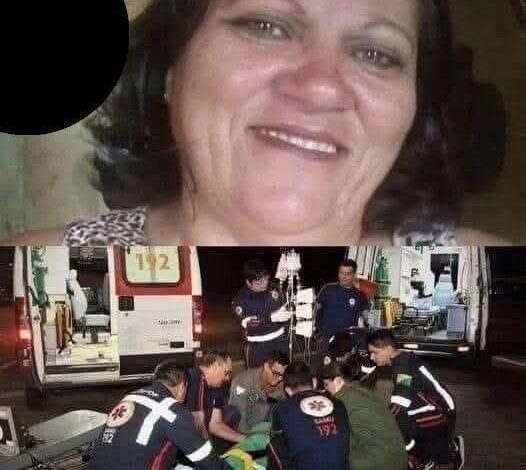
The morning began like countless others.
She followed the same familiar routine she had repeated hundreds of times before, moving through the quiet rhythm of an ordinary day without any hint that it would be her last. Nothing about those first moments suggested tragedy. There were no warnings, no dramatic signs, no reason for family or friends to imagine that, within a matter of hours, the woman they loved would be gone.
Then everything changed.
Neighbors who had seen her earlier going about her day were later confronted with flashing emergency lights outside her home. Inside, paramedics fought to understand what had happened as she lay in agonizing pain. Despite their efforts, there was nothing they could do. By the time help arrived, the situation had already become irreversible.
The news spread quickly through the neighborhood.
People stepped onto their porches, exchanged anxious glances, and asked the same heartbreaking question: How could someone who seemed perfectly fine just moments earlier be gone?
For those closest to her, the shock has been almost impossible to process.
Family members continue to replay every conversation, every phone call, and every ordinary interaction, searching for a clue they may have missed. Friends struggle to reconcile the vibrant, caring woman they knew with the devastating reality of her sudden death. Many still find themselves expecting to see her familiar smile or hear her voice, only to be reminded that she will never walk through the door again.
That uncertainty has made the loss even harder to bear.
Investigators are now carefully reconstructing the final hours of her life, examining every detail that might explain how an apparently routine day ended in tragedy. Detectives and medical experts are reviewing her activities, the products she used, her medical history, and any circumstances that could have contributed to her unexpected collapse.
At this stage, officials have not announced a definitive cause.
Among the possibilities being examined are whether she experienced a severe reaction to a product she had recently used, whether an undiagnosed medical condition suddenly became life-threatening, or whether multiple factors combined in a way that no one could have anticipated. Until the investigation is complete, authorities have urged the public to avoid speculation and allow the evidence to guide their conclusions.
That evidence will largely depend on the findings of the autopsy.
Medical examiners hope the examination will provide the answers her family desperately seeks, revealing whether an underlying illness, an unexpected reaction, or another medical event was responsible for her death. Those findings may eventually explain how she died.
They cannot explain why it happened to her.
For the people who loved her, no report will erase the emptiness left behind.
Friends describe her as kind, generous, and always willing to help someone in need. She was the type of person who remembered birthdays, checked in on neighbors, and quietly offered support without expecting recognition. The contrast between the gentle life she lived and the painful circumstances of her final moments has left many struggling to accept what happened.
Some neighbors have admitted they now look differently at the routines they once performed without a second thought.
Everyday habits—using common household products, preparing meals, taking medication, or following familiar personal-care routines—suddenly feel less ordinary when an unexplained tragedy occurs so close to home. While investigators have not determined whether any particular product or activity played a role in this case, the uncertainty itself has fueled difficult conversations about health, safety, and how quickly life can change.
Medical experts often remind the public that sudden medical emergencies can arise from a wide range of causes, some of which develop silently over many years without producing noticeable symptoms. In other cases, severe allergic reactions or other unexpected health events may occur with little warning. That is precisely why investigators are taking a careful, evidence-based approach rather than rushing to conclusions before all the facts are known.
Until those answers arrive, grief continues to fill the space where certainty should be.
Flowers have appeared outside her home. Messages of sympathy have spread throughout the community. Friends have shared stories of her kindness, remembering small acts of generosity that now feel even more meaningful. Each memory paints the picture of someone whose greatest impact was not found in headlines but in the quiet ways she cared for the people around her.
Those memories have become a source of comfort, even as questions remain unanswered.
Her death also serves as a sobering reminder of life’s unpredictability. Most people move through familiar routines believing tomorrow will unfold much like today. We expect ordinary moments to remain ordinary. Yet tragedy has a way of arriving without invitation, interrupting lives that only hours earlier seemed completely normal.
That reality is painful, but it also underscores the importance of staying attentive to our health, seeking medical care when something feels wrong, and relying on credible information rather than rumor whenever unexplained events occur.
As investigators continue their work, her loved ones wait for the answers only science may be able to provide. They hope the autopsy will replace uncertainty with understanding, even if it cannot lessen the heartbreak.
Because in the end, every report will contain medical facts.
What it cannot capture is the life behind them—a woman remembered for her warmth, whose final moments were marked by suffering no one should endure, and whose sudden loss has left an entire neighborhood mourning, searching for answers, and painfully aware of just how fragile an ordinary day can be.