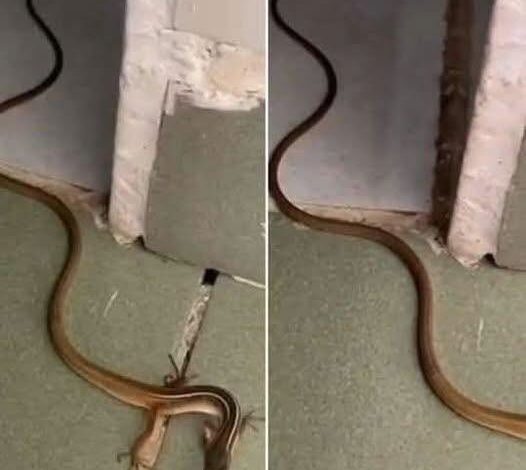
Few household surprises trigger panic as quickly as spotting a snake indoors.
One moment everything feels normal. The next, you catch a glimpse of something long and slender disappearing beneath a piece of furniture or stretched quietly across the floor. Even if the snake isn’t behaving aggressively, the unexpected encounter can leave anyone startled.
Fortunately, finding a snake in your home doesn’t automatically mean you’re facing a dangerous situation.
In many cases, snakes enter buildings for practical reasons rather than to interact with people. They may be searching for warmth during cooler weather, looking for a sheltered hiding place, or following food sources such as mice, rats, or insects. Once inside, most snakes prefer to remain hidden and will often try to avoid human contact whenever possible.
Because of that, one of the biggest risks is not the snake itself—it is the reaction it provokes.
Trying to catch, corner, or kill a snake can increase the likelihood of someone being bitten, particularly if the animal feels trapped and has no clear escape route. Even nonvenomous snakes may bite in self-defense if they believe they are being threatened.
The safest response is to stay calm and create space.
If possible, keep a safe distance from the snake and make sure children and pets are moved well away from the area. If the snake is confined to a single room, close the door to help limit its movement. Avoid blocking the snake’s escape path or attempting to handle it yourself.
It’s also a good idea to observe the snake from a safe distance, if you can do so without approaching it. Noting its approximate size, color, or location may help wildlife professionals identify it, but don’t put yourself at risk to get a closer look or photograph.
Rather than trying to solve the problem alone, contact the appropriate local service.
Depending on where you live, that may include animal control, a wildlife rehabilitation organization, a licensed wildlife removal specialist, or a pest control company experienced in handling snakes. These professionals have the training and equipment needed to remove the animal as safely and humanely as possible.
If you believe the snake may be venomous or someone has been bitten, leave the area immediately and contact emergency services. Do not attempt to capture or kill the snake, as this can increase the risk of additional injuries.
Once the snake has been removed, it’s worth taking time to understand how it may have entered your home.
Even surprisingly small openings can provide access. Inspect the exterior of your house for gaps around doors, windows, utility pipes, vents, foundations, and crawl spaces. Sealing cracks, installing door sweeps, repairing damaged window screens, and covering larger openings with appropriate mesh can all help reduce the chances of wildlife finding its way inside.
Your yard also plays an important role.
Piles of wood, dense vegetation, tall grass, and accumulated debris can provide attractive hiding places for snakes and the animals they hunt. Keeping vegetation trimmed, reducing clutter, and storing firewood away from the home’s foundation can make the area less inviting.
Controlling rodent populations is equally important.
If mice or rats are living in or around your home, they can attract snakes looking for an easy meal. Addressing food sources, sealing entry points for rodents, and maintaining good sanitation can help discourage both pests and the predators that follow them.
It’s also worth remembering that snakes play an important role in many ecosystems.
By feeding on rodents and other small animals, they help keep pest populations under control and contribute to a healthy natural environment. Most species are not interested in confronting people and would rather retreat than fight.
That doesn’t mean you want one in your living room.
But it does mean the best outcome is usually one in which both people and the snake remain unharmed.
A calm response, professional assistance, and a few preventive measures can turn a frightening surprise into a manageable situation.
With a well-maintained home and attention to potential entry points, your next encounter with a snake is far more likely to happen where it belongs—out in nature, from a comfortable distance, rather than across your living room floor.