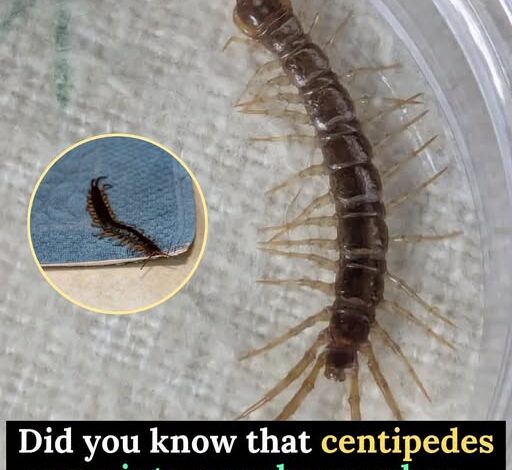
Spotting a centipede darting across your wall can be an unsettling experience.
With its many legs moving in perfect rhythm and its remarkable speed, it often disappears before you have time to react. For many people, the first instinct is to grab a shoe or spray and get rid of it as quickly as possible.
But that unexpected visitor may be telling you something about your home.
Centipedes don’t wander indoors by accident. They usually enter buildings because they have found the conditions they need to survive—moisture, shelter, and a steady supply of food. In many cases, their appearance can serve as a clue that other small pests are already living in places you rarely inspect.
Moisture is one of the biggest attractions.
Bathrooms, laundry rooms, crawl spaces, basements, and other damp areas provide an ideal environment for many species of house centipedes. Leaking pipes, condensation, poor ventilation, or consistently high humidity can all create conditions that encourage them to stay.
Dark, undisturbed spaces are equally appealing.
Behind storage boxes, beneath sinks, inside closets, and under furniture, centipedes find cool hiding places where they can remain out of sight during the day before becoming active at night.
Their presence may also point to another hidden reality.
Centipedes are predators.
Unlike insects that feed on food scraps, wood, or fabrics, house centipedes hunt other small creatures. Their diet commonly includes ants, cockroaches, silverfish, termites, spiders, bed bug nymphs, flies, moth larvae, and other household insects. If a centipede decides your home is worth staying in, it often means it has found enough prey to support itself.
In that sense, a centipede can act as a natural indicator rather than the primary problem.
The animal itself isn’t usually what attracts concern—it is the conditions that allow both predator and prey to thrive.
That doesn’t mean your home is dirty.
Even clean, well-maintained homes can occasionally attract centipedes, particularly in humid climates or older buildings where tiny cracks and damp areas are difficult to eliminate completely. Cleanliness certainly helps discourage many pests, but moisture and access points often play an even larger role.
Interestingly, house centipedes provide a surprising ecological service.
By feeding on a variety of nuisance insects, they naturally help keep populations of other household pests under control. Rather than damaging furniture or contaminating food, they spend much of their time hunting creatures that many homeowners would much rather not have around.
Of course, that doesn’t mean everyone wants one running across the living room.
If you’d rather discourage centipedes from taking up residence, the most effective approach is to make your home less inviting for both them and their prey.
Start by reducing excess moisture.
Repair leaking faucets and pipes, improve ventilation in bathrooms and laundry rooms, use exhaust fans where appropriate, and consider a dehumidifier if dampness is an ongoing issue, especially in basements or crawl spaces.
Next, inspect your home’s exterior.
Seal cracks around foundations, windows, doors, utility lines, and vents to reduce entry points. Installing door sweeps and repairing damaged screens can also make it more difficult for centipedes and other insects to get inside.
Managing other pests is equally important.
Because centipedes rely on insects for food, reducing populations of ants, cockroaches, silverfish, and other small pests naturally makes your home less attractive to their predators as well.
Keeping storage areas organized can also help.
Removing piles of cardboard, paper, and clutter reduces the number of dark hiding places where both insects and centipedes prefer to shelter during the day.
Fortunately, house centipedes are generally considered harmless to people.
They are shy animals that typically avoid human contact whenever possible. Although they possess venom to subdue small prey, bites to humans are uncommon and, when they do occur, are usually mild, though reactions can vary from person to person.
Perhaps the most fascinating thing about a centipede isn’t its appearance.
It’s what it quietly reveals.
Its sudden dash across the floor is often less a sign of invasion than a glimpse into the hidden ecosystem that exists within every home. Tiny insects search for food and shelter. Predators follow them. Moisture shapes where they gather. Every crack, leak, and forgotten corner becomes part of that delicate web.
Understanding that relationship changes the way many people see these fast-moving hunters.
Instead of viewing them as mysterious intruders, it’s possible to recognize them as indicators that your home may benefit from a little extra attention—whether that’s improving ventilation, repairing hidden leaks, sealing entry points, or addressing other household pests.
In the end, the goal isn’t simply to remove the centipede.
It’s to create an environment where neither the hunter nor its prey has much reason to stay.
A dry, well-maintained home doesn’t just discourage unwanted visitors.
It supports a healthier, more comfortable living space for the people who call it home.