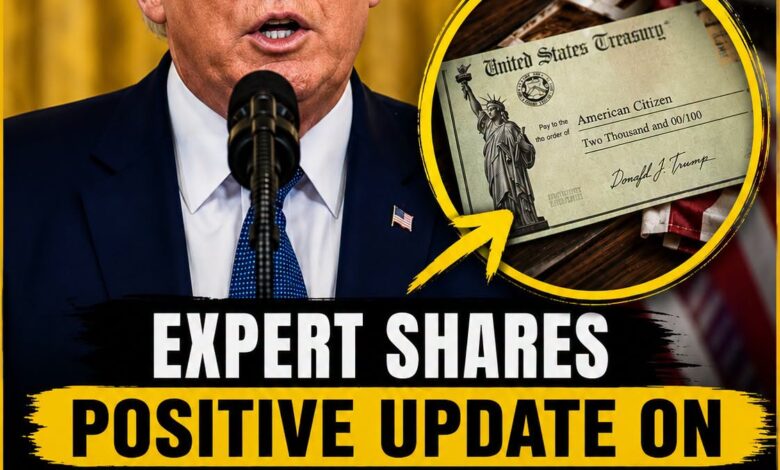
For countless Americans struggling with rising costs, the promise of a $2,000 “tariff dividend” has become a source of both hope and uncertainty.
The idea, promoted in political discussions as a way to return some tariff revenue to low- and middle-income households, quickly captured public attention. For families facing higher grocery bills, housing costs, and everyday expenses, the prospect of a direct payment sounded like meaningful relief.
But hope and reality have not yet aligned.
Despite widespread discussion of the proposal, no federal law has been enacted creating such a payment, no official government program has been announced, and neither the U.S. Treasury nor the Internal Revenue Service has opened an application process or issued instructions for receiving a $2,000 tariff-related check.
That gap between political messaging and official action has left many Americans asking the same question:
Is the money actually coming?
At this point, the answer remains uncertain.
Financial analyst Matthew Prchal has argued that timing is critical if lawmakers ultimately decide to move forward. According to his assessment, the political and economic value of sending relief payments diminishes the longer families are forced to absorb higher living costs without additional support. For households already stretched by debt, inflation, and unexpected expenses, assistance delivered months later may not provide the same immediate relief it would today.
Even if policymakers were to embrace the proposal, significant financial questions remain.
Providing a $2,000 payment to millions of eligible Americans would require tens of billions of dollars. Economists and budget experts have noted that whether tariff revenue alone could finance such a large program is uncertain, potentially requiring additional funding or congressional appropriations depending on the final structure of any legislation.
Until lawmakers resolve those questions, the proposal remains exactly that—a proposal.
The absence of official information has also created another problem.
Scammers have been quick to exploit public interest.
Fraudulent websites, text messages, emails, and phone calls have begun claiming that recipients can “claim,” “verify,” or “expedite” a supposed tariff payment by providing personal information or paying processing fees. These schemes are designed to steal identities, banking details, or money from people hoping the promised checks have finally arrived.
Consumer protection experts urge the public to remain cautious.
If a government payment program is ever authorized, official information would come through recognized federal agencies such as Congress, the U.S. Treasury, and the IRS—not through unsolicited texts, social media posts, or unofficial websites requesting sensitive information.
For now, there is an important distinction that cannot be overlooked.
Political proposals are not the same as enacted policy.
Until Congress passes legislation and the appropriate federal agencies announce the details, there is no established $2,000 tariff dividend available for Americans to claim.
That uncertainty has become increasingly frustrating for many households already coping with higher prices and tighter budgets. Families looking for financial relief continue to watch Washington, hoping for clarity while trying to manage the realities of everyday expenses.
Whether the proposal ultimately becomes law remains to be seen.
Until then, Americans should rely only on announcements from official government sources, remain skeptical of anyone claiming they can help secure a payment, and remember that discussion alone does not create a government benefit.
For millions waiting for answers, the situation remains unchanged.
The promise has generated headlines and expectations, but until lawmakers act and federal agencies formally implement a program, the proposed $2,000 payment remains a political proposal—not an available benefit.