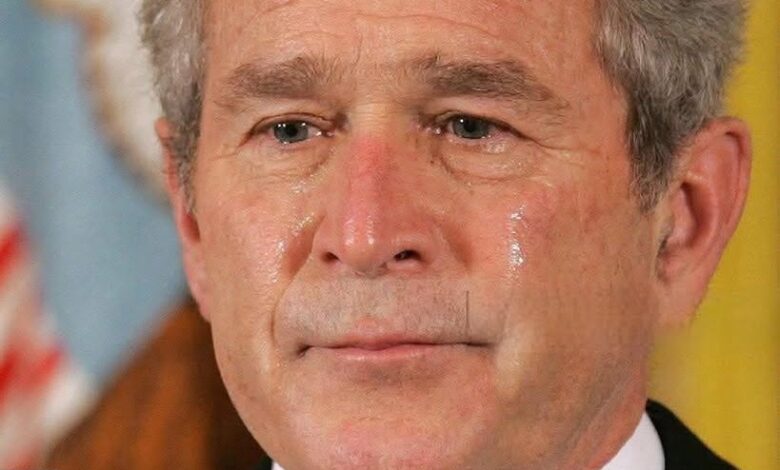
When George W. Bush stepped onto the pitcher’s mound before the opening game of the World Series, millions of viewers focused on one thing: the ceremonial first pitch. For many, it was a nostalgic moment, recalling his unforgettable strike at Yankee Stadium following the September 11 attacks. But beneath the cheers and television cameras, there was another story unfolding—one that had nothing to do with baseball and everything to do with resilience.
At first glance, his walk toward the mound seemed ordinary enough.
Look a little closer, however, and subtle details emerged.
His movements were measured rather than fluid. His posture appeared more deliberate than relaxed. There was a noticeable caution in the way he carried himself, as though every step had been carefully considered before it was taken. It wasn’t stage fright or uncertainty. It was the unmistakable body language of someone learning to trust a body that had recently undergone major surgery.
Months earlier, Bush had undergone lumbar spinal fusion, a significant operation performed to stabilize the lower spine. The procedure typically involves permanently joining two or more vertebrae using metal screws, rods, and bone grafts to reduce pain and restore stability. While often highly effective, recovery is rarely quick or effortless. Patients frequently spend months rebuilding strength, mobility, and confidence as they adjust to permanent changes in how they move.
A surgery of that magnitude doesn’t simply heal and disappear.
It changes everyday life.
Standing for extended periods can feel different. Sitting, bending, twisting, and even sleeping often require new habits. Activities that once happened automatically become conscious decisions, especially during the long recovery process. Throwing a baseball from a professional pitching mound—a motion that demands balance, rotation, and coordination throughout the entire body—can present an even greater challenge.
Yet Bush chose to do it anyway.
As footage of the ceremonial pitch circulated online, attention quickly shifted away from the symbolism of the event and toward the throw itself. The ball bounced before reaching home plate, prompting the usual flood of comments across social media. Some viewers poked fun at the throw, while others questioned whether age had simply caught up with the former president.
But those reactions overlooked an important piece of the story.
His daughter, Jenna Bush Hager, offered a different perspective.
Rather than making excuses or asking people to lower their expectations, she reminded viewers of the context many never knew. Her father wasn’t simply an aging former athlete stepping back onto a baseball field. He was someone who had recently endured a major spinal operation and was continuing the difficult work of recovery.
Her point wasn’t that the throw deserved sympathy.
It was that courage often looks far less dramatic than people expect.
Sometimes courage is choosing to appear in public even when you know your body may not perform the way it once did.
Sometimes it’s accepting that recovery doesn’t erase every limitation but refusing to let those limitations define you.
Bush’s spokesperson also confirmed that he had undergone the spinal fusion procedure, noting that while recovery had gone well, he has never been someone who dwells on physical setbacks. Those who know him describe a personality that prefers action over complaint. Rather than focusing on discomfort or seeking attention for the challenges he has faced, he tends to fulfill commitments and move forward without making his health the center of the conversation.
That attitude became especially visible during the World Series appearance.
He didn’t ask for special recognition.
He didn’t frame the event as an inspirational comeback.
He simply walked onto the field, greeted the crowd, and threw the pitch.
Only afterward did many people learn what his body had already endured.
Viewed through that lens, the moment takes on a very different meaning.
The bouncing baseball no longer stands as evidence of failure or decline. Instead, it becomes a reminder that recovery is rarely about returning to exactly who you were before. Major surgery often changes what the body can comfortably do, sometimes permanently. Success isn’t always measured by flawless performance. Sometimes it’s measured by the willingness to keep participating in the activities that matter despite those changes.
Recovery isn’t about pretending pain never existed.
It’s about refusing to let pain dictate every future decision.
For many people who have undergone spinal surgery, that lesson feels deeply familiar. Progress often arrives in small victories: walking a little farther, standing a little longer, or completing tasks that once seemed impossible. The goal isn’t perfection. It’s persistence.
Bush’s appearance reflected that reality in a very public setting.
Stepping onto a Major League Baseball field after spinal fusion required more than physical healing. It demanded confidence in a body that had been rebuilt, patience with its new limitations, and the willingness to accept that the outcome might not look exactly as planned.
Those qualities are often overlooked because they don’t create dramatic headlines.
Yet they are precisely what recovery requires.
The World Series crowd may have seen only a former president throwing out the ceremonial first pitch. But behind that familiar tradition stood a man who had spent months adapting to life after major back surgery—a process involving not only medical treatment but determination, discipline, and countless hours of rehabilitation.
In the end, the throw itself mattered far less than the decision to make it.
A baseball bouncing across the infield is easy to notice.
The resilience that carried it there is much harder to see.
Sometimes the strongest demonstration of courage isn’t delivering a perfect performance. It’s showing up anyway, accepting that your body has changed, and refusing to let those changes keep you from stepping back into the spotlight.
That first pitch wasn’t memorable because it was flawless.
It was memorable because it represented something far more enduring: the quiet determination to keep moving forward, even when every step reminds you how far you’ve already come.