Why I Always Ask for a Receipt at McDonald’s — And How It Quietly Improves the Entire Experience

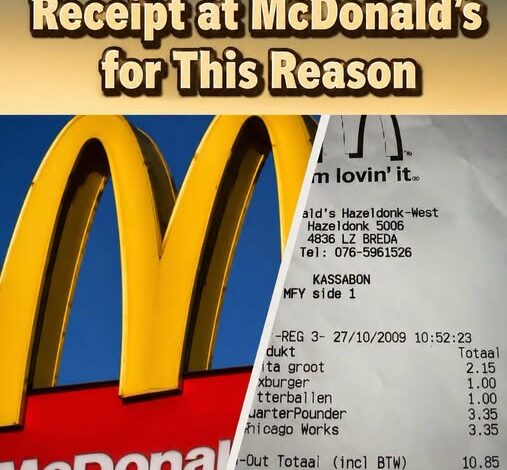
The next time you walk into a McDonald’s, there’s one simple question you may want to ask before you leave the counter: “Could I have my receipt, please?” It sounds almost too ordinary to matter. Most customers either decline the receipt or toss it away without a second thought. Yet according to former employees, that tiny piece of paper can sometimes influence the quality of the service you receive in ways many people never realize.
While it isn’t a magic trick or a guaranteed shortcut to a perfect meal, asking for your receipt has become a well-known tip among fast-food regulars. It’s especially useful for people who appreciate fresh food, accurate orders, and the peace of mind that comes with having proof of their purchase.
The reason lies in a little-known part of how many McDonald’s restaurants evaluate their performance.
Former workers have explained that the company periodically relies on mystery shoppers—sometimes referred to as Gapbusters in certain regions. These anonymous evaluators visit restaurants posing as ordinary customers. Their job is to quietly assess nearly every part of the experience, from the cleanliness of the dining area to the friendliness of the staff, the speed of service, and even whether the fries are served hot and fresh.
After their visit, they submit a detailed report that can affect how a restaurant’s performance is measured.
One important requirement for these mystery shoppers is keeping their receipt. It serves as proof that they actually visited the location and purchased the items they’re reviewing.
That small detail is where things become interesting.
When an employee sees a customer specifically request a receipt, they have no way of knowing whether that person is simply being careful with their purchase or secretly evaluating the restaurant. Since nobody wants their location to receive poor marks, many employees naturally become a little more attentive. They double-check the order, make sure the food looks presentable, and focus a bit more carefully on customer service.
It’s not because they’re trying to deceive anyone. Instead, they’re simply making an extra effort to deliver the level of service the restaurant aims to provide every day.
For customers, that extra attention can sometimes make a noticeable difference.
Imagine stopping by after a long morning, already looking forward to biting into a hot Big Mac or enjoying fries fresh from the fryer. Nobody wants a burger that has been sitting under warming lights for too long or fries that have lost their crispness before reaching the tray.
When employees believe they might be serving someone evaluating the restaurant, they’re often more likely to ensure everything is prepared properly.
That could mean receiving a burger assembled moments earlier instead of one that has been waiting. Your fries may have just come out of the fryer rather than sitting in a holding bin. Even small touches—like making sure the sandwich is wrapped neatly or that every requested condiment is included—may receive a little extra attention.
There are no guarantees, of course. Every restaurant is different, and employees are expected to provide good service regardless of who walks through the door. Still, many former workers say that asking for a receipt can encourage staff to slow down just enough to make sure everything is right.
Beyond the possibility of fresher food, there’s another reason that may be even more practical: mistakes happen.
Fast-food restaurants serve hundreds of customers every day, often during incredibly busy lunch and dinner rushes. Even the most experienced employees occasionally hand out the wrong bag or accidentally leave an item behind.
Perhaps you ordered a crispy chicken sandwich but discover a fish sandwich instead. Maybe your fries are missing, your drink size is incorrect, or a special request—like removing pickles or adding extra sauce—was overlooked.
Without a receipt, resolving those mistakes can sometimes become more complicated, especially when the restaurant is crowded and several similar orders are being prepared at once.
A receipt instantly removes much of that uncertainty.
It clearly shows exactly what you ordered.
It confirms what you paid for.
And if something isn’t right, it gives both you and the employees an easy reference point for correcting the problem quickly.
For older adults in particular, or anyone who prefers avoiding unnecessary confusion, keeping that small slip of paper can save both time and frustration. Instead of trying to remember every item on the order while standing at a busy counter, the receipt provides everything in black and white.
Another overlooked benefit is that receipts can be helpful long after the meal is over. If your credit card is charged incorrectly, if you need to contact customer service, or if you simply want to check what you purchased, the receipt provides a complete record of the transaction.
That makes it useful even if everything went perfectly.
What makes this tip so appealing is its simplicity. You’re not asking for special treatment. You’re not making extra demands or creating more work for employees. Requesting a receipt is a perfectly ordinary part of completing a purchase.
For customers, it may result in a meal that feels a little fresher, an order that’s checked more carefully, and greater confidence that any issues can be resolved without hassle.
For employees, it serves as a gentle reminder to follow the standards they’ve already been trained to meet—prepare the food carefully, verify the order, and give every guest the best experience possible.
Everyone benefits.
So the next time you stop at McDonald’s for your morning coffee, a quick lunch on the road, or a meal with your grandchildren after school, remember one small habit that takes only a few seconds.
Before you walk away from the counter, simply smile and ask, “May I have my receipt, please?”
It may seem like an insignificant request, but according to many former employees, it can encourage greater attention to detail, help protect you if something goes wrong, and sometimes even increase the chances of receiving food that’s as fresh and carefully prepared as possible.
The smallest habits are often the easiest to overlook. Yet every now and then, one simple question can make your next meal just a little better.