My 4-Year-Old Daughter Refused to Cut Her Hair, Crying, ‘When My Dad Comes Back, He Won’t Recognize Me’ – But My Husband Passed Away Long Ago

The first scream stopped the entire salon cold.
Not the kind of tantrum people expect from overtired children or impatient toddlers.
This sounded different.
Sharp.
Terrified.
Desperate.
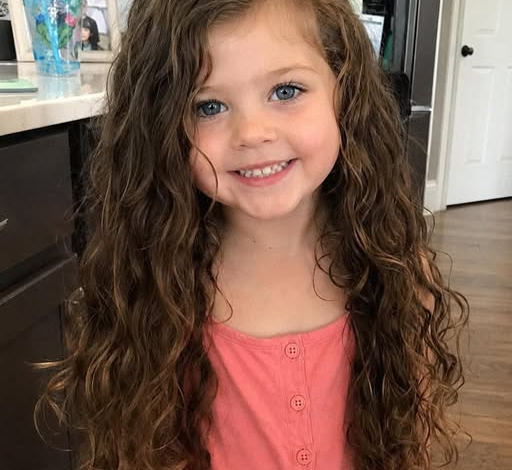
The scissors had barely opened when Olivia threw both hands over her curls and cried out as though someone was trying to take something precious from her forever.
“No! Mommy, no!”
Every conversation inside the salon died instantly.
The woman flipping through magazines near the window looked up.
A blow dryer shut off halfway through a style.
Even Clara, who had been cutting hair for nearly twenty years and had handled everything from screaming toddlers to nervous brides, froze with the silver blades suspended midair.
I stood up so quickly my purse slid off the waiting chair.
“Liv, sweetheart, it’s okay,” I said gently, crossing the room. “Clara is only trimming the ends.”
But Olivia was already crying too hard to hear me.
“Daddy won’t know me!”
The words hit me harder than the scream itself.
For one suspended moment, the entire room blurred.
Because my husband had been dead for three years.
Three years.
Long enough that people had stopped bringing casseroles.
Long enough that neighbors no longer lowered their voices around me.
Long enough that grief had changed from public tragedy into private architecture — something built quietly into the walls of daily life.
But not long enough for me to hear my daughter screaming about her father like he was coming home tomorrow.
Clara slowly lowered the scissors.
“Do you want a minute?” she asked softly.
I could barely answer.
I unclipped the salon cape, lifted Olivia into my arms, and carried her outside while her sobs shook against my shoulder hard enough to hurt my chest.
Rain clouds hung low above the parking lot, turning the afternoon gray and heavy. Cars moved steadily down the road beyond the strip mall, ordinary life continuing while my own suddenly tilted sideways.
Because that sentence —
Daddy won’t know me —
did not sound like childhood imagination.
It sounded rehearsed.
In the car, Olivia curled into her booster seat clutching her stuffed rabbit so tightly its floppy ears bent backward beneath her fingers.
I buckled her in with trembling hands.
“You can tell me anything, baby,” I whispered. “I’m not mad.”
Her cheeks were blotchy from crying.
“Are you sad because I didn’t cut my hair?”
“No,” I said carefully. “I just need to understand.”
The windshield wipers clicked softly once across dry glass before I realized they were still on from the rain earlier.
“Why would Daddy not recognize you?”
Olivia looked down immediately.
That silence frightened me more than tears would have.
Children pause differently when carrying secrets given to them by adults.
Finally she whispered:
“Grandma Patty said my curls are how Daddy finds me.”
I stopped breathing for a second.
Outside the car window, Clara stepped out of the salon carrying Olivia’s purple hair clip and my purse. She approached slowly, her face tense with concern.
“You forgot these,” she said quietly.
I took them automatically.
Then Clara glanced toward Olivia and lowered her voice.
“Allie… call me later.”
I nodded once.
Because suddenly I knew something was terribly wrong.
At home, Olivia ran to her bedroom immediately while I stood frozen in the kitchen staring at nothing.
The dishwasher hummed.
The refrigerator clicked softly.
A cartoon played faintly upstairs from Olivia’s room.
Ordinary sounds.
But inside me, panic spread rapidly.
Patty.
My mother-in-law had always loved Olivia fiercely. Sometimes overwhelmingly so. After William died in the car accident, Patty’s grief became almost consuming. She clung to every photograph, every belonging, every tiny resemblance between my daughter and her father.
I used to excuse it.
Used to tell myself grief simply reshapes people strangely.
But now?
Now my four-year-old believed her dead father might fail to recognize her if her hair changed.
That was not harmless grief anymore.
That was emotional damage.
I found Olivia sitting cross-legged on her bedroom floor arranging dolls carefully in front of the dollhouse William built during my pregnancy.
She looked up nervously when I entered.
“Sweetheart,” I said gently, kneeling beside her, “why do you think Daddy is coming back?”
“Because he does.”
The certainty in her voice made my stomach twist.
“Where?”
“At Grandma’s house.”
My heartbeat became painfully loud.
“She told you Daddy visits there?”
Olivia nodded slowly.
Then she whispered:
“But it’s secret. Grandma said you’d ruin it.”
The room suddenly felt airless.
“What would I ruin?”
“Daddy finding me.”
I stared at my daughter’s face — William’s eyes staring back at me from a child who should have been worrying about crayons and playground games, not carrying the emotional fantasies of grieving adults.
“Baby,” I said carefully, “Daddy loved you very much. But Daddy died.”
She frowned immediately.
“No. Grandma says you only say that because you don’t want me waiting.”
I had to leave the room before she saw my face break.
In the hallway, I pressed one hand against the wall and fought the overwhelming urge to drive straight to Patty’s house and scream until my throat tore open.
Instead, I forced myself to breathe.
Then I started looking for proof.
Inside Olivia’s daycare backpack, tucked beneath a sweater, I found a folded piece of construction paper.
My daughter had drawn three people:
herself,
Grandma Patty,
and a tall blond man standing beside a house.
Above him, written in Patty’s neat handwriting, were the words:
Daddy’s home.
My vision blurred instantly.
But the back hurt even worse.
A photocopy of William holding Olivia as a baby had been taped there carefully. Underneath it, Patty had written:
Don’t forget who you belong to, Olivia.
I sat at the kitchen table staring at those words for a very long time.
Because suddenly years of comments rearranged themselves into something uglier.
Patty complaining when I donated William’s old jackets.
Patty criticizing me for repainting the guest room.
Patty muttering that “William’s side” deserved more influence over Olivia’s life.
I used to think she was grieving.
Now I realized she was trying to preserve ownership.
The next morning, I called Mr. Wallace, the attorney who handled William’s estate.
He answered warmly at first.
Then I asked:
“Has Patty contacted you recently?”
The silence before his response told me everything.
“She called last month,” he admitted carefully.
“What did she want?”
My fingers tightened around the phone.
“She asked whether a grandparent could petition for oversight of a child’s trust if the surviving parent appeared emotionally unstable.”
I felt physically cold.
“She used those words?”
“Yes.”
“And?”
“She also asked whether erasing the deceased parent’s memory could support expanded visitation.”
I looked toward Olivia’s bedroom door upstairs.
Suddenly everything connected:
the stories,
the fear,
the manipulation.
Patty was building a narrative.
And my child was carrying it.
That afternoon I drove to Patty’s house alone.
She opened the door wearing William’s old college sweatshirt.
For one terrible second, seeing that familiar fabric almost softened me automatically. Grief does that. It tricks people into mistaking pain for innocence.
“Where’s my girl?” Patty asked immediately.
“At home.”
Her expression changed instantly.
“Why?”
I stepped inside and placed Olivia’s drawing on the coffee table between us.
“What is this?”
Patty barely glanced down.
“A drawing.”
“Try again.”
Her jaw tightened.
“You stopped bringing her every Sunday,” she snapped. “You packed away William’s things. You act like he never existed.”
“I took my daughter for a haircut,” I said quietly. “And she screamed because she thinks her father won’t recognize her anymore.”
Patty looked away.
That silence confirmed everything.
“Did you tell her William was coming back?”
“I told her he’s still with us.”
“No,” I said sharply. “You told her he would find her.”
Tears flooded Patty’s eyes instantly.
“She looks like him.”
“There it is,” I whispered.
Every conversation suddenly narrowed toward the truth neither of us wanted to say aloud.
Olivia was becoming less granddaughter and more memorial.
Patty reached for William’s photograph sitting beside the lamp.
“You don’t understand what it’s like to lose a son.”
The grief in her voice was real.
That was what made everything so complicated.
Because broken people can still cause harm while genuinely suffering themselves.
“No,” I said softly. “But I do understand what it’s like to lose my husband and still wake up every day because a child needs me.”
Patty cried harder then.
But I could not comfort her anymore.
Not after hearing Olivia whisper:
Daddy might not pick me.
Three days later, legal papers arrived.
Patty was petitioning for expanded visitation rights and requesting review of Olivia’s trust arrangements. Inside the filing, she claimed I was emotionally unstable and attempting to erase William’s memory from our daughter’s life.
I read that sentence twice.
Then a third time.
The cruelty of it stunned me.
She had planted fear inside my child and was now trying to use the resulting confusion as evidence against me.
For several minutes I simply sat at the kitchen table while rage and heartbreak battled each other beneath my ribs.
Then survival took over.
I called Clara first.
“Can you write down exactly what happened at the salon?”
“Already started,” she said immediately.
Then came Dr. Keene, the child therapist who gently explained that Olivia’s fears appeared “adult reinforced” and emotionally distressing.
Then came screenshots,
texts,
drawings,
copies of Patty’s notes.
Every night after Olivia slept, I built a folder.
Not out of revenge.
Out of protection.
Because for too long, I had mistaken Patty’s grief for harmless sadness instead of recognizing how deeply she was pulling my daughter into it.
The hardest night came before mediation.
Olivia climbed into my bed carrying Bunny tucked beneath one arm.
“Mommy?”
“Yeah, sweetheart?”
“If Daddy comes and I’m not at Grandma’s house, will he be mad?”
I pulled her against my chest immediately.
“No. Daddy would never be mad at you for being home with me.”
“But Grandma cries when I want to leave.”
That sentence nearly destroyed me.
Children should never feel responsible for regulating adult grief.
“I know,” I whispered, brushing curls away from her forehead. “But adults aren’t allowed to make kids carry their sadness.”
She stared at Bunny quietly.
Then:
“Do I have to pretend Daddy is coming back?”
My throat closed completely.
“No, baby,” I whispered. “You can stop pretending.”
At mediation, Patty arrived clutching a framed photograph of William like armor.
She spoke first.
“I lost my son,” she said tearfully. “And now I’m watching his wife erase him from his daughter.”
Part of me still hurt for her.
That was the tragedy.
Because grief had hollowed her out so badly she no longer understood where memory ended and possession began.
I handed over Clara’s statement.
Dr. Keene’s report.
The drawing.
The note.
Then Mr. Wallace quietly confirmed Patty’s call regarding the trust.
The room changed after that.
Especially when the mediator read aloud:
Don’t forget who you belong to, Olivia.
No one spoke for several seconds.
Finally the mediator looked directly at Patty.
“Did you tell Olivia her father was coming back?”
Patty cried immediately.
“I just wanted her to remember him.”
“You wanted her frozen,” I said softly. “Because that’s where you wanted William to stay.”
Patty flinched like I slapped her.
But it was true.
She wanted Olivia unchanged:
same curls,
same innocence,
same dependency,
same closeness to the version of William she lost.
Growth itself had begun feeling threatening to her because every change proved time was moving forward without her son.
But children are supposed to grow.
That is the entire point of loving them.
In the end, the agreement allowed only supervised visits and mandatory grief counseling. Patty lost any attempt at controlling the trust or expanding custody rights.
Outside afterward, she stood near the curb looking suddenly much older than before.
“I miss him,” she whispered.
“So do I.”
“I didn’t mean to hurt Olivia.”
And perhaps that was true too.
But intent does not erase damage.
A month later, Olivia asked to return to the salon.
Clara crouched beside the chair carefully.
“You’re in charge today, okay?”
Olivia climbed up holding Bunny in her lap.
Clara lifted one curl gently.
“This much?”
Olivia looked at me first.
Not terrified this time.
Just uncertain.
“Your choice,” I said.
The scissors opened.
Olivia squeezed my hand tightly but did not scream.
When it was over, she touched the shortened curl carefully.
“Mommy?”
“Yes, baby?”
“Do I still look like me?”
I kissed the top of her head.
“More than ever.”
That night, we placed the tiny curl inside William’s memory box beside old photographs and hospital bracelets and the blue flannel shirt that still smelled faintly like cedar and laundry soap if I pressed my face into it hard enough.
“Daddy still loves me?” Olivia whispered sleepily.
“Always,” I told her.
And finally —
without fear,
without confusion,
without someone else’s grief speaking through her —
she believed me.