We often think of communication as something that happens through words, facial expressions, or gestures. Yet our bodies tell stories long before we speak, and even something as ordinary as the way we stand or walk can reveal subtle clues about how we move through the world.
The legs, in particular, play an important role in that silent language.
Every step reflects a combination of balance, strength, flexibility, and habit. Some people walk with long, fluid strides that suggest confidence and ease. Others take shorter, more cautious steps, perhaps because of their environment, past injuries, or simply their natural gait. The way someone shifts their weight while standing, the angle of their feet, or the rhythm of their movements can all contribute to the impression they leave behind.
These observations, however, should never be mistaken for certainty.
Body language can offer hints, but it cannot reliably reveal a person’s emotions, personality, or state of mind. Fatigue, footwear, pain, weather, cultural habits, and countless other factors influence how people move on any given day. A relaxed stride doesn’t always mean someone feels carefree, just as a hurried walk doesn’t necessarily indicate stress.
Beneath those visible movements lies something even more fundamental: anatomy.
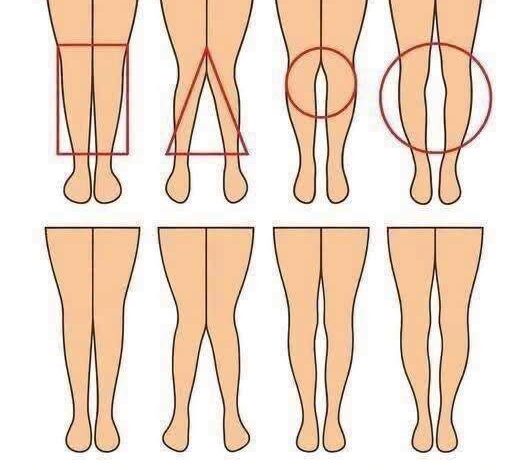
Every person’s legs are shaped by a unique combination of genetics and development. Bone structure, hip width, the angle of the femur, joint alignment, and muscle attachment points all contribute to the way the lower body looks and functions. These characteristics vary naturally from one individual to another, creating an enormous range of perfectly healthy body shapes.
One of the most commonly discussed examples is the thigh gap.
Contrary to popular myths, whether a person has a space between their thighs when standing is determined largely by skeletal structure. Pelvic width, the angle of the hips, leg alignment, and overall body proportions all influence whether the thighs touch. While body fat and muscle mass may affect the appearance to some extent, no amount of exercise can fundamentally change the shape of the pelvis or the position of the hip joints.
The same principle applies to many other aspects of leg appearance.
Some people naturally have knees that sit closer together.
Others have ankles that align differently.
Some develop fuller calves with minimal exercise, while others maintain slimmer lower legs despite years of athletic training.
These differences are not flaws to correct—they are simply examples of normal human variation.
Physical activity certainly influences the body, but it works within the framework that anatomy provides.
Long-distance runners often develop lean, endurance-oriented muscles.
Cyclists typically build strong quadriceps and gluteal muscles.
Dancers cultivate flexibility, balance, and precise control.
Strength training can increase muscle size and improve stability, while activities such as yoga and Pilates may enhance mobility and posture.
Each form of movement shapes the muscles differently, yet none can completely rewrite the underlying blueprint established by genetics.
Rather than trying to force the body to resemble someone else’s, many health professionals encourage focusing on strength, mobility, and function.
Healthy legs are not defined by a particular silhouette.
They are defined by their ability to support everyday life—walking comfortably, climbing stairs, maintaining balance, and allowing people to enjoy the activities they love.
Clothing can also influence how leg proportions appear without changing the body itself.
Wide-leg trousers create flowing lines and emphasize movement.
Straight-leg and tailored pants offer a clean, balanced silhouette.
Slim-cut styles highlight the natural contours of the legs, while skirts and dresses of different lengths can shift visual proportions in countless ways.
Fashion works best not as a tool for hiding the body, but as a way of expressing personal style while complementing individual features.
Ultimately, every pair of legs tells a unique story.
They carry us through childhood adventures, demanding workdays, celebrations, challenges, travels, and quiet walks home. They adapt as we grow older, becoming stronger through use, recovering from setbacks, and continuing to support us in ways we rarely stop to appreciate.
When we begin viewing leg shape and movement through the lens of biology rather than comparison, many of the pressures created by unrealistic beauty standards begin to lose their power.
There is no single “ideal” way for legs to look.
There is no universal measure of attractiveness hidden in the distance between the knees or the shape of the calves.
There is only remarkable diversity, shaped by genetics, experience, and the countless paths each person walks throughout life.
By recognizing those differences as natural rather than something to judge, we replace comparison with understanding.
We appreciate what our bodies are capable of instead of criticizing what they are not.
And in doing so, we discover that confidence doesn’t come from matching someone else’s proportions—it comes from moving through the world with comfort, health, and respect for the body that has carried us every step of the way.