Iran releases chilling video telling militants where to assassinate Melania Trump and a direct threat to Barron

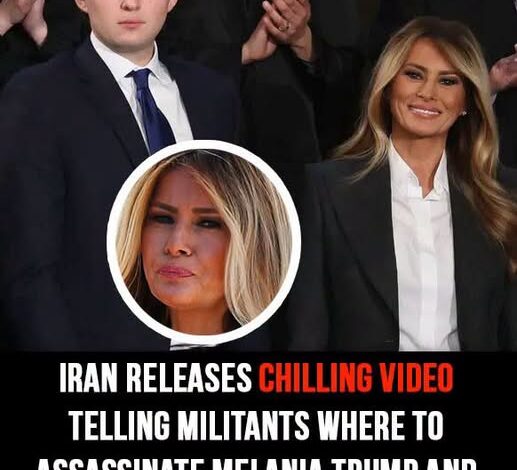
What begins as a propaganda video quickly crosses into something far more disturbing.
Rather than limiting itself to political rhetoric, the production reportedly focuses on Melania Trump in deeply personal ways, presenting fictionalized attack scenarios that go well beyond criticism or intimidation. According to reports describing the video’s contents, it identifies her by the codename “Muse,” highlights aspects of her public life, including her interest in fashion, and discusses locations she has been known to visit as though they were strategic opportunities rather than ordinary places.
The tone is what makes the material especially unsettling.
Instead of relying on broad political messaging, the script reportedly describes methods for tracking a target’s movements, watching for changes in security arrangements, and exploiting moments of vulnerability. It even includes references to poisoning clothing with toxic substances by corrupting or recruiting insiders—details that transform the production from inflammatory propaganda into something that appears designed to frighten and intimidate.
Whether intended as psychological warfare, extremist messaging, or political theater, the effect is difficult to ignore.
It shifts attention away from governments and policies and places it squarely on an individual.
That distinction matters.
Political leaders have long been the subject of hostile propaganda, but extending those narratives to family members blurs a line many people consider fundamental. When rhetoric begins focusing on private routines, personal interests, or loved ones, it moves beyond ideological conflict into something far more intimate.
According to reports, the video becomes even more alarming when it references Melania Trump’s son, Barron, by name.
The inclusion of a child—or any family member—in threatening political messaging dramatically changes the emotional weight of the material. Regardless of political affiliation, many people view relatives who are not involved in policymaking as deserving a measure of separation from the conflicts surrounding public office.
The timing of the video’s release has also drawn attention.
It emerged amid heightened tensions between the United States and Iran, following a period marked by military exchanges, retaliatory strikes, and increasingly aggressive rhetoric between the two countries. In such an atmosphere, symbolic messages often carry added significance, particularly when they appear to blur the boundary between propaganda and personal threats.
Over the years, periods of geopolitical confrontation have frequently been accompanied by highly provocative media intended to project strength, inflame emotions, or influence public perception. Images, speeches, and videos produced during these moments are often crafted as psychological tools as much as political statements, aiming to provoke fear, anger, or uncertainty among their intended audiences.
Even so, there is an important distinction between criticizing governments and appearing to encourage or dramatize violence against identifiable individuals.
That distinction is why material of this nature attracts intense scrutiny.
It raises questions not only about diplomacy and national security but also about the ethical limits of political messaging. When public figures—and especially members of their families—are portrayed in ways that appear to normalize or sensationalize violence, the conversation extends beyond international politics into broader concerns about public safety and the consequences of increasingly extreme rhetoric.
In an era when videos can spread globally within minutes, the impact of such content reaches far beyond its original audience.
Supporters may interpret it one way.
Critics another.
Security officials yet another.
Regardless of intent, material that appears to depict or romanticize attacks against named individuals inevitably contributes to an atmosphere of heightened tension and anxiety.
For many observers, that is the most troubling aspect.
Political disagreements, however fierce, have traditionally centered on ideas, policies, and leaders’ decisions. When messaging instead focuses on family members, everyday routines, or imagined acts of violence against private individuals, it can feel like a departure from those boundaries.
At its core, the controversy surrounding the reported video is about more than one person or one political dispute.
It reflects a broader concern about how modern conflicts are increasingly fought not only with diplomacy and military force, but also with images, narratives, and emotionally charged media designed to command attention. As international tensions continue to rise, the challenge is not simply responding to hostile rhetoric—it is ensuring that public discourse does not become so desensitized that threats against individuals and their families are treated as just another form of political spectacle.