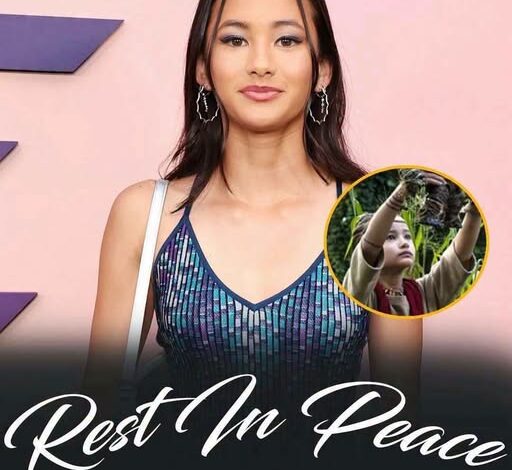
Kaylee Hottle’s portrayal of Jia demonstrated that powerful storytelling doesn’t depend solely on spoken words.
In a film filled with spectacular visual effects and towering creatures, some of the most memorable moments came through quiet gestures, expressive facial movements, and the natural rhythm of American Sign Language (ASL). Rather than treating Jia’s communication as something that required explanation or translation at every turn, the film allowed it to become an essential part of the story itself.
That decision mattered.
For decades, Deaf characters have often been underrepresented in mainstream films or portrayed through limited stereotypes. In many productions, hearing actors were cast in Deaf roles, and sign language was sometimes reduced to a narrative device rather than presented as a fully realized language with its own richness and nuance.
Casting Kaylee Hottle, a Deaf actress, brought a different kind of authenticity.
Her performance reflected genuine communication rather than imitation, allowing audiences to connect with Jia not because of her deafness, but because of her courage, curiosity, and emotional depth. Her expressions, body language, and signing became integral to the character’s identity, reminding viewers that meaningful communication takes many forms.
The impact extended beyond the screen.
For many Deaf viewers and their families, seeing a young Deaf actress in a major Hollywood production offered something that has historically been in short supply: representation that felt authentic. It demonstrated that Deaf performers can occupy central roles in blockbuster films without their disability defining the entirety of their character.
It also reinforced an important lesson for the entertainment industry.
Authentic casting is not simply a matter of inclusion—it can strengthen storytelling. When performers bring lived experience to a role, they often contribute insights and authenticity that enrich both the character and the audience’s understanding.
As Kaylee’s profile has grown, so has public interest in her career.
With that attention comes responsibility.
Young performers deserve the same respect for their privacy and well-being as any other child. Public discussion should remain grounded in verified information, avoiding speculation or rumors that can spread quickly online. Celebrating an actor’s work is one thing; treating their personal life as public property is another.
Perhaps Kaylee Hottle’s greatest contribution is not confined to a single film.
Her success helps broaden expectations about who belongs on screen. It encourages casting directors, filmmakers, and audiences to recognize that authentic representation is not a special exception—it is simply good storytelling.
Every meaningful step toward inclusion creates opportunities for others.
A child watching today may see someone who communicates like they do and begin imagining possibilities that once felt distant. Future filmmakers may approach casting with greater openness. Studios may increasingly recognize that authenticity and commercial success are not competing goals, but complementary ones.
That is how lasting change often happens.
Not through a single headline or one celebrated performance, but through doors that remain open after the spotlight moves on.
Kaylee Hottle’s performance as Jia reminded audiences that some of the most powerful voices are heard without a sound. By bringing authenticity, warmth, and emotional honesty to the role, she left an impression that extends far beyond one blockbuster film—helping shape a future where talented performers are recognized not despite their differences, but because every authentic perspective makes storytelling stronger.