PANIC AT MIDNIGHT: The Bizarre Object Spotted in Trump’s Hand That Sent the Entire Internet Into Total Meltdown!

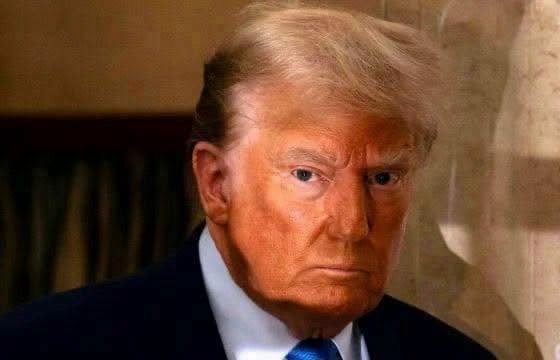
By the time the rumors had run their course, the story was no longer really about Donald Trump.
It had become a lesson in how quickly uncertainty can transform into certainty online—and how easily ordinary moments can be reshaped into extraordinary claims.
It began the way many viral stories do.
A short video.
A blurry image.
A pause at just the right frame.
Within hours, social media users were zooming in, drawing circles around indistinct objects, and confidently announcing that they had uncovered something hidden in plain sight. Anonymous accounts claimed insider knowledge. Speculation spread faster than verification. Each repost made the theory feel a little more credible, even though little new evidence had emerged.
The object itself became almost irrelevant.
What mattered was the mystery.
Human beings are naturally drawn to unanswered questions. Faced with incomplete information, our minds instinctively try to fill the gaps, especially when the subject involves a well-known public figure. Social media amplifies that instinct by rewarding speed, emotion, and certainty far more than patience or careful investigation.
As more complete photographs and additional footage emerged, the explanation became much less dramatic.
What had been presented as suspicious or mysterious turned out to be an ordinary item that could be carried by almost anyone. The dramatic theories surrounding it dissolved under closer examination, not because someone had uncovered a conspiracy, but because better information replaced incomplete information.
That pattern has become increasingly familiar.
A cropped image.
A misleading angle.
A few seconds of video without context.
Taken alone, any of these can create an entirely different impression than the full picture ultimately reveals.
This doesn’t mean every unusual image is harmless or every rumor is false.
It means extraordinary claims deserve careful evidence before they are accepted as fact.
Public figures naturally attract intense scrutiny, and legitimate reporting plays an important role in democratic societies. At the same time, speculation built on incomplete evidence can spread misinformation just as quickly as genuine news.
The speed of modern communication makes that challenge even greater.
Millions of people can encounter the same claim within minutes. Corrections often arrive later, reach fewer people, and rarely generate the same emotional response as the original rumor. By the time the facts become widely available, many people have already formed lasting impressions based on information that was incomplete or inaccurate.
Perhaps the most valuable habit is also the simplest.
Pause.
Ask where the information came from.
Look for multiple reliable sources.
Wait for additional evidence before reaching conclusions.
Those few extra moments of skepticism can prevent ordinary events from becoming imaginary crises.
In the end, the most revealing part of stories like this is often not the object everyone was debating.
It’s the process itself.
How quickly uncertainty became confidence.
How easily speculation overshadowed verification.
And how much our appetite for dramatic narratives can shape what we think we see.
The real lesson isn’t about one photograph or one public figure.
It’s about the importance of slowing down in a world that constantly rewards reacting first.
Because sometimes the biggest surprise isn’t hidden inside the image.
It’s discovering how much context can change what we believed we were looking at all along.