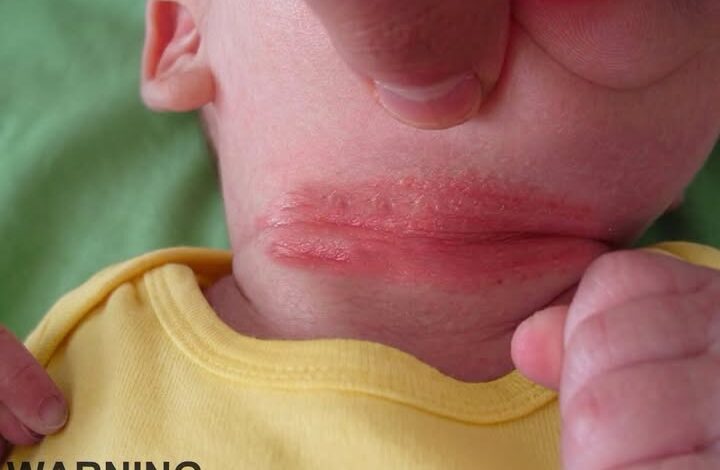
A bright red rash on your baby’s neck can be alarming, but it is also an important signal that the skin needs attention.
The skin in a baby’s neck folds is especially delicate. Warmth, moisture, milk dribbles, drool, sweat, and friction from clothing can all irritate the area, making redness develop quickly. In many cases, the cause is something relatively common, such as moisture irritation, heat rash, contact dermatitis, or eczema. Occasionally, a yeast or bacterial infection can develop in these moist skin folds, particularly if the irritation is left untreated.
The first step is not to panic.
It is to keep the area clean, dry, and comfortable while watching closely for signs that medical care is needed.
Gently wash the affected skin with lukewarm water once or twice a day, avoiding harsh soaps or vigorous scrubbing. After cleaning, pat the area dry with a soft towel rather than rubbing it. Because moisture trapped in the neck folds can make irritation worse, allow the skin to air dry for a few moments whenever possible before dressing your baby.
Clothing can also make a difference.
Choose soft, breathable fabrics such as cotton, and avoid tight collars, rough seams, or scratchy tags that may rub against already sensitive skin. If you’ve recently changed laundry detergent, fabric softener, or skincare products, consider whether a fragrance-free, hypoallergenic alternative might be gentler on your baby’s skin.
It’s generally best to avoid trying multiple creams or home remedies without guidance, especially if you’re unsure of the cause. Some products intended for adults or older children may further irritate a baby’s delicate skin. If your pediatrician has previously recommended a specific cream or barrier ointment for a similar rash, follow their instructions. Otherwise, ask a healthcare professional before starting a new treatment.
Most mild rashes improve with gentle skin care, but certain signs deserve prompt medical evaluation.
Contact your child’s healthcare provider if:
- The rash spreads rapidly or becomes much redder.
- The skin begins to crack, ooze, bleed, or develop yellow crusts.
- There is a foul odor or increasing swelling.
- Your baby seems to be in significant pain or cries when the area is touched.
- Blisters develop.
- The rash doesn’t improve after a few days of careful home care.
- Your baby develops a fever, seems unusually sleepy, feeds poorly, or otherwise appears unwell.
If your baby is younger than three months and develops a fever, or if the rash is accompanied by severe illness or difficulty breathing, seek urgent medical care immediately.
Perhaps the most important thing to remember is that you don’t have to identify the exact cause on your own.
Your role is to notice changes, provide gentle care, and seek medical advice when something doesn’t seem right. Parents and caregivers often recognize early that something is different, even before they know why. Trusting that instinct and contacting your child’s healthcare provider when you’re concerned is never an overreaction.
Most baby neck rashes are treatable and improve with appropriate care.
By keeping the area clean and dry, reducing friction, watching for warning signs, and seeking medical advice when needed, you give your baby’s skin the best chance to heal quickly—and help prevent a simple irritation from becoming a more serious problem.