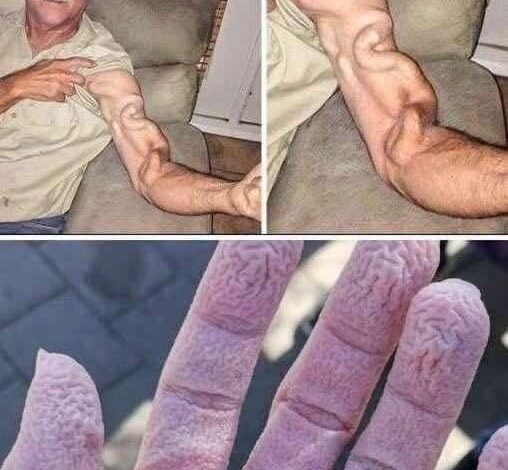
A single photograph can trigger thousands of alarming theories before anyone has a chance to check the facts.
An unusually shaped arm, wrinkled fingertips, or another unexpected physical change can look frightening in isolation. On social media, dramatic images often spread with captions that suggest rare diseases, mysterious conditions, or catastrophic injuries—even when the explanation is far more familiar.
One example is the “Popeye deformity.”
Despite its dramatic appearance, it is usually the result of a ruptured biceps tendon, most commonly involving the tendon near the shoulder. When the tendon tears, the biceps muscle can retract toward the elbow, creating a noticeable bulge while leaving the upper arm looking flatter than usual.
The injury can happen after lifting something heavy, during sports, or from a sudden force applied to the arm. It may be accompanied by a popping sensation, pain, bruising, weakness, or difficulty turning the palm upward or bending the elbow.
Although the appearance can be startling, it does not always require emergency surgery.
Treatment depends on several factors, including which tendon has torn, the person’s age, activity level, occupation, and functional needs. Some people recover excellent day-to-day function with rest, physical therapy, and rehabilitation, while others—particularly athletes or individuals whose work requires significant arm strength—may benefit from surgical repair. The most important first step is prompt medical evaluation to determine the extent of the injury and the most appropriate treatment plan.
Another image that frequently causes unnecessary alarm is that of wrinkled fingertips after spending time in water.
Many people assume the skin simply absorbs water and swells. In reality, the process is more sophisticated. After prolonged immersion, the body’s nervous system causes small blood vessels in the fingertips to constrict, creating the familiar wrinkles. Researchers believe this response may improve grip on wet objects, making it an adaptive feature rather than a sign that the skin is “rotting” or deteriorating.
In healthy individuals, these wrinkles are temporary and disappear once the skin dries.
Taken out of context, however, photographs of either condition can appear far more alarming than they truly are.
That highlights an important lesson about health information online.
Images rarely tell the whole story.
Lighting, camera angles, timing, and missing context can dramatically change how something looks. A single photograph cannot reliably diagnose an injury or illness, and dramatic captions often spread much faster than accurate medical explanations.
That doesn’t mean unusual symptoms should be ignored.
Sudden arm pain, a visible muscle deformity, significant weakness, loss of function, or symptoms that concern you deserve assessment by a healthcare professional. Likewise, persistent skin changes that occur without water exposure, don’t resolve, or are accompanied by pain, numbness, or other concerning symptoms should also be medically evaluated.
The goal isn’t to dismiss unusual findings.
It’s to respond thoughtfully rather than react fearfully.
Reliable information, careful evaluation, and timely medical care are far more valuable than viral speculation.
In the end, the most important lesson isn’t that every alarming picture has a harmless explanation.
It’s that understanding the science behind what we see helps us make better decisions.
Sometimes the right response is reassurance.
Sometimes it’s seeking medical care promptly.
Knowing the difference begins not with panic, but with good information.