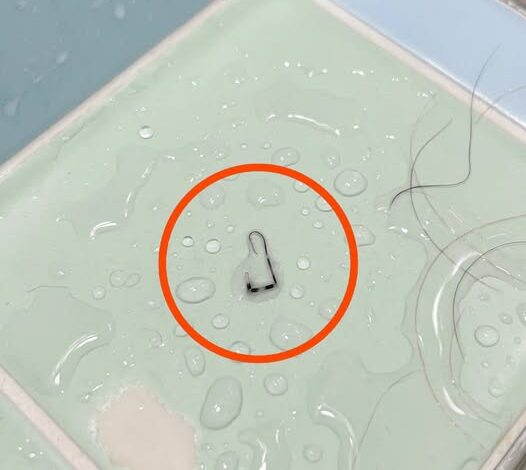
The moment I noticed it, every logical thought disappeared.
There, resting on the bathroom floor, was a thin, segmented object that looked disturbingly alive. I had just stepped out of the shower, and for a split second I could have sworn I’d felt it brush against my shoulder.
Then it moved.
Or at least, I thought it did.
I froze, dripping water onto the tiles, unable to decide whether to get closer or run out of the room. Every tiny twitch seemed to confirm my worst fears. My mind raced through impossible scenarios, each one more unsettling than the last.
Had it been crawling on me?
Had it somehow come from my skin?
How long had it been there without me noticing?
Questions multiplied much faster than answers.
For several minutes, I simply stood there watching it, convinced that if I looked away for even a second, it would disappear—or worse, move somewhere I couldn’t see.
Eventually, curiosity managed to push past the panic.
I wrapped a tissue around my fingers, took one cautious step forward, and carefully picked it up. Up close, it looked even stranger: long, jointed, and covered with tiny spines that made it appear almost mechanical.
I immediately reached for my phone.
Comparing it with photographs online, I slowly began to notice details I had completely overlooked while I was frightened. There was no body attached.
No head.
No wings.
Just a single detached appendage.
Then I found an image that matched almost perfectly.
It wasn’t a parasite.
It wasn’t a worm.
It wasn’t anything that had come from me at all.
It was the detached leg of a large beetle.
Many insects continue to show small reflexive movements for a short time after losing a leg because tiny nerve circuits within the limb can still respond briefly, even after it has separated from the body. Those automatic twitches can make a harmless insect part appear surprisingly lifelike.
The realization was almost comical.
Moments earlier, I had convinced myself I was living through the opening scene of a horror film.
In reality, I was looking at nothing more than part of an unfortunate beetle that had somehow found its way into the bathroom.
I couldn’t help laughing at the contrast between my imagination and the truth.
The experience reminded me how quickly our brains fill in missing information when we’re startled. Faced with something unfamiliar, we instinctively assume the most threatening explanation first. It’s an ancient survival mechanism—but in modern life, it often turns ordinary discoveries into imagined disasters.
Of course, if you ever find an unfamiliar organism attached to your skin, experience persistent symptoms, or have genuine concerns about a bite, sting, or parasite, it’s important to seek appropriate medical advice rather than relying on internet guesses. But isolated insect parts found around the home are usually just that—parts of insects that have wandered inside or become prey for another animal.
Looking back, the detached beetle leg wasn’t frightening at all.
Only my first interpretation was.
Sometimes the scariest part of a mystery isn’t the object itself.
It’s the story our imagination writes before the facts have a chance to catch up.