Tragedy Strikes Hours After the Fantasy Wedding of the Century—What She Found Next Morning Left Her Screaming

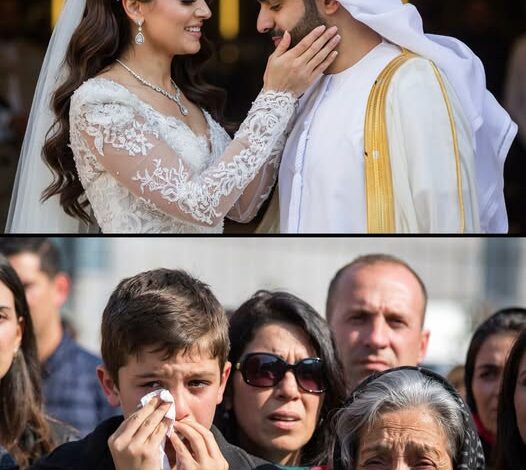
The funeral took place beneath an impossibly bright sky, the kind of day that seemed to ignore the weight of loss settling over everyone gathered there. Only days earlier, Rashid had been laughing beneath glittering chandeliers, celebrating a future that felt limitless. Now, those same dreams had been replaced by quiet prayers, lowered heads, and a farewell no one had imagined arriving so soon.
Outside the ceremony, the world’s attention focused elsewhere.
News reports dissected the fortune he left behind, lingered on the estate now passing to his widow, and fueled endless speculation about hidden motives, family secrets, and sensational theories. Headlines chased intrigue, but they missed the quieter reality unfolding beyond the cameras.
Sarah wasn’t thinking about wealth.
She was trying to remember how to exist in a world that no longer contained the man she loved.
Her days became an endless procession of legal documents, condolences, and practical decisions that somehow had to be made despite the fog of grief. At night, every distraction disappeared, leaving her alone with the same unbearable memory—the final time she reached for Rashid’s hand, expecting the familiar warmth she had always found, only to discover a silence that would never answer again.
Money offered no comfort there.
No inheritance could soften that moment.
What gradually carried her forward was something far less tangible: the memory of who Rashid had been when no one else was watching.
He had believed in possibility.
He had encouraged impossible dreams before anyone else could see them.
He had measured success not only by achievement, but by the opportunities he created for other people.
Sarah realized that if she allowed his story to become nothing more than headlines about wealth or mystery, she would lose the very qualities that had defined his life.
So, slowly, she began building something different.
She supported research dedicated to preventing the illness that had taken him so unexpectedly, hoping other families might be spared the same heartbreak. She established scholarships for young entrepreneurs and students whose ambitions reminded her of the determination Rashid had always admired. She invested in projects that blended education, innovation, and compassion, believing those were the values he would have wanted to leave behind.
Each decision became an act of remembrance.
Not grand enough to erase grief.
But meaningful enough to give it direction.
She never tried to replace what she had lost.
She knew that love doesn’t work that way.
Instead, she found a way to let it continue—not by holding on to the life they had planned, but by allowing the kindness, generosity, and hope they shared to reach people they would never meet.
Years later, many would remember Rashid through the buildings that bore his name, the scholarships that opened doors, and the lives quietly transformed by opportunities that might never have existed otherwise.
But Sarah remembered something simpler.
A smile across a dinner table.
A hand reaching for hers.
A life interrupted far too soon.
His story did not end with the tragedy that claimed him.
It lived on in every person whose future became brighter because one woman refused to let grief become the final chapter. Instead of allowing loss to define her, she chose to transform love into a legacy—one act of compassion at a time.