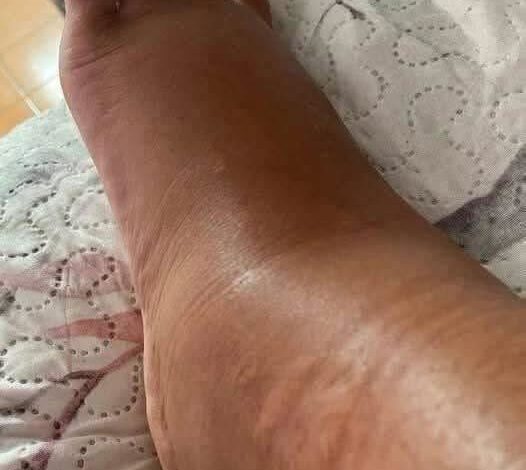
When Swollen Feet Are Trying to Tell You Something
It often begins with something surprisingly small.
Your shoes feel tighter than they did that morning. Your socks leave deeper marks around your ankles. By evening, your feet look puffy and heavy, and pressing a finger against the swollen skin may even leave a temporary indentation.
Most people dismiss it with the same explanation:
“I’ve just been on my feet too long.”
Sometimes, they’re right.
Swelling in the feet and ankles can occur when excess fluid collects in the surrounding tissues, a condition commonly called edema. After a long day of standing, sitting, traveling, or spending time in hot weather, gravity can encourage fluid to accumulate in the lower legs.
A particularly salty meal can contribute as well, because sodium influences how much fluid the body retains.
In many everyday situations, mild swelling improves once you rest and give your legs a chance to recover.
One of the simplest things you can do is elevate them.
Instead of merely sitting down with your feet touching the floor, try raising your legs comfortably while resting. Elevation can help fluid that has collected around the ankles move away from the lower extremities.
Gentle movement can also help.
If you’ve spent hours sitting at a desk, traveling in a car, or remaining in one position, periodically standing and walking can activate the muscles in your legs. Even simple ankle movements—slowly pointing and flexing your feet or making gentle circles—can keep your lower legs from remaining completely inactive.
The goal isn’t an exhausting workout.
It’s movement.
Heat can make swelling feel worse for some people, so a cool compress may provide temporary comfort. Avoid placing ice directly against the skin; wrap a cold pack in a cloth and use it for short periods instead.
And although warm foot soaks can feel soothing, they’re better viewed as a comfort measure than a treatment for the underlying cause of swelling. Epsom salts are often recommended online, but evidence that they meaningfully draw excess fluid from swollen feet through the skin is limited.
Sometimes the most useful changes happen before swelling begins.
Start with your shoes.
Footwear that is excessively tight can become miserable once your feet expand during the day. Comfortable, supportive shoes with enough room for your feet can make a significant difference, particularly if your job requires long periods of standing or walking.
Hydration matters too.
It may sound strange to drink water when your body appears to be retaining fluid, but intentionally dehydrating yourself is not a good solution. Your body needs adequate fluids for normal circulation and kidney function.
Your diet deserves attention as well.
Packaged snacks, processed meats, fast food, canned foods, sauces, and many prepared meals can contain surprisingly large amounts of sodium. If swelling tends to follow particularly salty days, reducing high-sodium foods may help.
Small dietary changes can accumulate.
Choosing more fresh foods.
Reading nutrition labels.
Cooking at home more often.
Using herbs and spices instead of relying heavily on salt.
These habits can support overall health while potentially reducing sodium-related fluid retention.
Some people also turn to herbal teas, essential oils, or supplements in hopes of reducing swelling.
This is where caution becomes important.
“Natural” does not automatically mean harmless or medically appropriate. Some herbs can interact with medications or affect blood pressure, kidney function, or fluid balance. Essential oils can also irritate the skin and should not be treated as a cure for unexplained edema.
A gentle massage may feel pleasant for ordinary tired feet, but unexplained swelling should not automatically be massaged aggressively—particularly when one leg is suddenly more swollen, painful, warm, or red than the other.
That distinction matters because swollen feet are not always caused by standing too long.
Persistent or unexplained swelling can sometimes be associated with medication side effects, injuries, infections, circulation problems, blood clots, or conditions involving the heart, kidneys, or liver. Pregnancy can also cause swelling, although sudden or severe swelling during pregnancy deserves prompt medical attention.
Your body often provides clues about how seriously to take the symptom.
Mild swelling affecting both feet after a long, hot day that improves with rest is very different from one leg suddenly becoming swollen, painful, warm, and red.
Likewise, swelling accompanied by shortness of breath or chest pain should never be dismissed as ordinary tired feet.
Those symptoms can indicate a medical emergency and require immediate evaluation.
You should also contact a healthcare professional if swelling persists, repeatedly returns without an obvious explanation, becomes progressively worse, or is accompanied by significant pain, redness, warmth, skin changes, fever, or other concerning symptoms.
The important lesson isn’t to become frightened every time your shoes feel tight.
It’s to pay attention.
Our bodies communicate through changes that are easy to overlook.
Sometimes swollen feet are simply asking for a break after hours of standing.
Sometimes they’re reminding you to move after sitting too long.
Sometimes they’re responding to heat or a high-sodium meal.
And occasionally, they’re signaling something that deserves medical investigation.
Knowing the difference begins with noticing patterns rather than ignoring them.
When does the swelling appear?
Does it affect one foot or both?
Does elevation improve it?
Is there pain?
Has anything else changed?
Those observations can be extremely useful if you eventually need to speak with a healthcare professional.
For ordinary, mild swelling, simple measures such as comfortable footwear, appropriate hydration, regular movement, sensible sodium intake, cooling, and elevation may bring welcome relief.
But home remedies have limits.
If the swelling refuses to disappear—or arrives alongside symptoms that concern you—don’t keep trying increasingly elaborate remedies while hoping the problem will resolve itself.
Sometimes your feet need rest.
Sometimes your routine needs adjustment.
And sometimes your body needs a doctor.
Learning to recognize which one you’re dealing with is far more valuable than any single home remedy.