Patrick Swayze’s life was never the effortless fairy tale that many people imagined while watching him glide across a dance floor or command the screen with effortless confidence. Behind the charisma, the movie-star smile, and the unforgettable performances was a man shaped by hardship, determination, devastating loss, and an unwavering refusal to let the world define him. His journey was not simply about becoming one of Hollywood’s most beloved actors—it was about protecting the very qualities others once tried to shame out of him.
Born on August 18, 1952, in Houston, Texas, Patrick Wayne Swayze grew up in a family where discipline and creativity existed side by side. His mother, Patsy Swayze, was a respected dance instructor whose studio became the foundation of his earliest education. Long before movie cameras followed his every move, Patrick spent countless hours practicing ballet, jazz, and gymnastics under her demanding guidance.
Those lessons shaped far more than his technique.
They taught endurance.
Perfection was expected, excuses were never accepted, and every mistake became an opportunity to improve. While many children his age spent afternoons playing outside, Patrick often found himself repeating routines until exhaustion gave way to mastery.
Yet outside the dance studio, life was far less encouraging.
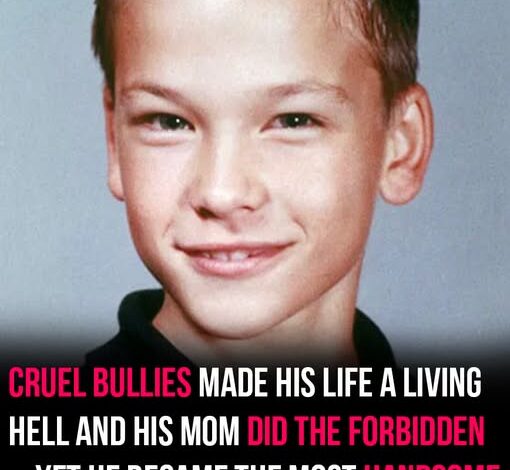
Growing up as a boy who loved dance in Texas came with consequences. At school, classmates mocked his passion, questioning his masculinity and treating his artistic interests as something worthy of ridicule. Insults became routine. So did fights.
He quickly learned that surviving meant developing two very different kinds of strength.
One came from discipline.
The other came from resilience.
Patrick refused to abandon dancing simply because other people considered it unusual. Instead, every cruel comment, every shove in a hallway, and every attempt to embarrass him only deepened his commitment. Dance wasn’t simply an extracurricular activity—it became the language through which he expressed emotions he struggled to put into words.
At the same time, he excelled in athletics.
Football offered another outlet and another opportunity to prove himself physically. For a while, it seemed possible that sports might define his future just as much as dance.
Then everything changed.
A serious knee injury abruptly ended many of his athletic ambitions. What could have become the greatest disappointment of his young life instead became a turning point.
Rather than seeing the injury as the end of his future, Patrick poured all of his energy into the one passion that had never abandoned him.
Dance.
The very pursuit that others had mocked became the foundation upon which he would build an extraordinary career.
His talent eventually carried him to New York, where he trained professionally while taking acting classes and performing on stage. Like countless aspiring performers, he faced rejection after rejection, balancing auditions with difficult jobs while waiting for someone to recognize what he could offer.
Success did not arrive overnight.
It came through persistence.
Television appearances gradually led to larger opportunities, but it was his role as dance instructor Johnny Castle in Dirty Dancing that transformed him into an international sensation.
The film became far more than a box-office success.
It became a cultural phenomenon.
Audiences around the world were captivated by Patrick’s remarkable combination of athleticism, elegance, vulnerability, and confidence. His famous lifts and graceful movements looked effortless on screen, but every moment reflected decades of disciplined training that began in his mother’s dance studio.
Suddenly, the boy who had once been bullied for dancing became one of the most admired leading men in Hollywood.
That success continued with memorable performances in films including Ghost, Point Break, Road House, and To Wong Foo, Thanks for Everything! Julie Newmar. Whether portraying romantic heroes, action stars, or emotionally complex characters, Patrick brought authenticity and quiet intensity to every role.
His on-screen confidence made audiences believe he had always been fearless.
The reality was much more complicated.
Behind the fame, Patrick and his wife, Lisa Niemi, quietly carried heartbreak that few people fully understood.
The two had fallen in love as teenagers after meeting through his mother’s dance studio. Their marriage became one of Hollywood’s rare lasting partnerships, built on deep friendship and unwavering loyalty.
Yet one dream remained painfully out of reach.
They desperately wanted children.
Pregnancy losses and infertility brought years of private grief that neither fame nor success could erase. While the world celebrated Patrick’s career, he and Lisa mourned the family they had hoped to build together.
The emotional weight accumulated over time.
As losses mounted—including the deaths of loved ones and close friends—Patrick increasingly struggled with alcohol. Like many people carrying unresolved grief, he searched for ways to numb pain that seemed impossible to escape.
Eventually, he recognized that those coping mechanisms threatened everything he valued.
He worked hard to regain control, refusing to let addiction become the final chapter of his story.
Then came the diagnosis that changed everything once again.
In 2008, Patrick learned he had pancreatic cancer, one of the most aggressive forms of the disease. The prognosis was devastating.
Most people would have stepped away from public life.
Patrick chose differently.
Even while undergoing exhausting treatments, he continued working whenever his health allowed. He filmed the television series The Beast, astonishing colleagues with his determination and professionalism despite constant physical pain.
He rarely complained.
Instead, he focused on living as fully as possible.
Throughout his illness, Lisa remained beside him, providing the same unwavering support they had shared throughout more than three decades of marriage. Together, they faced uncertainty with remarkable courage, refusing to allow the disease to define every remaining moment.
Patrick passed away on September 14, 2009, at the age of 57.
His death marked the end of an extraordinary career, but not the end of his influence.
Generations continue discovering his performances, not simply because of their entertainment value, but because they reveal something timeless about courage, vulnerability, and authenticity.
His story carries a lesson far greater than celebrity.
As a boy, he was told dancing made him weak.
He protected that part of himself anyway.
As a young man, injury threatened to derail his future.
He adapted instead of surrendering.
As an actor, he faced rejection before finding success.
As a husband, he endured heartbreak without losing his capacity to love.
As a patient, he confronted terminal illness with extraordinary dignity.
Patrick Swayze’s greatest achievement was never a single film, award, or iconic performance.
It was his refusal to let fear, ridicule, loss, or illness convince him to abandon the qualities that made him who he was.
The sensitivity others mocked became emotional depth.
The discipline learned through dance became artistic brilliance.
The hardships he endured became compassion.
His legacy lives on not only through unforgettable movies, but through the example he left behind: that our greatest strengths are often the very parts of ourselves the world first tells us to hide.
Patrick Swayze chose instead to protect them.
And in doing so, he became unforgettable.