Chronic Constipation Led This Young Woman to Seek Medical Care – Her X-Ray Told a Surprising Story…

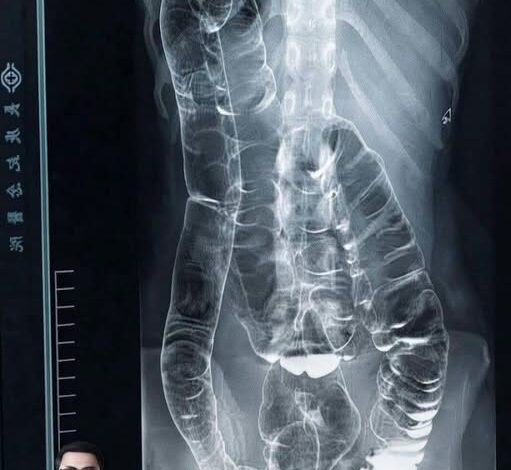
She had gone to the doctor because she couldn’t remember the last time she’d had a normal bowel movement.
She expected questions about her diet.
Maybe a prescription.
Perhaps a lecture about drinking more water.
What she did not expect was for the doctor to stare at her X-ray, grow noticeably serious, and call another medical professional into the room.
Until that moment, the young woman had convinced herself that what she was experiencing was embarrassing, uncomfortable, but probably ordinary.
Constipation happens.
Everyone knows that.
So she’d waited.
And waited.
That decision was about to teach her why something common can still become medically serious when it refuses to go away.
For privacy, we’ll call her Anna.
Anna’s problems hadn’t begun dramatically.
There was no sudden collapse or unbearable pain.
Instead, her symptoms crept into her life so gradually that she kept adjusting to them.
At first, she simply noticed she wasn’t going to the bathroom as regularly.
Then came the bloating.
Her abdomen sometimes felt unusually full after even a modest meal.
Her clothes became uncomfortable around her waist.
She occasionally developed cramps, but they would ease, giving her another reason not to worry.
She changed what she ate.
She drank more water.
She tried adding fiber.
She walked more.
When that didn’t immediately solve the problem, she tried over-the-counter remedies.
Sometimes she felt a little better.
Then the discomfort returned.
Because constipation is so common, Anna kept finding explanations for it.
Stress.
A poor diet.
Not enough exercise.
A disrupted routine.
Anything except something that required medical attention.
There was another reason she hesitated.
Embarrassment.
Talking about bowel movements can make people uncomfortable.
Even with doctors.
Anna didn’t want to sit in an examination room describing when she’d last used the bathroom or what her stool looked like.
So she minimized the problem.
When family members noticed she wasn’t eating much, she said she wasn’t hungry.
When someone commented on her swollen abdomen, she blamed bloating.
When she felt tired, she blamed poor sleep.
Then things became harder to ignore.
The pressure in her abdomen wasn’t disappearing anymore.
She felt increasingly uncomfortable.
Eating could make her feel full almost immediately.
Going to the bathroom became something she worried about constantly.
Eventually, discomfort overcame embarrassment.
Anna made an appointment.
The first part was exactly what she’d expected.
Questions.
How long had this been happening?
How often was she having bowel movements?
Was there blood?
Vomiting?
Severe abdominal pain?
Had she started any new medications?
What did she typically eat?
How much fluid did she drink?
Had anything changed recently?
The questions felt invasive until Anna realized something important:
The doctor wasn’t judging her.
He was looking for clues.
Constipation isn’t a single disease.
It is a symptom.
Sometimes the explanation is relatively simple.
Dietary changes, dehydration, reduced activity, travel, stress, or certain medications can affect bowel habits.
But persistent constipation can also require further investigation, particularly when it becomes severe or appears alongside other concerning symptoms.
After examining Anna’s abdomen, the doctor decided imaging was appropriate.
That was when the visit stopped feeling routine.
Anna was sent for an abdominal X-ray.
She lay still while the images were taken.
The entire process was remarkably uneventful.
No dramatic machines.
No emergency alarms.
Just instructions to remain in position while the equipment captured what was happening inside her abdomen.
Then she waited.
When the doctor returned, his expression had changed.
He pulled up the image.
Anna stared at it without understanding what she was seeing.
Gray shapes.
Dark areas.
The pale outlines of structures she couldn’t identify.
Then the doctor began explaining.
Her bowel contained a substantial accumulation of stool.
The constipation she had been treating as an inconvenience had progressed far beyond what she’d imagined.
Suddenly, the months of symptoms fit together.
The pressure.
The bloating.
The reduced appetite.
The abdominal discomfort.
Her body had been warning her.
She simply hadn’t realized how loudly.
Anna’s first reaction wasn’t fear.
It was disbelief.
“All of that is… stool?”
The doctor explained what the image suggested and why persistent or severe constipation shouldn’t simply be ignored.
In significant cases, hardened stool can become difficult to pass normally. Doctors may describe severe accumulation as fecal loading, while a firmly lodged mass can constitute fecal impaction.
Those situations can require medical treatment rather than endless experimentation with home remedies.
Anna immediately felt embarrassed.
How had she allowed it to become this bad?
The doctor stopped her.
The useful question wasn’t how embarrassed she should feel.
It was what they should do next.
That distinction mattered.
Digestive problems are among the easiest symptoms to joke about and among the hardest for some patients to discuss honestly.
But the bowel is an organ system.
Its problems deserve the same straightforward medical attention as problems involving the lungs, heart, skin, or joints.
There is nothing shameful about telling a doctor that you cannot have a bowel movement.
Treatment for significant constipation depends on the individual situation and its cause.
A clinician may recommend changes involving fluids, diet, physical activity, medications, or laxatives. More severe cases can require additional measures under medical supervision.
And importantly, adding large amounts of fiber isn’t automatically the answer in every severe situation.
When someone has significant pain, vomiting, marked swelling, an inability to pass stool or gas, bleeding, fever, unexplained weight loss, or other worrying symptoms, simply piling on home remedies can delay appropriate evaluation.
Anna followed the treatment plan given by her medical team.
Improvement wasn’t instantaneous.
Her digestive system had not reached that point overnight, and restoring normal function required patience.
But something else changed immediately.
She stopped hiding what was happening.
For the first time, she began paying attention to bowel habits as actual health information rather than something too embarrassing to mention.
How frequently was she going?
Was she straining?
Was there pain?
Had her usual pattern changed?
Were particular foods or medications affecting her?
She began recognizing that “normal” doesn’t necessarily mean an identical schedule for everyone.
Bodies differ.
What mattered was knowing her own usual pattern and noticing meaningful, persistent changes.
She also realized that the X-ray hadn’t really been the first warning.
It was simply the first warning she couldn’t rationalize away.
Her body had been communicating for weeks.
The bloating was information.
The discomfort was information.
The appetite changes were information.
The persistent difficulty passing stool was information.
She had interpreted each symptom separately because doing so made them easier to dismiss.
The image connected them.
That became the real surprise.
Not that an X-ray could show a significant stool burden.
But that something Anna had considered merely inconvenient had gradually become important enough to require medical care.
There is a broader lesson in her experience.
Common symptoms can create a dangerous kind of reassurance.
Headaches are common.
Back pain is common.
Heartburn is common.
Constipation is common.
Most episodes will not signal an emergency.
But “common” and “always harmless” are not synonyms.
Duration matters.
Severity matters.
Associated symptoms matter.
A problem that repeatedly returns, progressively worsens, or substantially changes how your body normally functions deserves attention.
That doesn’t mean panicking whenever you miss a bowel movement.
It means resisting the opposite mistake:
Ignoring persistent symptoms because they seem too ordinary—or too embarrassing—to discuss.
Anna eventually recovered from the immediate problem, but she carried one lesson forward.
She stopped treating embarrassment as a diagnostic tool.
If something felt wrong, she would say so.
Clearly.
Early.
Without apologizing.
Because doctors have heard these conversations before.
The symptom that feels humiliating to a patient may be routine clinical information to the person treating them.
And sometimes one uncomfortable conversation can prevent a much more uncomfortable medical problem later.
Anna had walked into the clinic expecting a simple explanation for constipation.
She walked out understanding something much larger about her body.
It had never been trying to embarrass her.
It had been trying to get her attention.
The X-ray simply made the message impossible to ignore.
So if your bowel habits change briefly, there may be an ordinary explanation.
But if constipation persists, becomes severe, repeatedly returns, or is accompanied by significant pain, vomiting, blood, unexplained weight loss, pronounced abdominal swelling, or an inability to pass stool or gas, don’t rely on a viral story—or embarrassment—to decide what happens next.
Talk to a qualified healthcare professional.
Because sometimes the most surprising thing a medical image reveals isn’t something mysterious hiding inside the body.
It’s how long the body had been asking us to listen.