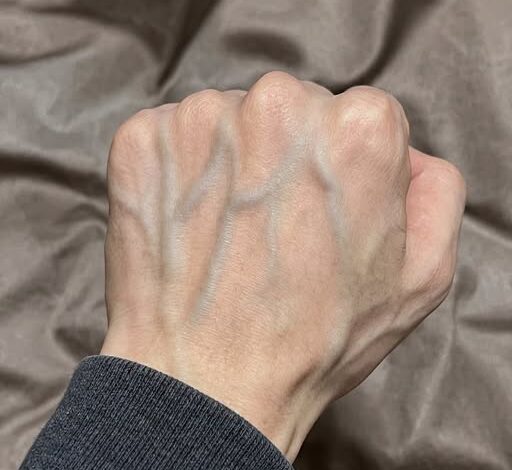
One morning, you look down at your hands and notice something you swear wasn’t there before.
Veins.
Blue-green lines seem to be winding across the backs of your hands, climbing along your forearms, or becoming more noticeable on your legs.
And almost immediately, the questions begin.
Why are my veins suddenly so visible?
Is my circulation getting worse?
Could this mean something is wrong?
The reassuring answer is that visible veins are often completely normal.
In fact, sometimes they’re the result of changes we’d normally consider positive—losing excess body fat, becoming more physically active, or building muscle.
But there are also situations where changes in veins deserve medical attention.
The important thing is learning the difference.
Your Veins May Have Always Been There
The first thing to understand is surprisingly simple:
The veins usually haven’t suddenly appeared.
They’ve become easier to see.
Veins carry blood back toward the heart, and many run relatively close to the skin’s surface. How noticeable they look depends on several factors, including skin thickness, body composition, genetics, temperature, and activity.
Change any of those, and veins you’ve barely noticed for years can suddenly seem prominent.
That doesn’t automatically mean something has gone wrong.
Losing Body Fat Can Reveal Them
Body fat isn’t distributed only around the abdomen or hips.
There’s also tissue between the skin and structures underneath it.
When someone loses weight and reduces subcutaneous fat, there’s simply less material hiding superficial veins.
That’s why people who become leaner sometimes notice dramatically more vascularity in their arms and hands.
The veins haven’t necessarily enlarged dangerously.
The covering above them has changed.
This effect is particularly noticeable in people who combine fat loss with resistance training.
Muscle Can Make Veins Stand Out Too
Anyone who has watched athletes or bodybuilders has seen this effect.
Exercise increases blood flow to working muscles. As muscles become larger, superficial veins may also appear more prominent.
During a workout, the effect can become especially dramatic.
Your arms might look unusually vascular after lifting weights and considerably less so an hour later.
That temporary “pumped” appearance generally isn’t alarming by itself.
It’s part of the body’s response to exercise.
Heat Changes the Picture
Then there’s temperature.
Take a hot shower and look at your hands afterward.
You may notice the veins are suddenly much easier to see.
When the body needs to release heat, blood vessels near the skin can widen. This helps move heat toward the surface.
That’s why visible veins may become more noticeable after:
- A hot shower or bath
- Exercise
- Spending time outside in warm weather
- Sitting in a hot room
Once your body cools, their appearance may become less pronounced.
So if your veins seem to change throughout the day, temperature could be part of the explanation.
Standing for Hours Matters
Gravity also plays a role, especially in the legs.
When you’re upright for long periods, blood returning from the legs has to work against gravity.
Veins contain valves that help keep blood moving toward the heart.
After a long day of standing, veins in the legs can sometimes appear more prominent than they did first thing in the morning.
For many people, this is simply a temporary change.
But persistent bulging or twisted veins—especially when accompanied by aching, heaviness, swelling, itching, or skin changes—can indicate varicose veins or another venous problem worth discussing with a healthcare professional.
Genetics May Be the Simplest Explanation
Look at your relatives.
Do your parents have prominent veins?
What about your siblings?
Some people are simply built that way.
Skin thickness, vein positioning, body composition, and other inherited characteristics influence how visible the vascular system appears.
Two equally healthy people can have completely different-looking hands and arms.
One person’s veins may barely show.
The other’s may look like a road map.
Both can be normal.
Aging Makes Veins Easier to See
Age creates another noticeable change.
Over time, skin generally becomes thinner and loses some of its elasticity and underlying tissue.
Structures beneath the surface therefore become easier to see.
That includes veins.
This is one reason veins on the hands and forearms often become increasingly visible with age.
The change can seem dramatic because people tend to notice it suddenly.
One day, you catch your hands under bright lighting and think:
When did that happen?
Usually, it didn’t happen overnight.
It developed gradually until something finally made you notice.
So When Should Visible Veins Concern You?
Appearance alone doesn’t tell the whole story.
What matters more is whether something else has changed.
A vein that has always been visible is very different from an area that suddenly becomes painful, swollen, warm, or discolored.
Pay attention to symptoms such as:
Pain or tenderness.
A vein that becomes significantly painful deserves more attention than one that is simply easy to see.
Swelling.
New or pronounced swelling—particularly if it affects one arm or leg—shouldn’t be dismissed.
Warmth or redness.
These can accompany inflammation or, in some situations, a blood clot.
Sudden changes.
If a vein or an entire limb suddenly looks dramatically different without an obvious explanation, getting medical advice is sensible.
Skin sores or persistent discoloration.
Slow-healing wounds around the lower legs or ankles can sometimes accompany circulation problems and warrant evaluation.
The broader rule is straightforward:
How the area feels can matter more than how vascular it looks.
One-Sided Swelling Is Especially Important
There is a significant difference between noticing symmetrical veins on both arms after exercise and suddenly developing swelling, warmth, tenderness, or discoloration in one limb.
A blood clot in a deep vein can be serious.
If new one-sided swelling or pain develops, particularly with warmth or skin-color changes, seek prompt medical assessment.
And symptoms such as sudden shortness of breath, unexplained chest pain, coughing up blood, fainting, or severe difficulty breathing require urgent medical attention.
Those symptoms should never be treated as something to simply watch for a few days.
Cold or Numb Fingers and Toes Tell a Different Story
Visible veins aren’t always the main clue.
Sometimes the important information is happening farther down the limb.
If your fingers or toes repeatedly become unusually cold, numb, painful, pale, or bluish, especially when this represents a new or worsening pattern, circulation should be considered.
Again, there are many possible explanations, and not all are dangerous.
But persistent symptoms deserve evaluation rather than internet guesswork.
The same is true for wounds that aren’t healing normally.
Don’t Diagnose Yourself From Color Alone
People sometimes become frightened because veins look blue, green, or purple through the skin.
That doesn’t automatically mean the blood itself is an abnormal color or that circulation is failing.
Blood is red.
The appearance of superficial veins through skin is influenced by how light interacts with tissue.
Lighting, skin tone, vein depth, and surrounding tissue can all change how those veins appear.
So color alone isn’t a reliable home diagnostic test.
Your Body Is Constantly Changing
Perhaps the most reassuring thing about visible veins is understanding that your body isn’t a static object.
It responds constantly.
To temperature.
Exercise.
Hydration.
Gravity.
Body composition.
Age.
Hormones.
Genetics.
A change in appearance doesn’t automatically equal disease.
Sometimes it simply means you’re seeing your own anatomy more clearly than before.
That can happen after weight loss.
After months in the gym.
During summer.
As you get older.
Or simply because you finally started paying attention.
But Don’t Ignore Your Instincts Either
There’s a difference between panic and awareness.
You don’t need to become frightened every time a vein appears more prominent.
At the same time, you shouldn’t dismiss meaningful symptoms simply because someone online said visible veins are “normal.”
You know what is typical for your body.
If something changes suddenly, hurts, swells, becomes warm or discolored, or simply seems significantly different from your normal baseline, getting professional advice is reasonable.
You don’t have to prove something is seriously wrong before asking a doctor about it.
That’s what evaluation is for.
The Mirror Doesn’t Tell the Whole Story
It’s easy to look at prominent veins and immediately interpret them as evidence that your body is deteriorating.
Often, the opposite may be true.
Maybe you’ve lost body fat.
Maybe you’ve gained muscle.
Maybe you’ve become more active.
Maybe it’s simply hot outside.
Maybe you’ve inherited naturally visible veins.
Or perhaps your skin has gradually changed with age.
All of those can make the vascular system beneath your skin easier to see.
So before assuming the worst, pay attention to context.
Ask yourself:
Did this happen after exercise?
Have I recently lost weight?
Is it especially warm?
Have these veins actually changed, or have I only just noticed them?
Are there symptoms besides appearance?
Those questions provide far more useful information than simply staring at the veins and worrying.
Most visible veins aren’t warning signs.
They’re anatomy.
They’re circulation.
They’re part of the complex network that has been quietly working beneath your skin every day of your life.
Notice them.
Respect meaningful changes.
Get checked when symptoms suggest something isn’t right.
But don’t assume that every newly visible blue line is your body announcing disaster.
Sometimes it’s doing something much simpler.
It’s showing you how remarkably alive it has been beneath the surface all along.