It was only one word.
But the moment BBC presenter Martine Croxall changed it live on air, viewers immediately realized she was making a point.
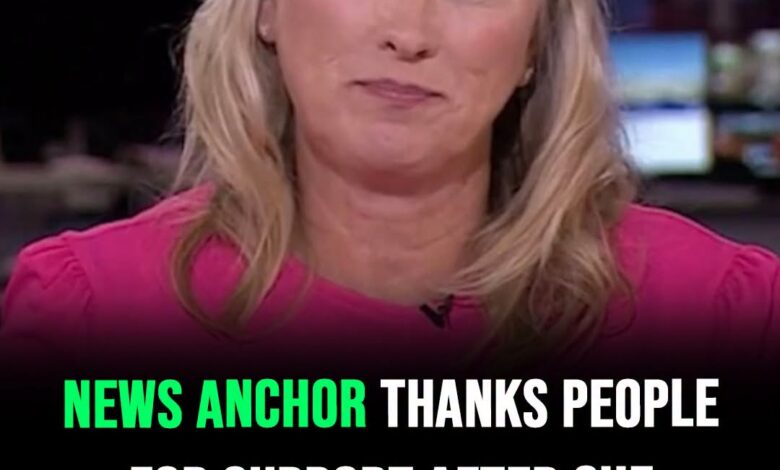
Croxall, a longtime BBC News anchor with more than three decades at the broadcaster, was reading from the autocue during a report about extreme heat in the United Kingdom.
The segment focused on groups considered especially vulnerable to heat-related illness.
Everything appeared routine.
Then Croxall reached a phrase on the teleprompter.
“Pregnant people.”
She began reading it.
Then stopped herself.
And replaced the final word.
“Women.”
The correction lasted only a second, but her expression afterward made the moment impossible to miss.
During the broadcast, Croxall said:
“Malcolm Mistry, who was involved in the research, says that the aged, pregnant people—women—and those with pre-existing health conditions need to take precautions.”
That tiny deviation from the script was enough to ignite a much larger argument.
Within hours, clips spread rapidly across social media.
Some viewers praised Croxall for changing the wording.
Others criticized the decision, arguing that a news presenter should read approved copy accurately rather than use a live broadcast to express a personal position.
And suddenly, one sentence about hot weather had become part of a much broader cultural debate about language, sex, gender identity, and journalistic neutrality.
British author J.K. Rowling was among the public figures who responded enthusiastically.
Posting on X, Rowling wrote:
“I have a new favourite BBC presenter.”
Her reaction brought even more attention to the clip.
The phrase “pregnant people” has increasingly appeared in healthcare, government, academic, and institutional language intended to include pregnant individuals who do not identify as women, including some transgender men and non-binary people.
Supporters of the term argue that it allows medical guidance to describe everyone who may become pregnant without excluding people whose gender identity differs from their biological sex.
Critics argue that replacing “pregnant women” with broader phrases can unnecessarily erase or obscure the reality that pregnancy is a female reproductive function.
That disagreement has become one small part of a much larger political and cultural conflict.
And Croxall’s choice placed her directly in the middle of it.
What made the moment especially notable was that it did not appear accidental.
She could have simply read the teleprompter.
Instead, she began with the written phrase and then deliberately changed it.
Her facial expression afterward was interpreted by many viewers as confirmation that she wanted the correction noticed.
That raised another question:
How much freedom should a news presenter have to change editorial language while broadcasting live?
Television anchors make small adjustments constantly.
They correct awkward wording.
Fix mistakes.
Shorten sentences.
Clarify confusing phrases.
Live broadcasting requires improvisation.
But when a presenter changes language connected to an intensely contested political or social issue, that change can carry meaning far beyond ordinary editing.
The presenter is no longer perceived merely as correcting grammar.
Viewers begin asking whether personal beliefs are entering the broadcast.
For Croxall, that concern was amplified by her previously expressed views.
She has publicly discussed questions surrounding sex and gender and has stated her belief that biological sex is binary and immutable.
That history meant viewers were unlikely to interpret the substitution as a random linguistic preference.
To supporters, her action represented common sense.
To critics, it represented an anchor inserting her ideology into BBC news copy.
Both reactions arrived almost immediately.
That is the reality of modern broadcasting.
A presenter can spend thirty years reading thousands of stories, interviewing guests, covering elections, wars, royal events, disasters, and breaking news.
Then a two-second facial expression becomes the clip millions of people discuss.
Social media has changed the scale of such moments completely.
Before platforms like X, TikTok, and YouTube, a slight deviation during a television bulletin might have been noticed by a relatively small audience and quickly forgotten.
Now viewers record screens.
Clips are isolated from full broadcasts.
Slow-motion reactions appear.
Captions are added.
People analyze eyebrow movements as though studying evidence.
Within hours, the presenter becomes the subject rather than the story.
Croxall appeared fully aware that this could happen.
After receiving a surge of attention and new followers, she posted a message thanking people who had supported her.
“A huge thank you to everyone who has chosen to follow me today for whatever reason,” she wrote.
“It’s been quite a ride…”
She also indicated that she understood the BBC might want to speak with her about what had happened.
That possibility highlighted another tension surrounding the incident.
The BBC has long faced intense scrutiny over impartiality.
Because it is one of the world’s most influential public broadcasters, relatively small editorial decisions can become politically charged.
Presenters are expected to maintain professional neutrality, particularly when covering subjects that divide audiences.
But neutrality becomes difficult when even individual words are politically contested.
Consider the dilemma.
If Croxall had read “pregnant people,” some viewers would have accused the BBC of adopting ideological language.
By replacing it with “women,” other viewers accused Croxall herself of making an ideological intervention.
Either choice becomes political once audiences interpret terminology through competing cultural frameworks.
That is why language debates can become so intense.
Words are rarely being argued about only as words.
They represent assumptions about identity, biology, inclusion, social change, and who has the authority to define categories.
For one side, “pregnant people” represents respectful inclusion.
For another, it represents the unnecessary replacement of clear biological language.
The argument therefore becomes almost impossible to resolve through vocabulary alone.
Each side believes something larger is at stake.
Croxall’s decision captured that conflict in miniature.
The subject she was reporting on was actually straightforward.
Extreme heat can be dangerous.
Older adults, pregnant women and other pregnant individuals, people with certain medical conditions, young children, and others may face increased health risks during periods of unusually high temperatures.
That public-health message was quickly overshadowed.
Instead of discussing heat precautions, much of the audience began discussing two words.
That may be the strangest consequence of the entire incident.
A report designed to communicate health information became a referendum on language.
And perhaps that reveals something about the current media environment.
Audiences no longer consume news only for information.
They watch closely for signals.
Which terms are used?
Which terms are avoided?
Who is described in what way?
Does the presenter hesitate?
Does an eyebrow move?
Did somebody alter the script?
Every linguistic choice can become evidence in a larger cultural argument.
For broadcasters, that creates an almost impossible environment.
Use one term and one group believes you’ve taken sides.
Use another and the opposite group reaches the same conclusion.
Even silence can be interpreted politically.
That doesn’t mean journalists should abandon standards of impartiality.
If anything, it makes those standards more important.
But it demonstrates how much harder maintaining public trust has become when language itself is contested.
Croxall’s supporters saw courage.
They believed she refused to repeat terminology she personally considered inaccurate.
Her critics saw something entirely different.
They believed a professional journalist had used a public news platform to override inclusive editorial language.
Between those positions lies a broader question about the role of individual broadcasters.
Should presenters merely deliver approved copy?
Should they have discretion to alter wording they consider inaccurate?
And where does ordinary editorial judgment become personal advocacy?
Those questions won’t be answered by one television clip.
But the clip explains why the debate became so large.
Croxall didn’t deliver a speech.
She didn’t launch into an argument.
She didn’t stop the program.
She changed one word.
Yet that single word touched an issue already carrying enormous social and political tension.
The reaction was therefore immediate.
Praise.
Anger.
Memes.
Support.
Criticism.
New followers.
Calls for consequences.
All from a moment that lasted seconds.
Whatever viewers think of Croxall’s decision, one thing is undeniable:
The incident demonstrated the extraordinary power language now holds in public life.
A television presenter can read hundreds of words without controversy.
Then one substitution becomes the only thing anyone remembers.
And perhaps that is why the clip continues to resonate.
It isn’t really about an autocue.
It isn’t even entirely about Martine Croxall.
It’s about a society increasingly divided over which words describe reality—and who gets to decide.
For Croxall, the choice was made in real time.
The teleprompter said one thing.
She said another.
And in that tiny gap between the script and the spoken word, an entire national argument rushed in.