My Child Woke Up Screaming With a Giant Eyelid Lump: A Parent’s Guide to Styes, Infections, and When to Seek Help

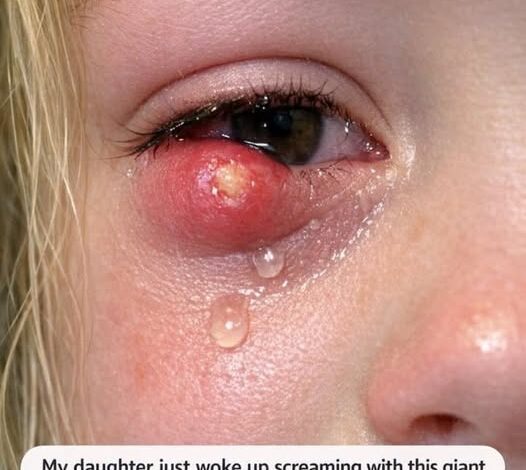
It can happen frighteningly fast.
Your child goes to bed with what looks like a tiny red bump near the eyelashes. By morning, the eyelid is swollen, puffy, and angry-looking—sometimes so dramatically that your first thought is:
Do we need to go to the emergency room?
That fear is understandable because swelling around a child’s eye can look far worse than the problem causing it.
Sometimes, the explanation really is something relatively minor, such as a stye.
A stye is a tender bump that develops when a gland around the eyelid becomes blocked or infected. It can resemble a small pimple near the eyelashes and may cause redness, soreness, tearing, and localized swelling.
And because eyelid tissue is loose and delicate, even a small area of inflammation can produce surprisingly noticeable puffiness.
For an uncomplicated stye, gentle home care is often reasonable.
A clean, comfortably warm compress held against the closed eyelid for several minutes at a time can encourage natural drainage. The area should be kept clean, and children should be discouraged from rubbing or squeezing the bump.
Trying to pop a stye is especially important to avoid.
But here’s where parents need to pay close attention:
Not every swollen eyelid is simply a stye.
Infections can sometimes involve the tissues surrounding the eye, and those situations may require prompt medical treatment.
The challenge is that early symptoms can initially look similar.
That’s why the appearance of the bump isn’t the only thing that matters.
Watch the child.
Watch the swelling.
And most importantly, watch for changes.
If the redness and swelling are rapidly spreading rather than remaining concentrated around a small bump, that’s a reason to seek medical advice.
Fever is another important warning sign, particularly when it occurs alongside significant redness, warmth, tenderness, or worsening swelling.
Severe pain deserves attention too.
And certain symptoms should never become a “we’ll see how it looks tomorrow” situation.
If your child has difficulty seeing, reports new vision changes, cannot comfortably open or move the eye, develops significant pain with eye movement, seems unusually ill, or has rapidly worsening swelling around the eye, seek urgent medical evaluation.
Those symptoms can indicate something more serious than an ordinary stye.
The same is true if the eye appears to bulge forward or the child develops severe headache, vomiting, confusion, or unusual drowsiness alongside the eye symptoms.
At that point, home remedies aren’t the answer.
A medical professional needs to determine what is happening.
That doesn’t mean every swollen eyelid should send a family racing to the emergency department.
It means parents shouldn’t have to diagnose the problem based on appearance alone.
There’s an enormous difference between a child who is happily eating breakfast with a small tender eyelid bump and a child with fever, escalating pain, spreading redness, or changes in vision.
Context matters.
So does progression.
Take a picture when you first notice the swelling. It can make it easier to determine whether the redness or puffiness is actually spreading over the next several hours.
Pay attention to temperature and behavior.
Ask whether the child can see normally.
Notice whether moving the eyes hurts.
And if something doesn’t seem right, call your pediatrician or seek appropriate urgent care.
Because one of the easiest mistakes to make is assuming that something must be harmless simply because it started small.
Most childhood eyelid bumps will not become medical emergencies.
But the area around the eye deserves particular respect.
Vision is precious, infections can occasionally progress, and young children aren’t always able to describe exactly what they’re experiencing.
The goal isn’t panic.
It’s knowing when ordinary care stops being enough.
A small, localized stye in an otherwise well child may improve with warmth, cleanliness, and time.
But fever, rapidly worsening or spreading swelling, severe pain, difficulty moving or opening the eye, or any change in vision deserves prompt professional attention.
When you’re uncertain, getting medical advice isn’t an overreaction.
It’s how you replace frightening guesswork with an informed decision.
Sometimes the answer will be reassuringly simple:
“It’s just a stye.”
And when it isn’t, you’ll be glad you didn’t wait for an alarming problem to become an even bigger one.