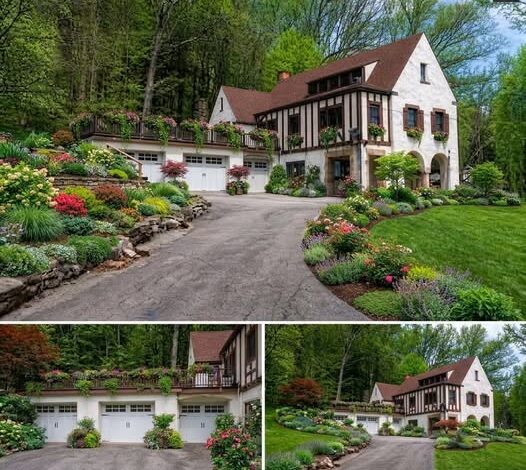
The first thing you notice isn’t the house.
It’s the quiet.
Not complete silence, but the kind of quiet that has texture to it—the wind moving across open ground, birds somewhere beyond the yard, perhaps the distant sound of a vehicle passing before disappearing again.
Then you look toward the house and begin imagining what living here might actually feel like.
Not visiting.
Not touring.
Living.
Morning starts differently when the first thing outside your window isn’t another building or a line of traffic.
You wake, make coffee, and stand for a moment looking across the fields.
There’s nowhere you need to rush within those first few minutes.
The day can wait.
That’s part of what makes this Clearfield property compelling.
It doesn’t demand attention with extravagance.
It offers something increasingly difficult to find:
room.
Room inside.
Room outside.
And perhaps most importantly, room for life to change.
Walk through the front door and the possibilities begin almost immediately.
The layout doesn’t insist that every space have only one purpose.
That’s important because real homes rarely stay exactly as they were when we bought them.
Families change.
Jobs change.
Children grow.
Parents visit.
Hobbies expand.
Suddenly the room that once seemed unnecessary becomes the most valuable space in the house.
Maybe one area becomes a home office.
Not a laptop balanced on the kitchen table, but an actual place where work can begin and, just as importantly, end.
Close the door.
Leave the emails behind it.
Return to your family.
Another space could become a guest room.
Or a playroom.
A reading room.
A place for crafts, music, exercise, or whatever interest you’ve been promising yourself you’ll eventually make room for.
That’s the advantage of flexibility.
You’re not buying a house designed around one frozen version of your life.
You’re buying possibilities.
Imagine a typical weekday.
Someone is working quietly in one room.
Someone else is preparing dinner.
Children, if they’re part of the picture, have somewhere to spread out without turning every shared space into permanent storage.
A guest can visit without everyone feeling displaced.
Life can happen simultaneously without everybody being stacked on top of one another.
That’s what square footage and separate spaces really provide.
Not bragging rights.
Breathing room.
And then there is the land.
Step outside and the personality of the property changes again.
A generous lot is easy to describe in measurements.
It’s more interesting to imagine in seasons.
Spring might begin with deciding where the garden should go.
At first, perhaps it’s modest.
Tomatoes.
Peppers.
Herbs.
A few rows planted with more optimism than expertise.
Then summer arrives.
The yard becomes an extension of the house.
Dinner outside.
Bare feet in the grass.
A chair positioned exactly where the evening light is best.
Maybe there’s a fire pit someday.
Maybe raised garden beds.
Maybe nothing at all.
There is value in leaving open land open.
Children can run.
Dogs can explore.
Adults can rediscover the surprisingly restorative experience of sitting somewhere without needing to accomplish anything.
Then a storm begins building in the distance.
In town, weather often arrives between buildings.
Here, you can watch it approach.
Clouds gather across the horizon.
The light changes.
Wind moves through the grass.
For a few minutes, the landscape becomes its own entertainment.
Nobody needs a screen.
Nobody needs tickets.
You simply watch.
Autumn brings another version of the property.
Cool mornings.
Longer shadows.
The satisfaction of coming inside to warmth after spending time outdoors.
Winter simplifies everything again.
The fields become quieter.
The house feels more protective.
That is when practical features stop sounding boring and start becoming the things you appreciate most.
A home ultimately has to function.
Beautiful photographs might get someone through the door, but dependable everyday comfort is what makes them stay.
The best houses understand that.
They don’t require constant performance.
They work.
You learn where the afternoon light lands.
Which window becomes your favorite.
Where everyone naturally leaves their shoes.
Which corner the dog claims.
Which room somehow becomes the place where the longest conversations happen.
Slowly, a property stops being something you purchased and starts becoming something you know.
There may be things you’d change.
That’s part of the appeal.
A home doesn’t need to arrive as somebody else’s finished masterpiece.
Sometimes “perfect” is surprisingly restrictive.
Every expensive choice has already been made.
Every room announces how it expects to be used.
You begin feeling as though you’re living inside someone else’s taste.
Potential is different.
Potential gives you permission.
Paint that wall.
Change the flooring someday.
Turn that room into an office.
Build shelves.
Plant trees.
Create the garden.
Add the patio you’ve always wanted.
Do some things immediately.
Leave others for later.
A house becomes personal through layers.
The first year, you learn it.
The second, you adjust it.
Eventually you stop remembering exactly what it looked like before your life moved in.
That transformation is where ownership becomes meaningful.
And there is another kind of space this Clearfield setting offers that doesn’t appear on a floor plan.
Mental space.
Modern life is remarkably good at filling every available second.
Notifications.
Traffic.
Schedules.
Noise.
Appointments.
Messages.
Another thing requiring attention.
Living somewhere with more openness doesn’t magically remove responsibility.
Bills still arrive.
Work still gets stressful.
Laundry remains stubbornly committed to existing.
But surroundings influence rhythm.
Looking across an open field can make a five-minute cup of coffee feel like an actual break.
Walking outside after dinner can become something you look forward to rather than another task.
A quiet evening can stop feeling empty.
It can feel complete.
Perhaps that’s the kind of buyer who will understand this house immediately.
Not someone searching for perfection.
Someone searching for a place where they can build toward it.
Maybe it’s a family wanting more space.
Maybe it’s someone tired of dense neighborhoods and constant movement.
Maybe it’s a remote worker who has realized that if home is also going to be the office, home needs enough room for both identities.
Maybe it’s someone entering a quieter stage of life.
Or someone beginning a louder one.
The property doesn’t need to know yet.
That’s what flexibility means.
The house adapts.
Years pass.
The office could become a nursery.
The playroom could eventually become an office again.
A child’s bedroom could become a guest room after college.
The vegetable garden might become flowers.
Or grow larger every year until neighbors start receiving bags of tomatoes they never requested.
Life rearranges itself.
A good home leaves enough room for that rearrangement.
There will also be days when none of these possibilities feel poetic.
You’ll wake late.
Coffee will spill.
Something will break.
Work will be frustrating.
Dinner will be whatever can be assembled fastest.
Nobody will admire the view.
Nobody will sit peacefully watching the sunset.
That’s real life too.
And perhaps that’s the best test of a house.
Not whether it makes extraordinary days look beautiful.
Whether it makes ordinary days easier to live.
A place for groceries.
A place for muddy shoes.
A place to close a door and concentrate.
A place to gather.
A place to be alone.
A yard where you can step outside when the walls feel too close.
Windows that remind you there’s a world beyond whatever problem currently feels enormous.
Those things don’t photograph as dramatically as designer finishes.
They matter longer.
One evening, perhaps months after moving in, you might find yourself outside after everyone else has gone indoors.
The sun is dropping.
Something you planted is finally growing.
The house behind you has lights glowing through the windows.
There are projects you haven’t finished.
A room still needs painting.
Something in the yard isn’t quite where you want it.
Maybe the furniture doesn’t all match.
It doesn’t matter.
Because suddenly the place no longer feels like a listing.
It feels like yours.
That moment is difficult to manufacture.
It doesn’t come from staging.
It comes from repetition.
The same driveway.
The same morning window.
The same view changing through four seasons.
Birthdays.
Weekends.
Quiet Tuesdays.
Visitors arriving.
Visitors leaving.
A thousand dinners nobody photographs.
That’s how houses become homes.
Slowly.
Almost invisibly.
This Clearfield property doesn’t need to promise a flawless life.
No house can.
What it offers is more grounded than that.
Space to create routines that feel like your own.
Flexibility for whatever comes next.
Land that gives you reasons to step outside.
Practical comfort while you decide what you’d like to change.
And enough quiet to occasionally hear yourself think.
Maybe you’ll plant the garden.
Maybe you’ll build the perfect workspace.
Maybe you’ll fill the house with family.
Maybe you’ll simply sit beside that window every morning with coffee and watch the fields wake up.
The point isn’t deciding everything before you arrive.
The point is having enough room to decide later.
Because the right home isn’t always the one that impresses you most during the first five minutes.
Sometimes it’s the one that makes you imagine the five thousand ordinary mornings that could follow.
Coffee brewing.
Light through the window.
Wind crossing the field.
Someone you love moving through another room.
Nothing spectacular happening.
Nothing needing to.
Just another day beginning in a place that finally feels settled.
And sometimes, that’s exactly what home is supposed to be.