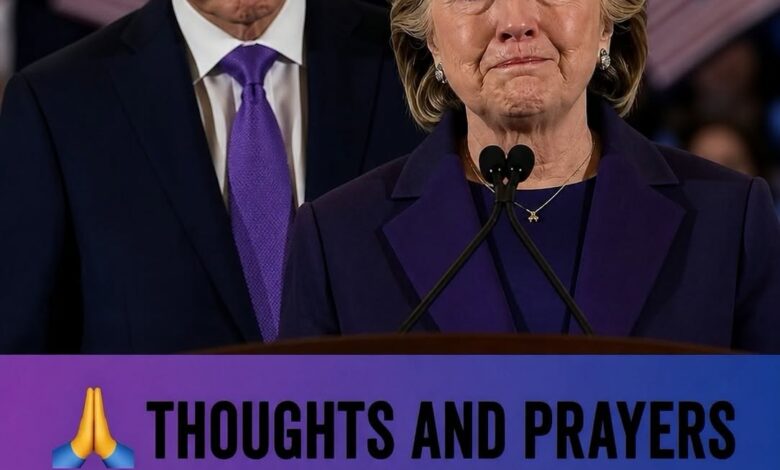
The confrontation was bigger than two famous names.
Bill Clinton had occupied the Oval Office.
Hillary Clinton had served as secretary of state, represented New York in the Senate, and become the Democratic Party’s presidential nominee.
Now their names were being pulled into another arena entirely: the long-running congressional effort to examine questions surrounding Jeffrey Epstein and Ghislaine Maxwell.
And the dispute was rapidly becoming less about celebrity connections and more about something Washington has fought over for generations.
How far can Congress go when it demands answers?
And what happens when the person receiving the demand refuses?
Those questions matter because a congressional subpoena is not simply an invitation.
Congress has investigative authority, and committees can seek testimony and documents as part of legitimate legislative and oversight work. When a subpoenaed witness refuses to comply, lawmakers have mechanisms for escalating the conflict—including contempt proceedings.
But that doesn’t mean every subpoena automatically produces testimony.
Nor does a contempt vote automatically put someone in prison.
That distinction often disappears once politics enters the headline.
The Clinton dispute became combustible because it combined three subjects almost guaranteed to generate attention: the Clintons, Epstein, and the possibility of criminal consequences.
Each comes with decades of political baggage.
Put them together and nuance becomes difficult to preserve.
Republicans pushing the investigation portrayed compliance as a straightforward matter of accountability.
Their argument was powerful in its simplicity:
No former president should be above congressional oversight.
No former secretary of state should receive special treatment.
If Congress has legitimate questions relevant to an authorized investigation, fame and political influence shouldn’t create immunity from answering them.
Critics, however, raised a different concern.
Congressional investigations can serve legitimate legislative purposes while also becoming political theater. When the targets are among the most polarizing figures in American politics, questions about motive, scope and relevance inevitably follow.
That doesn’t make a subpoena invalid.
But it does mean the public should distinguish between several very different things:
Being asked questions about Epstein is not the same as being accused of participating in Epstein’s crimes.
Knowing or encountering someone is not proof of criminal conduct.
Refusing, resisting, negotiating or legally challenging a subpoena does not by itself establish guilt regarding the underlying subject being investigated.
Those distinctions are essential.
Epstein’s crimes were horrific, and the public interest in understanding the network around him is understandable.
Precisely because the subject is so serious, however, insinuation should never replace evidence.
Then came the word that transformed the dispute into a national spectacle:
Contempt.
“Contempt of Congress” sounds almost theatrical, but it refers to Congress’s efforts to enforce its investigative authority when it believes someone has improperly refused to cooperate.
A committee can move toward holding a witness in contempt, followed by further action in the House or Senate depending on the circumstances.
What happens after that is more complicated.
A congressional contempt action and a successful criminal prosecution are not the same event.
The executive branch has its own role.
Prosecutors make decisions.
Legal defenses can arise.
Courts may become involved.
And politics can collide with prosecutorial discretion in ways that make the final outcome much less predictable than the original headline suggests.
That was the significance of comments attributed to former federal prosecutor Joe diGenova about the difficulty of obtaining an indictment from a Washington, D.C., grand jury.
His observation pointed toward a reality frequently lost in political coverage:
A congressional vote can be dramatic.
A prosecution requires another process.
The comparison to Steve Bannon inevitably surfaced because his case demonstrated that congressional contempt can have serious consequences.
Bannon was convicted in 2022 on two criminal contempt of Congress counts after refusing to comply with a subpoena from the House committee investigating January 6. He was ultimately imprisoned after years of litigation.
But invoking Bannon’s name doesn’t automatically determine how another contempt dispute would end.
Different witnesses can raise different facts, communications, defenses and legal arguments.
Legal outcomes aren’t produced by analogy alone.
That’s why the Clinton controversy should be examined through documents and chronology rather than partisan expectation.
What exactly did Congress request?
When were subpoenas issued?
What deadlines applied?
What responses did attorneys provide?
Were alternative arrangements proposed?
What justification did the committee give for requiring testimony?
What legal objections were raised?
Did the committee accommodate any of them?
Those questions are less exciting than predictions of handcuffs and prison cells.
They’re also far more useful.
The larger constitutional issue is important regardless of whether someone admires or despises the Clintons.
Congress’s investigative power would mean little if influential witnesses could simply ignore legitimate subpoenas.
At the same time, congressional power isn’t unlimited merely because lawmakers invoke oversight.
The system depends on tension among branches and institutions.
Congress investigates.
Witnesses can assert legal rights.
Lawyers negotiate or challenge demands.
The Justice Department evaluates potential prosecutions.
Courts resolve certain disputes.
That friction can look dysfunctional.
Sometimes it is.
But some of it is intentional.
American government was not designed around the assumption that powerful institutions would always agree.
The Epstein dimension makes careful thinking even more important.
For years, Epstein’s relationships with wealthy, politically connected and socially prominent people have fueled enormous public suspicion.
Some questions are legitimate.
Some claims are documented.
Others are speculative.
And online, the boundaries between those categories frequently disappear.
A photograph becomes “proof.”
An acquaintance becomes an accomplice.
A name in a document becomes a conviction.
A refusal to answer one question becomes evidence of an entirely different accusation.
That’s not how evidence works.
If congressional investigators possess relevant information concerning Bill or Hillary Clinton, the public interest is best served by establishing precisely what that information demonstrates.
If investigators want testimony, they should explain its legislative relevance as clearly as the law and investigative process permit.
If the Clintons object, their legal reasoning should likewise be evaluated on its merits.
Then the evidence—not political allegiance—should determine what conclusions are justified.
That principle should apply universally.
Bill Clinton.
Hillary Clinton.
Steve Bannon.
Democrats.
Republicans.
Former presidents.
Cabinet officials.
Political advisers.
Billionaires.
Nobody should receive automatic innocence because people like them.
Nobody should receive automatic guilt because people hate them.
Accountability requires a harder standard.
Evidence.
The political consequences, meanwhile, can arrive long before any legal resolution.
A contempt vote itself creates a powerful public image.
It places an official congressional accusation into the historical record and provides both supporters and opponents with material they can use for years.
Republicans can argue that they pursued testimony despite the stature of the witnesses.
Democrats can argue, depending on the evidence and procedure, that congressional power was being used for partisan purposes.
Each side can fundraise.
Each side can produce television appearances.
Each side can accuse the other of hypocrisy.
And the underlying question risks disappearing beneath the political machinery.
What did investigators actually need to know?
That is the question worth protecting.
Because the Epstein story has already accumulated enough rumor to last generations.
Victims deserve better than having documented abuse buried beneath partisan spectacle.
The public deserves better than suggestive headlines that transform unanswered questions into presumed guilt.
And Congress, if it is exercising legitimate oversight, strengthens its case by showing exactly why the testimony it seeks matters.
Perhaps that’s the most consequential part of the confrontation.
The dispute tests more than the Clintons.
It tests whether Americans still believe rules governing powerful people should remain consistent when political identities change.
It’s easy to defend congressional authority when Congress is pursuing someone you distrust.
It’s easy to suddenly discover concerns about government overreach when the subpoena lands on someone you support.
Principles become meaningful only when they survive that reversal.
If Congress lawfully requires testimony, political stature alone shouldn’t provide an escape hatch.
If witnesses possess legitimate constitutional or legal objections, political unpopularity shouldn’t erase those rights either.
And if prosecutors are eventually asked to act, the decision should depend on law and evidence rather than demands from either political camp.
The eventual legal outcome may be dramatic.
Or it may be far less explosive than the headlines suggest.
But one consequence is already clear.
The Epstein investigation has once again collided with the highest levels of American political history, ensuring that every subpoena, objection and congressional maneuver will be scrutinized through decades of partisan distrust.
That makes restraint more important, not less.
Ask the questions.
Enforce legitimate authority.
Examine the documents.
Test the legal arguments.
Follow the evidence wherever it leads.
But don’t convert unanswered questions into answers simply because the names involved make doing so irresistible.
Because contempt of Congress can be a serious matter.
So can abuse of congressional power.
And allegations connected to Jeffrey Epstein are far too grave to be decided by whichever political narrative produces the loudest headline.