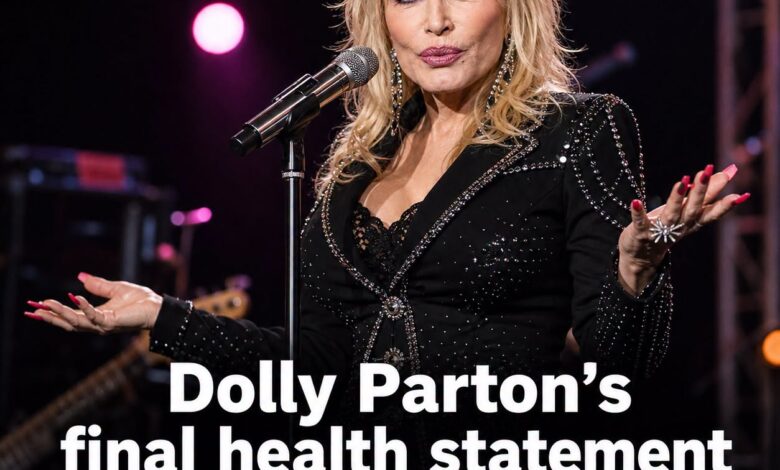
For decades, Dolly Parton could turn almost any heartbreak into a song.
She could take poverty and make it beautiful.
Take betrayal and make it funny.
Take loneliness and give it a melody millions of people could sing along with.
But the most difficult love story of her life was never performed beneath stage lights.
It unfolded quietly, behind closed doors, beside the man who had spent nearly sixty years deliberately avoiding them.
Carl Dean had always been the mystery standing beside one of the most recognizable women in the world.
Dolly glittered.
Carl disappeared.
She walked red carpets, posed for cameras, performed before enormous crowds, and built an entertainment empire around a personality impossible to ignore.
He preferred home.
That contrast became part of their mythology.
People sometimes struggled to understand how one of the world’s most public women could remain married to such a private man.
Dolly seemed amused by the question.
Their marriage didn’t need an audience.
Perhaps that was precisely why it lasted.
She could belong to millions of fans for an evening.
At home, she belonged to Carl.
And Carl belonged to her.
As the years accumulated, however, their marriage reportedly entered a chapter no love song could make easy.
Carl’s health declined.
The strong, fiercely independent man Dolly had protected from celebrity attention for decades increasingly needed protection of another kind.
Alzheimer’s disease changes far more than memory.
It can slowly rearrange a marriage.
The person you have known for decades may become confused.
Familiar routines can disappear.
Conversations change.
Independence shrinks.
The relationship between husband and wife can gradually include another role neither person ever expected:
Caregiver.
For Dolly, stepping into that role would have been entirely consistent with the way she had always approached the people she loved.
When someone needed her, she showed up.
The problem was that her own body was beginning to demand attention too.
There were appointments she should have kept.
Symptoms she could no longer dismiss.
Rest she needed but resisted.
Yet when the choice seemed to be between caring for herself and remaining beside Carl, she reportedly kept choosing him.
One more day.
One more appointment postponed.
One more night spent worrying about someone else’s condition instead of her own.
It is easy to romanticize sacrifice from the outside.
We call it devotion.
Loyalty.
True love.
And sometimes it is all those things.
But caregiving also has a cost.
Exhaustion doesn’t disappear because your intentions are noble.
Stress doesn’t politely leave your body alone because the person you’re caring for is your husband.
Eventually, the body begins collecting every postponed need.
And Dolly, for all the mythology surrounding her, was still human.
The public began noticing changes not through some dramatic announcement, but through absences.
Appearances shifted.
Plans changed.
Cancellations accumulated.
For someone whose professional identity had been built partly on extraordinary reliability, each change invited questions.
Was Dolly all right?
Was something seriously wrong?
Why wasn’t she appearing where people expected her?
For most of her career, Dolly had mastered the art of revealing herself while still keeping enormous portions of her private life protected.
She could tell an interviewer a hilarious personal story and somehow leave the things that truly mattered untouched.
That skill had helped preserve her marriage.
Carl didn’t become a supporting character in the Dolly Parton show.
He remained Carl.
So when Dolly finally addressed her own health publicly, she did what she had always done when life became frightening.
She made it easier for everyone else.
There she was in Nashville, rather than making the expected trip to Dollywood, dressed with the unmistakable theatricality fans associated with her.
Pink.
Sparkle.
Fairy wings.
Rhinestones.
If the circumstances were worrying, Dolly seemed determined not to let worry have the final word.
She joked about her wings being clipped.
She talked about dehydration.
She reassured people.
She insisted that what she was dealing with was treatable.
It was classic Dolly.
Give people enough truth that they don’t feel deceived.
Then wrap the truth in humor so they don’t have to carry all of its weight.
But humor can only disguise so much.
Behind the jokes was a woman acknowledging something she had spent much of her life refusing to admit:
She couldn’t do everything.
Not indefinitely.
The same person who had built an almost superhuman reputation for productivity was being forced to obey limitations she hadn’t chosen.
That may have been one of the hardest adjustments of all.
Dolly had always worked.
Not merely performed.
Worked.
Songs.
Recording sessions.
Business meetings.
Movies.
Television.
Dollywood.
Philanthropy.
Books.
Costumes.
Appearances.
Projects seemingly arriving faster than most people could keep track of them.
Work wasn’t simply something she did.
It was part of the rhythm of her existence.
So even while discussing her health, she kept returning to the same reassurance.
She was still working.
Still writing.
Still involved.
Still planning.
Still Dolly.
The message underneath seemed almost more important than the medical update:
Don’t count me out.
That determination had carried her from the Smoky Mountains to places her childhood self could scarcely have imagined.
Dolly Rebecca Parton had grown up one of twelve children in rural Tennessee, in circumstances she would later describe with affection without pretending poverty was easy.
She understood scarcity.
She understood what it meant to dream from a place where dreams seemed financially absurd.
Then came Nashville.
Songs.
Rejection.
Porter Wagoner.
Success.
Conflict.
Independence.
“Jolene.”
“I Will Always Love You.”
“9 to 5.”
Decade after decade, she transformed herself without losing the exaggerated blonde silhouette that made people assume they understood her before she opened her mouth.
They rarely did.
Behind the wigs and jokes was a formidable songwriter and businesswoman.
Behind the rhinestones was discipline.
Behind the deliberately exaggerated image was someone who understood exactly how the entertainment industry worked and how she intended to survive it.
And behind all of that was Carl.
He wasn’t the public romance.
That was the point.
Their relationship existed in a space fame couldn’t fully consume.
When they married in 1966, neither could have known what Dolly’s career would become.
Carl certainly could not have known that his wife would eventually become one of the most recognizable entertainers on Earth.
Yet as her fame expanded, he resisted being absorbed into it.
Dolly protected that resistance.
She told stories about him.
She joked about him.
She occasionally allowed fans a glimpse.
But she did not require him to become famous simply because she was.
That may have been one of the greatest gifts they gave each other.
He allowed her to become Dolly Parton.
She allowed him to remain Carl Dean.
Then age changed the arrangement.
Privacy stopped being merely a preference and became protection.
The outside world didn’t need access to every difficult day.
It didn’t need photographs of vulnerability.
It didn’t need intimate details simply because people were curious.
So much of caregiving happens that way.
Quietly.
A spouse repeating an answer.
Helping with something that used to require no help.
Watching carefully.
Sleeping lightly.
Managing medication.
Listening for movement.
Pretending not to be frightened.
Remembering for two people.
There is nothing glamorous about it.
No rhinestones can make it easy.
And perhaps that is why the image of Dolly the caregiver feels so different from Dolly the star.
The woman famous for giving audiences joy was confronting a situation she could not entertain away.
She couldn’t write Carl out of Alzheimer’s.
Couldn’t negotiate with it.
Couldn’t charm it.
Couldn’t buy enough success to defeat it.
She could only stay beside him.
And staying became its own kind of performance—except there was no applause.
Carl’s death closed a chapter of Dolly’s life that had existed longer than nearly every professional identity the public associated with her.
You don’t spend almost six decades with someone and simply return to the person you were before them.
There is no “before” left to return to.
The routines remain after the person doesn’t.
The silence changes shape.
A house becomes full of evidence.
An empty chair.
A familiar object.
A room carrying someone’s habits even after they’re gone.
For Dolly, grief arrived alongside her own health concerns and the expectations of an audience accustomed to seeing her indestructible.
That is an impossible role for anyone to maintain.
Eventually, even icons need permission to be tired.
Yet Dolly’s instinct remained reassurance.
She wanted fans to know she was being cared for.
That treatment existed.
That work continued.
That the woman they loved hadn’t vanished simply because she needed to slow down.
There is something deeply revealing in that.
Dolly spent a lifetime caring about how other people felt.
Her philanthropy demonstrated it in ways far more substantial than celebrity gestures.
Her Imagination Library put books into the hands of children.
Her charitable work reached communities that might never attend one of her concerts.
Again and again, she used fame not merely as a spotlight but as infrastructure for giving.
So perhaps nobody should have been surprised that, even when discussing her own vulnerability, she seemed concerned with comforting everyone else.
That’s beautiful.
It’s also heartbreaking.
Because the person constantly reassuring everyone eventually needs someone to say:
You don’t have to make this easier for us.
You can simply be tired.
You can hurt.
You can grieve.
You can stop smiling for a moment.
You can be human.
There is a danger in turning Dolly’s devotion to Carl into a lesson that people should ignore their own health for someone they love.
They shouldn’t.
Caregivers need care too.
Missing medical attention isn’t proof that love is deeper.
Destroying yourself doesn’t save the person you’re trying to protect.
If anything, Dolly’s difficult final years offer a more complicated lesson.
Love can make us extraordinarily strong.
It can also convince us that strength means never stepping away.
Sometimes it takes the body itself to finally say:
Enough.
Rest.
Let someone care for you now.
That may have been the hardest role Dolly ever had to accept.
Not giver.
Receiver.
Not caretaker.
Patient.
Not the woman reassuring everyone else.
The woman being reassured.
And yet, even through that vulnerability, the image remained unmistakably hers.
Fairy wings.
Pink rhinestones.
A joke.
A promise.
A little sparkle positioned between the audience and whatever fear she was carrying privately.
That wasn’t necessarily denial.
It was the language Dolly had used her entire life.
When poverty hurt, she made songs.
When people underestimated her, she made jokes.
When heartbreak arrived, she found a melody.
When age and illness began closing doors, she put on wings.
That is why reducing Dolly Parton’s legacy to records sold, awards collected, or decades survived in entertainment misses something essential.
Her greatest achievement may have been the way she repeatedly converted hardship into something other people could use.
A song.
A laugh.
A book.
A job.
A scholarship.
A memory.
Hope.
Carl received something different.
He received the part that wasn’t designed for us.
The private Dolly.
The wife.
The woman who came home after the makeup came off and the crowds disappeared.
The person who reportedly stayed beside him when memory began slipping away and loving him became more demanding than any performance.
If both Dolly and Carl are gone, that private world goes with them.
There are conversations nobody will hear.
Ordinary evenings nobody photographed.
Arguments nobody documented.
Inside jokes no biography can reconstruct.
Moments of caregiving that will never become headlines.
Perhaps that’s appropriate.
Some love stories become more meaningful because portions of them remain inaccessible.
Dolly gave the world an extraordinary amount of herself.
Carl was allowed to keep something for himself.
And when his world became smaller, she reportedly made hers smaller too.
Not forever.
Not perfectly.
And perhaps not without consequences.
But willingly.
For a woman whose career was defined by standing beneath enormous lights, one of her most profound acts of devotion happened where almost nobody could see it.
Beside a husband who no longer needed the star.
Only the woman.
The glitter eventually fades.
Stages go dark.
Costumes are packed away.
Charts move on.
Even the loudest applause eventually becomes silence.
But love leaves quieter evidence.
A chair pulled close to a bed.
An appointment postponed because someone needed you.
A hand held when words became difficult.
A familiar voice continuing to speak even when memory could no longer reliably answer.
That may be the final image worth keeping.
Not Dolly Parton beneath the spotlight.
Not the rhinestones.
Not even the fairy wings.
Just Dolly beside Carl, after the audience had gone home.
Because perhaps the last great love song of her life was never written down.
She lived it.