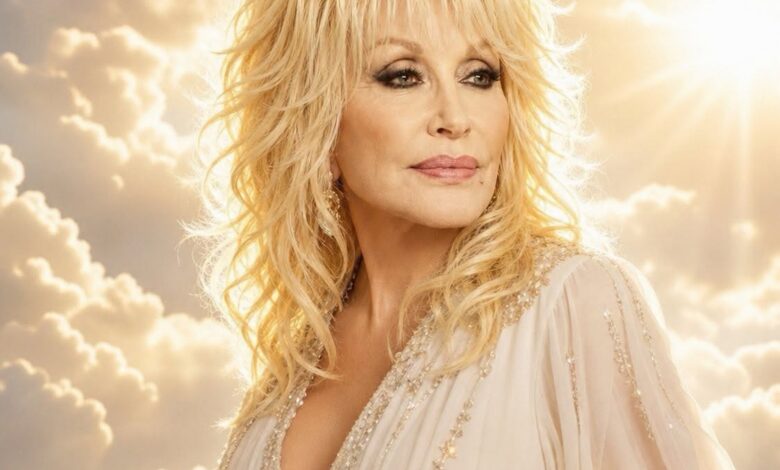
The strangest thing about losing Dolly Parton is imagining a world in which she is no longer somewhere in it.
For more than six decades, she seemed permanent.
Presidents came and went. Musical styles exploded, disappeared, and returned as nostalgia. Vinyl surrendered to cassettes, cassettes to CDs, CDs to streaming. Generations grew up, grew old, and introduced their children to the songs their parents had once played for them.
And through all of it, there was Dolly.
The enormous blonde hair.
The rhinestones.
The impossible heels.
The quick laugh.
The unmistakable Tennessee voice that could turn from mischievous conversation into heartbreak within a single breath.
Now, with Dolly Parton’s death at 80, American culture has lost something more complicated than a country singer.
It has lost one of its great storytellers.
Her songs were never merely songs.
They were little rooms people could enter when life became difficult.
If your heart was broken, Dolly had been there.
If you were poor, she understood.
If someone underestimated you, she knew the feeling.
If you loved someone enough to let them go, she had words for that too.
And if you were exhausted from working all day for somebody who barely noticed you, she could turn your frustration into an anthem you could sing on the drive home.
That was her extraordinary gift.
She made deeply personal emotions feel communal.
Consider “I Will Always Love You.”
The title sounds like the beginning of a conventional romantic declaration.
Instead, Dolly wrote something far more mature and painful: a goodbye in which love survives even though the relationship cannot.
There is no villain required.
No revenge.
No demand that the other person suffer.
Just gratitude, grief, tenderness, and the courage to walk away.
Years later, Whitney Houston would transform the song into one of the most famous vocal performances in popular music history.
But underneath that monumental voice remained Dolly’s deceptively simple idea:
Sometimes loving someone and leaving them can both be true.
That emotional intelligence ran throughout her songwriting.
“Jolene” could easily have been written as an attack on another woman.
Dolly did something more vulnerable.
She begged.
The narrator recognizes Jolene’s beauty, acknowledges her power, and admits fear.
There is jealousy, certainly, but also admiration.
The woman supposedly threatening the relationship isn’t reduced to a cartoon villain.
She’s almost mythological.
That complexity helped make a song built from a few chords and one woman’s name virtually immortal.
Then there was “Coat of Many Colors.”
Here was Dolly at perhaps her purest.
A child grows up poor.
Her mother makes her a coat from scraps.
Other children laugh.
But the coat is precious because it was made with love.
In less capable hands, the story could have become sentimental.
Dolly made it universal.
Anyone who ever owned something worthless to the world but priceless to them understood.
Anyone who had ever been embarrassed by poverty understood.
Anyone whose mother tried to make something beautiful out of almost nothing understood.
That wasn’t songwriting learned in a boardroom.
It came from experience.
Dolly Rebecca Parton was born in rural Tennessee in 1946, one of twelve children in a family with very little money.
She never romanticized poverty enough to pretend deprivation was pleasant.
But neither did she treat her childhood as something shameful that success required her to erase.
She carried the Smoky Mountains with her.
The church music.
The family stories.
The language.
The humor.
The people.
Even after she became rich enough to inhabit a world almost unimaginably different from the one in which she’d been raised, she kept returning to where she came from.
That mattered.
Because Dolly’s persona contained a contradiction people found irresistible.
Everything about her appearance screamed artificiality.
The hair.
The makeup.
The nails.
The clothes.
She made no attempt to pretend otherwise.
She joked openly about cosmetic procedures and constructed glamour.
Yet somehow, beneath all that deliberate artificiality, she became famous for seeming remarkably authentic.
Dolly understood the joke before anyone else could make it.
That made it difficult to use against her.
People could underestimate her because of how she looked.
Many did.
Then she would start talking business.
Or songwriting.
Or publishing rights.
Or philanthropy.
And suddenly the supposedly frivolous blonde in rhinestones was several moves ahead.
Her career required that intelligence.
The entertainment industry has swallowed countless talented people.
Dolly survived it for decades without surrendering ownership of herself.
She knew when to collaborate.
She knew when to leave.
She understood the value of her songs.
And she understood that being kind did not require being naive.
That combination—warmth without foolishness—became one of her defining qualities.
By the time “9 to 5” arrived, Dolly had moved far beyond the boundaries of traditional country music.
The song was playful, infectious, and angry.
Workers recognized themselves in it immediately.
The alarm clock.
The commute.
The boss taking credit.
The feeling of giving your life to a system that barely notices you.
Dolly transformed workplace frustration into something joyful enough to dance to.
That was another trick she mastered:
She could smuggle pain inside entertainment.
You might start tapping your foot before realizing how much sadness, anger, or longing was hiding in the lyrics.
Yet if Dolly’s legacy ended with music, it would already be extraordinary.
It doesn’t.
Perhaps no project better explains the woman she wanted to be remembered as than the Imagination Library.
The idea was beautifully straightforward: give children books.
Not glamorous.
Not designed around celebrity access.
Not a charity requiring children to know or care who Dolly Parton was.
Just books arriving in homes.
Again and again.
The inspiration was deeply personal.
Dolly’s father, Lee Parton, had not learned to read and write, something she said caused him embarrassment throughout his life.
His daughter responded not with pity, but with infrastructure.
She created a program capable of placing books directly into children’s hands.
What began locally grew dramatically.
Millions of books eventually reached children through the program.
Think about what that actually means.
Somewhere, a child opened a package with their name on it.
Inside was a book.
Perhaps somebody read it to them before bed.
Perhaps they eventually learned to read it themselves.
Perhaps that book became the first object they truly considered their own.
Dolly wasn’t standing in the room.
There were no cameras.
No applause.
No award presentation.
Yet her influence was there.
That kind of philanthropy says something about how a person understands legacy.
A song can outlive you.
So can literacy.
And Dolly seemed to understand that fame is most valuable when it can be converted into something that continues working after the celebrity leaves the room.
Dollywood offered another version of that philosophy.
Yes, it was entertainment.
Yes, it carried her name and mythology.
But it also created jobs and economic activity in the region that had shaped her.
Dolly didn’t simply escape Appalachia and look back nostalgically from Hollywood.
She invested in home.
That loyalty helped explain why people who might agree on almost nothing politically could agree on Dolly Parton.
She became one of the increasingly rare American public figures capable of crossing cultural boundaries.
Country listeners loved her.
Pop audiences loved her.
Rock musicians respected her.
Drag performers celebrated her.
Grandparents knew her.
Children received books from her.
People in conservative rural communities claimed her.
So did people in progressive cities.
She somehow belonged to everyone without appearing to belong entirely to any political tribe.
That was not accidental.
Dolly generally resisted attempts to turn her into somebody else’s political weapon.
She understood that once a public figure becomes merely a symbol for one side, half the room stops listening.
She preferred a larger room.
Her instinct was connection.
That didn’t mean she had no values.
Her values were visible in what she funded, what she wrote, how she spoke about people, and where she directed her attention.
But she rarely seemed interested in humiliating people into agreeing with her.
In an era increasingly built around outrage, that restraint became almost radical.
She could make a point without making an enemy.
She could laugh at herself without degrading herself.
She could be sentimental without becoming hollow.
And she could be enormously famous while retaining a strange sense that she might still understand the person sitting alone at a kitchen table somewhere.
Maybe that is why news of her death feels personal even to people who never met her.
Celebrity grief is peculiar.
We mourn strangers.
But they aren’t entirely strangers.
Their voices entered our cars.
Our kitchens.
Our weddings.
Our funerals.
Their songs became attached to people they never knew existed.
Someone heard “I Will Always Love You” after a breakup.
Someone played “Coat of Many Colors” and remembered their mother.
Someone blasted “9 to 5” after quitting a miserable job.
Someone drove through Tennessee with Dolly on the radio and felt, for three minutes, that life made more sense.
Artists become embedded in memory that way.
The song stops belonging only to its creator.
It belongs to the hospital room where you heard it.
The person who sang along beside you.
The summer when it played constantly.
The parent who loved it before you did.
That is immortality in one of the few forms human beings can actually achieve.
Not living forever.
Remaining present in people who do.
Questions surrounding Dolly’s final days may naturally attract attention.
People will wonder about her health.
They will search for explanations.
They may want a precise medical cause because death feels slightly easier to comprehend when it can be given a name.
But a life this large should not be reduced to the mechanism by which it ended.
The medical details, if her family chooses to keep them private, belong to them.
The public already possesses the part Dolly deliberately gave away.
And she gave away an astonishing amount.
Thousands of performances.
Songs.
Stories.
Jokes.
Movies.
Businesses.
Books.
Opportunities.
Memories.
A model of generosity that never required pretending she wasn’t ambitious.
That combination deserves emphasis.
Dolly wanted success.
She worked relentlessly for it.
She enjoyed money.
She enjoyed glamour.
She enjoyed being Dolly Parton.
There was no requirement in her worldview that goodness meant making yourself small.
Instead, she demonstrated another possibility:
Become enormous.
Then use your size to lift something besides yourself.
That may be one of the most valuable lessons buried beneath all those rhinestones.
Success and generosity do not have to be enemies.
You can build something extraordinary and still remember the people who haven’t reached the door yet.
You can come from poverty without treating poverty as a moral virtue.
You can become wealthy without pretending money is the only measure of wealth.
You can be sophisticated without becoming ashamed of where you started.
And you can be powerful without making cruelty part of your personality.
At 80, Dolly leaves behind the kind of career that becomes difficult to summarize because almost every decade contains enough achievement for another lifetime.
But perhaps statistics are the wrong way to remember her.
Don’t count the awards.
Listen instead.
Somewhere tonight, someone will play “Jolene.”
Someone else will discover “Coat of Many Colors” for the first time.
A worker will hear the opening rhythm of “9 to 5” and immediately know every word.
A grieving person will hear “I Will Always Love You” and suddenly have language for something they couldn’t explain.
And somewhere, a child will open a book.
That child may not recognize Dolly Parton’s photograph.
They may not know what Dollywood is.
They may never become a country music fan.
None of that matters.
They have the book.
That was the point.
The spotlight eventually goes dark for everyone.
Even icons.
The makeup comes off.
The stage empties.
The audience goes home.
But the things people give away have a strange habit of remaining behind.
Dolly Parton spent her life giving.
Sometimes she gave people three minutes and a chorus.
Sometimes she gave them laughter.
Sometimes she gave them permission to be proud of where they came from.
And sometimes she simply gave a child a book.
For a woman who spent so much of her life covered in glitter, her most enduring legacy may ultimately be something much quieter.
Millions of people carrying small pieces of what she left behind.
A melody.
A memory.
A story.
A chance.
The girl from the Smoky Mountains once dreamed of being heard beyond those hills.
She was.
And long after her voice itself has gone quiet, the world will keep singing back.