Dolly Parton, 80, Spent Her Final Days Out of the Public Eye — and a Source Close to Her Family Has Now Revealed Why

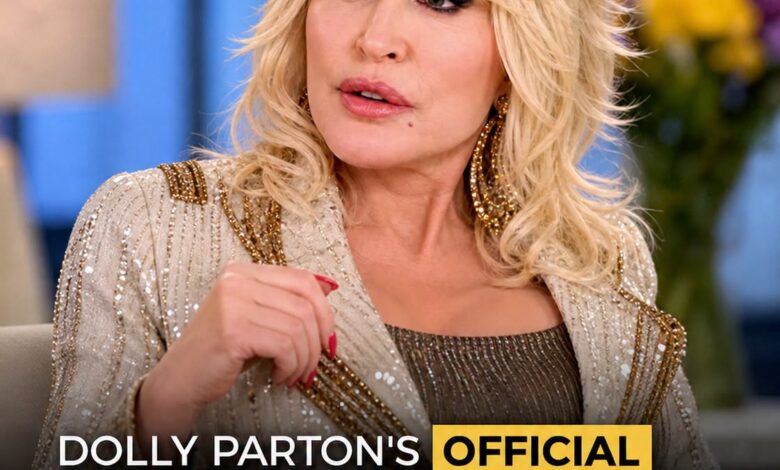
By the final year, the mirror had become complicated.
For decades, Dolly Parton had looked into one and created exactly the woman she wanted the world to see: towering blonde hair, rhinestones catching every light, bright lipstick, impossible heels, and a smile that seemed capable of making heartbreak behave itself.
But illness does not care about an image.
Treatment took its toll. Her strength faded. Her appearance changed. Days that once would have been packed with meetings, recording sessions, rehearsals, and laughter became quieter and more carefully managed.
Still, Dolly refused to surrender the one thing she had controlled from the beginning.
Her story.
The public had always understood that “Dolly Parton” was partly a creation.
She had joked about it herself.
The hair was bigger.
The clothes were brighter.
The jokes were sharper.
She took pieces of herself and turned the volume all the way up until a poor girl from the Tennessee mountains became instantly recognizable almost anywhere on Earth.
The image wasn’t a disguise.
It was armor.
And during her final year, she wore that armor more deliberately than ever.
When she appeared virtually, viewers still saw Dolly.
The lighting was flattering.
The familiar hair was there.
The sparkle remained.
Technology helped soften what illness had changed, preserving the face audiences expected to see.
Some might call that illusion.
But those closest to her understood it differently.
It was generosity.
Dolly had spent a lifetime making other people feel better. She knew what her image represented to fans who had grown up with her songs playing in kitchens, cars, hospital rooms, weddings, funerals, and lonely bedrooms.
She didn’t want them watching her disappear.
She wanted them seeing the woman they remembered.
So even when treatment had taken her hair, she gave the world Dolly’s famous blonde crown.
Even when fatigue had diminished her physical strength, she summoned the voice and humor people recognized.
Even when her private world was contracting, the public version of Dolly remained enormous.
Behind the cameras, however, everything was different.
The circle around her grew smaller.
Family became more important than publicity.
Trusted colleagues were admitted into a world increasingly protected from outside eyes.
A devoted sister remained close.
Siblings came and went.
Her goddaughter struggled with the possibility of losing someone who had been far more than a famous relative or mentor.
And those who had worked beside Dolly for years found themselves facing something almost impossible to comprehend.
The woman who always seemed indestructible was becoming fragile.
There were no rhinestones capable of changing that.
No stage trick could reverse it.
No perfectly timed joke could make the diagnosis disappear.
Yet Dolly continued working.
That surprised almost nobody who truly knew her.
Work had never simply been a job.
It was how she processed life.
When Dolly hurt, she wrote.
When she was frightened, she created.
When somebody broke her heart, she turned the fracture into a melody and handed it to millions of strangers.
She had been transforming pain into something useful since childhood.
Why would the end be different?
One project in particular refused to release its hold on her imagination.
Broadway.
Even as her physical world became smaller, her creative world remained stubbornly expansive. Scripts could still be revised. Songs could still be shaped. Characters could still be sharpened.
There was always another line to fix.
Another scene to reconsider.
Another musical idea worth chasing.
Illness might determine where she worked.
It could not completely determine whether she worked.
There was something almost rebellious about it.
A body could weaken while an imagination remained restless.
A woman could spend much of her day in a bedroom and still be mentally standing beneath Broadway lights.
Dolly understood better than most that mortality and creativity operate on different clocks.
The body says stop.
The artist says one more.
One more song.
One more revision.
One more idea.
One more thing to leave behind.
Perhaps that is why she seemed determined that illness would never become the final definition of her life.
She had built too much for that.
There was Dollywood, the unlikely theme park rooted in the mountains that formed her.
There were decades of recordings.
Thousands of lyrics.
Characters.
Films.
Businesses.
Books.
Philanthropic projects.
And generations of children who received books because Dolly believed where someone was born should never determine how far their imagination could travel.
There were also the songs.
Those were perhaps the closest thing to immortality she ever needed.
“Jolene” would continue pleading long after its writer could no longer sing it.
“9 to 5” would still bounce from radios and playlists on Monday mornings.
“I Will Always Love You” would continue appearing whenever somebody needed words large enough for a goodbye.
That catalog meant something unusual.
Dolly did not have to be physically present to remain present.
She had spent decades leaving pieces of herself everywhere.
Perhaps she understood that better during her final months than anyone else did.
Those around her could see what was happening.
They watched the changes.
They understood why visits became more intimate and carefully protected.
They saw the distance between the sparkling woman appearing on screens and the exhausted person resting afterward.
But Dolly apparently saw no contradiction.
Both women were real.
The fragile woman was real.
So was the performer.
The wigs had always been real in the only sense that mattered: Dolly chose them.
The rhinestones were chosen.
The makeup was chosen.
The outrageous silhouettes were chosen.
She had never claimed that glamour happened accidentally.
She built herself deliberately.
Why should illness suddenly receive the authority to redesign her?
So she continued deciding what the public would see.
That decision becomes especially poignant when viewed against the life she had lived.
Dolly came from almost nothing.
Her childhood home had little privacy, little money, and few luxuries. What she possessed in abundance was imagination.
She could look at hardship and envision something larger.
Eventually she did the same with herself.
The girl became the singer.
The singer became the songwriter.
The songwriter became the star.
The star became an institution.
And through every transformation, Dolly maintained an unusual understanding of performance.
Performance wasn’t necessarily dishonesty.
Sometimes it was survival.
Sometimes people put on lipstick because they’re happy.
Sometimes they put it on because they aren’t.
Sometimes the brightest clothes are worn during the darkest days.
There is courage in both.
During her final year, that philosophy reached its most extreme form.
Cancer could change her body.
It could steal energy.
It could disrupt plans.
It could force doors closed.
But it could not make Dolly surrender authorship of herself.
If the world was going to see her, it would see her the way she wanted to be seen.
Bright.
Funny.
Working.
Still dreaming.
Still Dolly.
Meanwhile, the people closest to her carried the truth that audiences could not see.
They knew how much effort existed behind a brief appearance.
They knew when a smile required strength.
They knew the cost of maintaining normality.
They knew that the woman discussing tomorrow’s projects was living with a tomorrow that had become increasingly uncertain.
And perhaps that was the cruelest part.
Dolly kept planning.
Artists often do.
There is always a future tense embedded in creativity.
We’ll finish this song.
We’ll open this show.
We’ll revise that scene.
We’ll meet next week.
We’ll try again tomorrow.
A Broadway musical therefore became more than another project.
It represented continuation.
As long as there was another page to rewrite, the story wasn’t finished.
As long as Dolly was creating, illness had not completely taken command.
Eventually, however, the rooms became quieter.
The work that had accompanied her through nearly every chapter of her life could go only so far.
There comes a point when even the most determined performer has to leave the stage.
But Dolly had prepared for that possibility better than most.
She had spent a lifetime building things capable of continuing without her.
A theme park would open its gates.
Her songs would keep playing.
Books would keep arriving in children’s homes.
Musicians who had learned from her would keep performing.
Families would keep attaching her music to their own memories.
And somewhere, eventually, performers would step onto a Broadway stage and speak words she had once considered from a much smaller room.
That is what she left behind.
Not merely a career.
Momentum.
Dolly had spent her life setting things in motion.
Even death could not immediately stop them.
There is something deeply fitting about the possibility that her final public image was carefully constructed.
Some people might wish celebrities would reveal every detail of decline, as though authenticity requires suffering to be publicly displayed.
Dolly never owed anyone that.
She had given audiences her voice for decades.
She had given them stories.
Humor.
Heartbreak.
Hope.
She was allowed to keep something for herself.
If she wanted her weakest moments protected by family, she had earned that privacy.
If she wanted a screen to show the familiar blonde hair instead of the physical evidence of treatment, that choice belonged to her.
It wasn’t necessarily denial.
It was direction.
Dolly Parton had directed the world’s gaze for most of her life.
She knew exactly where she wanted us looking.
Not at the medicine.
Not at the lost hair.
Not at the exhaustion.
Look at the work.
Look at the songs.
Look at the mountains.
Look at the children opening books.
Look at the stage that still needed building.
Look at everything that would remain.
Her body might have been losing its battle, but Dolly refused to let illness write the final line.
She had written too many good endings herself to surrender that easily.
So the curtain did not fall on an image of defeat.
It fell on sparkle.
On enormous blonde hair.
On a woman still talking about projects that reached beyond the room where she sat.
That may have been her final performance.
But calling it merely a performance misses the point.
It was an act of ownership.
The world had spent decades looking at Dolly Parton.
At the end, she reminded everyone of something she had understood from the beginning:
You can look.
But she decides what you see.