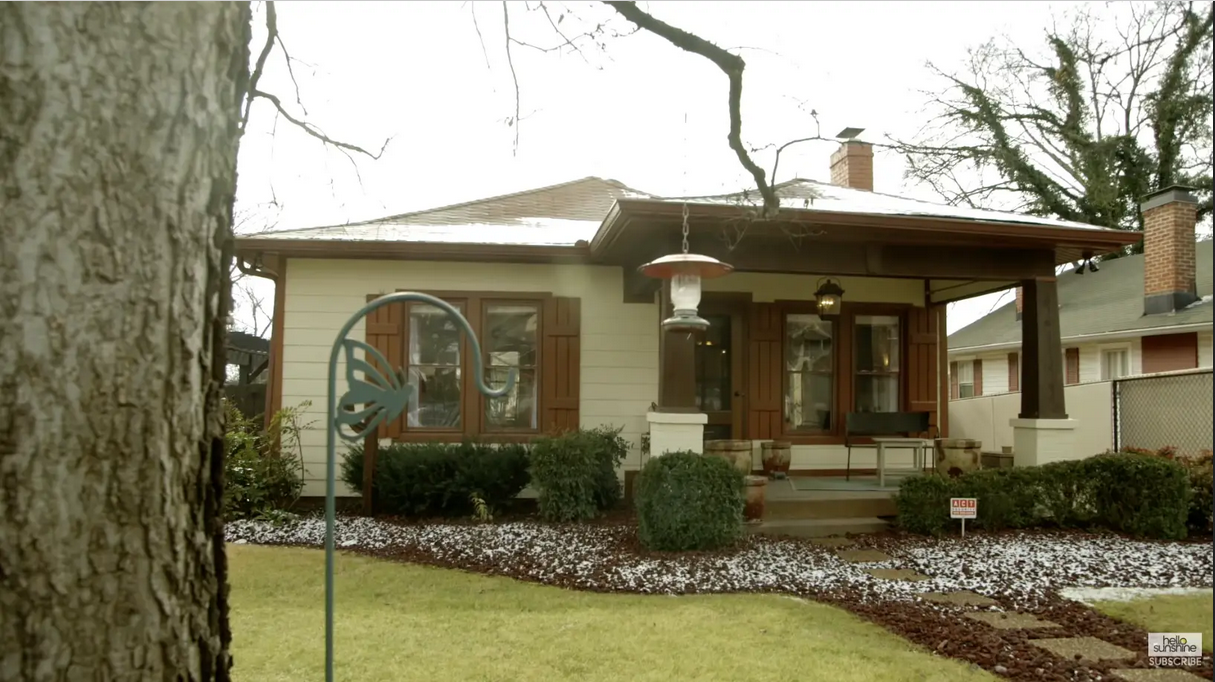
Dolly Parton & Her Spouse Lived on Cozy Farm & Enjoyed Doing ‘Little Things’ out of the Limelight..

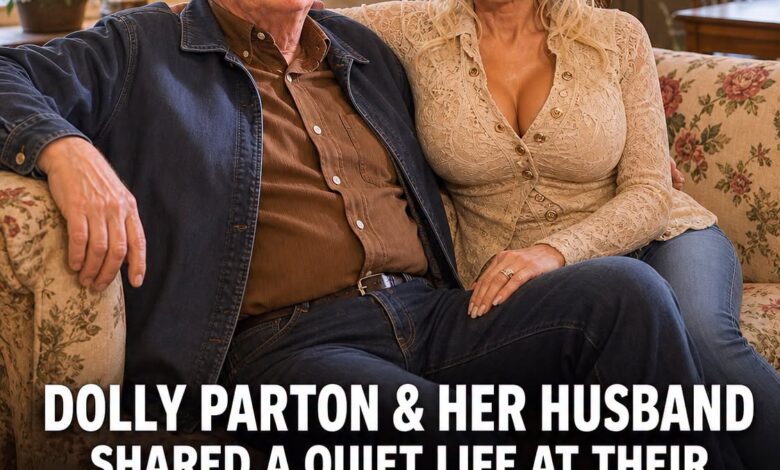
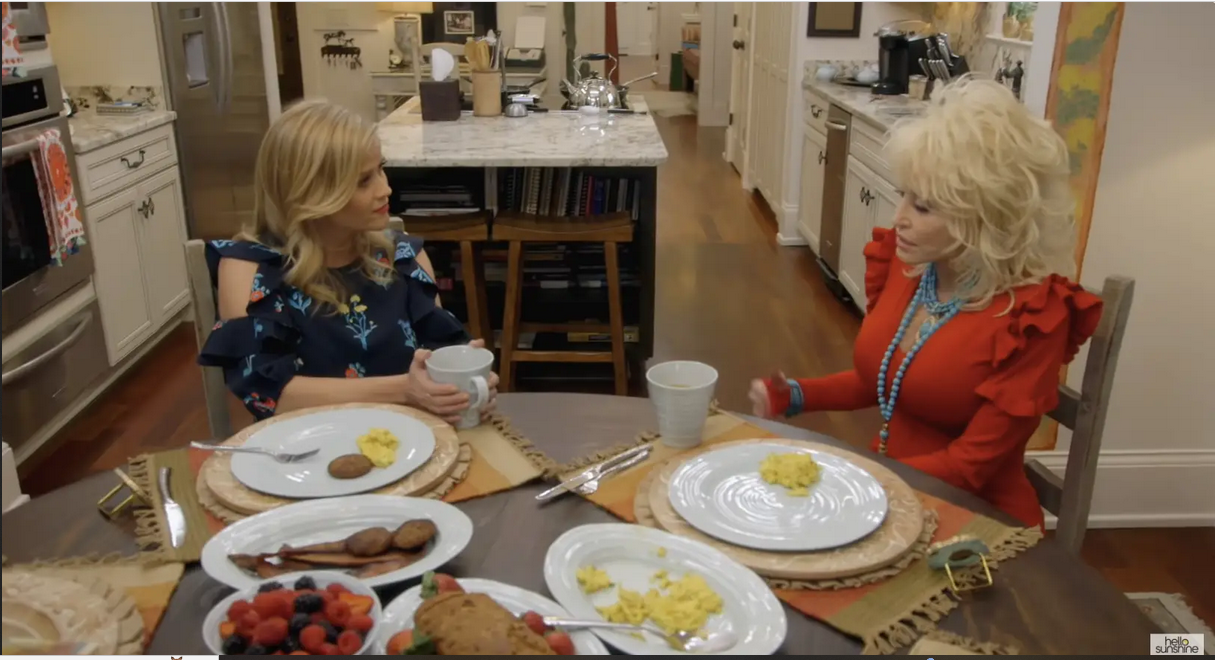

For nearly six decades, Dolly Parton belonged to the world.
Carl Dean never wanted to.
Somehow, that difference became one of the greatest strengths of their marriage.
While Dolly walked onto brightly lit stages, posed for cameras, collected awards, and became one of the most recognizable entertainers on the planet, Carl built a life almost completely outside that universe. He rarely attended celebrity events, avoided interviews, and became so elusive that some fans jokingly wondered whether Dolly’s mysterious husband actually existed.
Dolly found that hilarious.
But beneath the jokes was a deliberate choice that helped protect their relationship for 59 years: fame could have Dolly Parton, but it wasn’t going to have her marriage.
Their story began before the rhinestones, the enormous wigs, the hit records, and the global celebrity.
In 1964, an 18-year-old Dolly arrived in Nashville carrying ambitions far larger than her circumstances. She wanted to sing. She wanted to write songs. Most importantly, she wanted to build a life through music.
Then she went to a laundromat.
There, at the Wishy-Washy laundromat, she encountered 21-year-old Carl Dean.
It was hardly the setting for a glamorous country love song.
No candlelight.
No orchestra.
No carefully arranged introduction.
Just two young people crossing paths while Dolly was beginning one of the most uncertain chapters of her life.
Carl noticed her immediately.
Their connection grew, and two years later, on May 30, 1966, they married in Ringgold, Georgia.
The ceremony was intentionally small.
Dolly’s career was beginning to move, and people around her worried that marriage could interfere with the image of a young female performer. But Dolly wasn’t interested in sacrificing Carl for an industry she had only just entered.
She wanted both.
The career and the marriage.
She simply didn’t believe they had to occupy the same space.
That philosophy would define the next half century.
As Dolly’s fame exploded, Carl moved in the opposite direction.
He didn’t crave attention.
He didn’t want red carpets.
He didn’t want photographers documenting his life.
He certainly didn’t want to become a celebrity simply because his wife was one.
Dolly understood.
More importantly, she respected it.
She often explained that Carl had chosen her, not the entertainment business.
That distinction mattered enormously.
Marrying a famous person doesn’t automatically mean agreeing to surrender your privacy. Dolly recognized that long before celebrity couples could broadcast every breakfast, vacation, and anniversary to millions of followers.
So she protected him.
She kept much of their marriage personal, even as almost every other aspect of her life became public property.
It worked almost too well.
Over the years, Carl was seen publicly so rarely that rumors emerged claiming Dolly had invented him.
She laughed about that too.
Of course Carl existed.
He simply had something unusual for the husband of a global superstar: absolutely no desire to prove his existence to strangers.
Dolly described him as quiet and reserved. She knew that exposing him to her world would destroy the peace he valued.
So when Dolly stepped onto the stage, Carl generally stayed home.
And when Dolly came home, she wasn’t necessarily the international icon anymore.
She was his wife.
That separation gave them something precious.
Normality.
Dolly sometimes joked that one reason their marriage survived so long was because she was gone so often.
Behind the punch line was a genuine philosophy.
They didn’t believe marriage required two people to occupy the same physical and emotional space every waking minute.
They allowed each other independence.
Carl had his interests.
Dolly had hers.
They could separate without feeling threatened and reunite without needing to perform affection for anyone else.
For a woman whose career depended on being seen, her marriage became the place where she didn’t have to be.
That may have been one of its greatest gifts.
Carl wasn’t competing with Dolly Parton.
He wasn’t intimidated by the crowds screaming her name or the enormous cultural presence she became.
Dolly repeatedly described him as secure in himself and supportive of her career.
He liked hearing about what she was doing without needing to insert himself into it.
That quality meant more to her than public displays ever could.
She knew how unusual it was.
Fame can create strange pressures inside relationships. Success changes financial circumstances, social circles, schedules, and power dynamics. One partner’s achievements can easily become another partner’s resentment.
Dolly never portrayed Carl that way.
She described him as a good man who understood her.
He didn’t resent her ambition.
He didn’t demand that she become smaller so he could feel bigger.
And she didn’t demand that he become public simply because she was famous.
They gave each other room.
That didn’t mean they lived completely separate lives.
Quite the opposite.
Away from the cameras, Dolly often described a relationship built around wonderfully ordinary pleasures.
Their farm became an important refuge.
By the time Dolly stepped away from extensive touring, she could spend more time there, enjoying the kind of domestic life that looked almost comically modest beside her public image.
This was a woman associated with enormous hair, sparkling costumes, elaborate performances, theme parks, television specials, and international fame.
Yet some of her happiest moments with Carl involved doing very little.
They enjoyed their home.
They took drives.
They traveled privately.
They spent time outdoors.
They laughed.
They did what Dolly affectionately described as the “little things.”
That phrase revealed something important about their relationship.
After you’ve seen stadiums, luxury hotels, television studios, award ceremonies, and every extravagance fame can offer, ordinary life can become the rarest luxury.
Carl gave Dolly access to that world.
At home, she didn’t need applause.
She didn’t need makeup.
She didn’t need a hit song.
She didn’t need to be anybody’s icon.
She could simply exist beside the man who had known her since she was an ambitious teenager trying to make something happen in Nashville.
They also chose not to have children.
It was another deeply personal part of a marriage the public often wanted explained.
Dolly reflected over the years on how differently her life might have unfolded had she become a mother. Her extraordinary career required travel, relentless work, and enormous amounts of time.
Instead, she and Carl built their family life differently.
And Dolly eventually poured much of her nurturing instinct outward, becoming closely involved with nieces, nephews, godchildren, and eventually millions of children through her charitable work.
Carl remained the private center of her personal world.
Their marriage wasn’t presented as perfect.
Dolly was far too funny and practical for that kind of mythology.
Instead, she repeatedly emphasized humor.
They laughed together.
That mattered.
When you’ve been married for decades, romance inevitably changes shape. Grand gestures become less important than knowing how to make the other person smile after a difficult day.
Dolly and Carl understood each other’s personalities well enough to let their differences become entertainment rather than conflict.
They were opposites in obvious ways.
She loved performing.
He avoided attention.
She could walk into a room and become its center of gravity.
He preferred remaining outside the room entirely.
She became internationally recognizable.
He became famously unrecognizable.
Yet beneath those differences were shared values: independence, loyalty, humor, simplicity, and respect.
Dolly believed that respect was essential.
Love mattered, but admiration mattered too.
She admired Carl.
And she believed he admired her.
Not merely Dolly Parton the performer, but the woman behind the construction.
That was significant because Dolly’s public image was deliberately enormous.
The hair.
The makeup.
The clothes.
The jokes.
The persona became almost mythological.
Carl knew what existed when all of that came off.
He knew the songwriter sitting quietly with an idea.
The woman exhausted after work.
The wife wandering around the farm.
The person underneath “Dolly Parton.”
He had met her before the world invented the legend.
And perhaps that is why she guarded him so fiercely.
Their privacy wasn’t evidence of distance.
It was evidence of value.
Some things become more precious when they aren’t constantly displayed.
Dolly gave interviews about almost everything. She joked about her appearance, talked openly about growing up poor, discussed songwriting, faith, business, ambition, failure, and success.
But Carl remained mostly theirs.
That boundary allowed their marriage to develop outside the strange expectations imposed upon celebrity relationships.
There were no endless couple interviews.
No constant red-carpet appearances.
No requirement that Carl smile beside Dolly every time she received another honor.
They didn’t need strangers to validate the relationship.
They knew what they had.
And year after year, they kept choosing it.
Five years became ten.
Ten became twenty.
Twenty became forty.
Eventually, the young man Dolly met at a laundromat had spent more than half a century married to one of the most famous women in American entertainment.
And she still spoke about him with affection.
Their relationship offered an unexpectedly simple lesson.
The secret wasn’t that they were inseparable.
It was almost the opposite.
They understood how to remain themselves while staying together.
Carl didn’t become Mr. Dolly Parton.
Dolly didn’t abandon her ambitions to prove she loved her husband.
Neither demanded that the other surrender the identity that had attracted them in the first place.
Instead, they built two worlds that touched without swallowing each other.
One contained stages, microphones, cameras, business meetings, costumes, and crowds.
The other contained home, privacy, laughter, and those little things Dolly treasured.
For 59 years, the arrangement endured.
Perhaps that is why their story remains so compelling.
From the outside, Dolly Parton’s life looked enormous.
Carl Dean helped give her somewhere small enough to breathe.
The world got the rhinestones.
The cameras got the smile.
The audiences got the songs.
But when the lights went down, Dolly could return to something the public was never fully allowed to possess.
Her home.
Her quiet.
And the man who had loved her since before anybody knew her name.