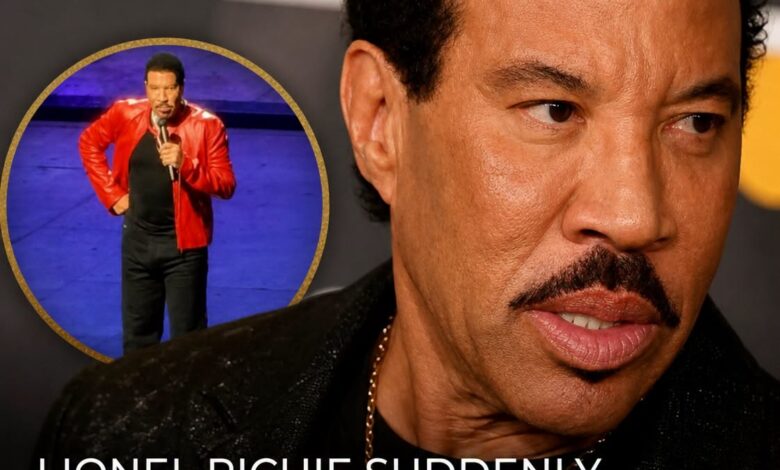
Lionel Richie, 77, Commanded the Stage in a Yellow Jacket Hours Before His St. Louis Hospital Visit — Photos

For most of the night in St. Louis, Lionel Richie looked like the man audiences had come to see.
He joked.
He danced.
He turned familiar choruses over to the crowd and listened as thousands of voices sent them back.
Across The Muny’s enormous stage, the 77-year-old moved through decades of music in vivid jackets, surrounded by lights, bursts of fire and the polished spectacle expected from an artist who has spent most of his life knowing exactly how to command a room.
It felt celebratory.
Then came “All Night Long.”
At some point during the song, Richie signaled for a chair.
In the moment, it was easy to read as another playful adjustment from a veteran performer. After all, Richie had been entertaining audiences for more than half a century. Sitting for part of a song hardly seemed alarming.
He kept performing.
He eventually stood again.
He finished the show.
He bowed.
He wished St. Louis good night.
The audience went home believing the evening was over.
For Richie, it apparently wasn’t.
After leaving the stage, he quietly checked himself into a hospital and was reportedly moved to intensive care while doctors investigated what had happened, with dehydration among the possible explanations being considered.
Suddenly, that chair looked different.
That is what frightening news does to memory.
A moment that seemed harmless when it happened becomes evidence in retrospect.
Fans replay footage and notice pauses they ignored the first time.
Was he moving more slowly?
Did his expression change?
Was the joke covering discomfort?
Did he already know something was wrong?
Those questions are understandable.
But videos cannot diagnose a medical problem, and without detailed information from Richie or his medical team, speculation remains exactly that.
What made the St. Louis scare particularly unsettling was its familiarity.
Only two months earlier, Richie had experienced another alarming episode during a performance in St. Paul.
That night, while performing “Dancing on the Ceiling,” he suddenly sat down.
Richie tried to do what entertainers often do when something unexpected happens in front of an audience.
He joked.
He told fans he was feeling “dizzy” and “strange,” attempting to keep the mood light even as it became increasingly obvious that something was wrong.
Eventually, the performance was cut short.
Richie was taken away by ambulance.
For fans, the immediate fear was followed by relief when he recovered enough to return.
Richie rested, followed medical advice and eventually stepped back onto the stage.
And when he did, he again used humor to acknowledge the concern.
He knew he had frightened people.
He thanked them for caring.
Then he returned to what he had always done.
Music.
That history offers hope now, but it also changes the way the St. Louis footage feels.
One episode can seem like bad luck.
A second forces a harder question.
Not necessarily about a specific diagnosis—outsiders cannot responsibly make one—but about the physical demands of continuing to perform at this level.
A major concert is not simply ninety minutes of singing.
There is travel.
Soundcheck.
Rehearsal.
Heat.
Costume changes.
Bright lights.
Irregular sleep.
The adrenaline of walking in front of thousands of people.
Then another city.
Another stage.
Another night.
For a performer with Richie’s work ethic, stopping may feel harder than continuing.
That is part of what fans are seeing differently now.
The chair during “All Night Long” no longer looks like a quirky moment in the show.
It looks like a man listening—perhaps belatedly—to a body asking him to slow down.
And there is something strangely emotional about the song in which it happened.
“All Night Long” is built around celebration.
It promises movement without exhaustion, music without an ending, a party capable of continuing indefinitely.
For decades, Lionel Richie has seemed to embody that promise.
His songs have survived eras, fashions and generations.
People who danced to Richie in the 1980s now attend his concerts with children or grandchildren who know the same choruses.
He has become one of those artists who can create the illusion that time has barely moved.
Then a chair appears onstage.
And suddenly everyone remembers that it has.
That does not diminish Richie.
If anything, it reveals the extraordinary distance he has traveled.
The Commodores.
The solo years.
The enormous ballads.
The stadiums.
The awards.
The television appearances.
The tours.
More than five decades of repeatedly walking toward an audience and being expected to deliver the memory they came hoping to relive.
But legendary status does not create a legendary body.
Age still arrives.
Fatigue still accumulates.
Dehydration can still happen.
Illness can interrupt the best-planned tour.
And sometimes the strongest thing a performer can do is stop.
Fans understandably want Richie back.
They want another opening note.
Another joke.
Another chorus of “Hello.”
Another night when thousands of strangers become one enormous choir.
But the St. Louis scare offers a reminder that there is something more important than preserving the schedule.
Preserving the man.
If Richie needs rest, the stage can wait.
If shows need to move, dates can be changed.
If future performances require more sitting, shorter sets or a slower pace, none of that erases what he has already accomplished.
A chair is not defeat.
Neither is cancellation.
Neither is admitting that the body that carried a career for half a century now deserves different treatment.
Perhaps that is the uncomfortable lesson hidden inside those videos fans keep replaying.
We often expect our icons to remain frozen at the age when we first loved them.
The songs do.
The recordings do.
A music video from forty years ago never grows tired.
But the person inside it continues living.
That distinction can be painful.
In St. Louis, Richie gave the audience almost everything it expected.
Fire.
Lights.
Color.
Laughter.
Hits.
A final bow.
What nobody understood was what might have been happening beneath the performance.
Only afterward did the chair become significant.
Only afterward did the good-night feel heavier.
And only afterward did an evening remembered for joy acquire another meaning entirely.
For now, the most important performance is not the next one.
It is recovery.
Fans can sing the songs themselves for a while.
They know every word.
Lionel Richie has spent more than fifty years giving them the music.
Now they can give him something in return:
permission to stop before “All Night Long” becomes too long.