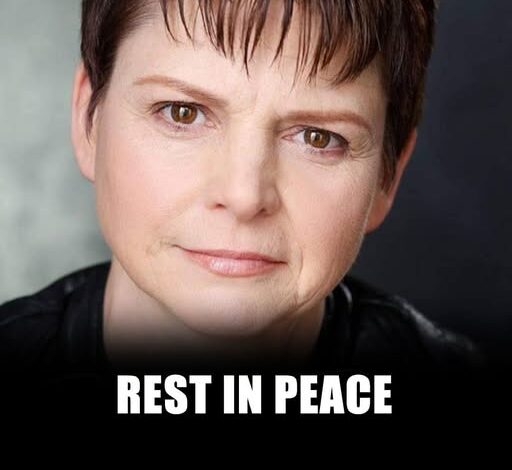
She arrived in New York carrying the kind of dream the city almost dares people to abandon.
One suitcase.
A few phone numbers folded into a notebook.
Enough cash for rent if she stretched every dollar carefully.
And beneath all of it, a stubborn, private belief that somehow her life would become larger there.
Not glamorous immediately.
Not cinematic.
Just possible.
During the day, Wenne Alton Davis worked shifts at JFK Airport, moving through terminals filled with strangers constantly arriving somewhere important. The work was repetitive, exhausting, and rarely noticed by anyone rushing past her toward flights and deadlines.
But she watched people closely.
That became part of her education too.
Actors often learn as much from ordinary observation as formal training:
how tired travelers hold themselves,
how loneliness sounds in someone asking for directions,
how joy erupts at arrival gates when people finally spot each other after long absences.
New York gave her endless material simply by surviving around her loudly enough.
At night, she chased stage time.
Tiny clubs.
Dim comedy rooms.
Back spaces above bars where audiences barely looked up from their drinks unless you forced them to.
Five minutes at a microphone could feel like both humiliation and salvation simultaneously. Some nights nobody laughed. Some nights one stranger in the back corner laughed hard enough to keep her going another week.
That’s how many artists survive New York:
not through certainty,
but through small moments convincing them not to quit yet.
Comedy came first because comedy offers immediate proof of connection. Either people laugh or they don’t. There is nowhere to hide inside silence.
But acting reached deeper into her somehow.
Comedy let her speak.
Acting let her disappear into other lives temporarily.
Bit by bit, casting directors began noticing something difficult to manufacture artificially:
presence.
Not loudness.
Not glamour.
Presence.
Wenne became the kind of actor audiences trust instinctively even if they cannot immediately place her name. The nurse whose gentle tone steadies an entire hospital scene. The neighbor appearing for thirty seconds yet somehow making the world onscreen feel fully inhabited. The woman delivering one line with enough emotional truth that viewers remember her afterward without understanding why.
Those performers hold entire stories together quietly.
Every production depends on them.
Stars may dominate posters, but character actors create reality around them. They make fictional spaces feel lived in rather than staged. Wenne understood that instinctively. She treated small roles seriously because she knew real life itself is mostly built from small moments:
brief conversations,
unexpected kindness,
the familiar face who notices when you’re hurting.
That understanding shaped her offscreen too.
People who knew her rarely began stories by mentioning television credits or comedy sets. They talked instead about texts returned consistently. Calls answered late at night. The way she remembered birthdays, checked in after difficult weeks, learned assistants’ names on set when others barely acknowledged them.
Kindness became part of her reputation quietly.
Not performative.
Habitual.
Perhaps because New York had once frightened and ignored her too.
People surviving creative industries often become hardened eventually — exhausted by rejection, competition, instability. But some individuals respond differently. They become softer precisely because they understand how difficult surviving can feel for everyone around them.
Wenne belonged to that second category.
Then came Monday night.
Ordinary at first.
That’s the unbearable thing about sudden loss:
it enters through ordinary hours.
A city street.
Traffic lights.
Someone expecting to arrive home shortly.
And then, without warning, the future rearranges itself permanently.
The driver waited afterward.
Sirens cut through the night.
Police reports began.
Hospital procedures unfolded with their cold procedural language and fluorescent efficiency.
Meanwhile, somewhere nearby, New York continued moving almost offensively fast.
Subways still screamed underground.
Restaurants still filled.
People still laughed outside bars.
Taxis still rushed through intersections beneath neon reflections and rain.
Cities do not pause for grief.
Even when they should.
For those who loved Wenne, the shock arrived in waves impossible to organize neatly. First disbelief. Then frantic phone calls. Then the hollow administrative reality that follows sudden death:
paperwork,
identification,
arrangements,
official language trying unsuccessfully to contain emotional catastrophe.
But grief never stays confined to documents.
It escapes into memory constantly.
Into habits.
Voicemails.
Old conversations replayed at strange hours.
Friends began discovering how thoroughly she had threaded herself through ordinary parts of their lives:
the check-in text every few days,
the joke sent after difficult auditions,
the reassuring message before important meetings,
the instinctive warmth she carried into rooms without demanding attention for it.
That becomes the true archive after someone dies.
Not headlines.
Not résumés.
The emotional fingerprints left across other people’s daily existence.
And perhaps that is why sudden loss feels so disorienting initially. The world outside remains physically unchanged while internally everything has shifted violently. Streets look the same. Cafés still open. Trains still arrive.
But one voice has vanished permanently from the texture of ordinary life.
People closest to Wenne now carry that absence everywhere.
In laughter that catches suddenly before becoming tears.
In moments they instinctively reach for their phones to text her before remembering.
In stories told repeatedly because repetition temporarily keeps someone near.
Actors spend their lives hitting marks precisely — stepping into exact positions beneath lights so scenes unfold correctly.
There’s something painfully poetic about how memory works afterward.
Because in the minds of those who loved her, Wenne keeps making entrances endlessly:
walking onto sets,
appearing in doorways,
calling unexpectedly,
laughing halfway through stories before finishing them.
Still vividly here in fragments powerful enough to resist disappearance for a while longer.
New York itself may not stop for grief.
It keeps rushing past intersections and airport terminals and comedy clubs at full speed, swallowing one life story after another into its enormous restless machinery.
But the people who loved Wenne do stop.
They pause at old messages.
At familiar corners.
At memories arriving unexpectedly in grocery stores or subway stations.
And in those pauses, she remains astonishingly alive.
Not frozen as tragedy.
Not reduced to the circumstances of one terrible night.
But remembered fully:
the woman with the suitcase,
the airport shifts,
the tiny stages,
the warm check-ins,
the quiet professionalism,
the kindness extending downward and outward toward everyone around her.
A working artist.
A familiar face.
A trusted friend.
Someone who came to New York hoping to become part of its story —
and did.
Even now, somewhere in the city she fought so hard to belong to, someone is probably telling a story about her and laughing halfway through it before the sadness arrives.
And for a moment, through memory alone, Wenne Alton Davis steps back into the room exactly on cue once more.