There are moments when even the most fortified places in the world suddenly feel exposed.
Not permanently.
Not catastrophically.
But long enough for everyone inside to remember that security is ultimately a system built on probabilities, not guarantees.
The White House exists partly as architecture and partly as symbolism. Its fences, checkpoints, barriers, armored vehicles, surveillance systems, and tactical units project the image of absolute control — a carefully maintained illusion that the center of American power operates behind layers too sophisticated to fail.
Most days, that illusion holds comfortably.
Tourists gather near the North Lawn taking photographs against white columns glowing beneath afternoon light. Staffers move briskly through gates carrying coffee cups and classified schedules. Reporters crowd briefing rooms waiting for statements that will travel across the world within minutes. Helicopters cut low arcs through Washington airspace while traffic hums steadily beyond the security perimeter.
Routine becomes its own form of reassurance.
People stop noticing the armed officers.
The rooftop snipers.
The barricades.
The emergency protocols.
Security fades into the background precisely because it functions continuously.
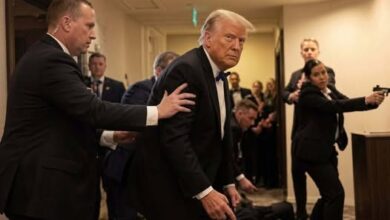
Then gunfire erupts.
And suddenly every invisible system becomes visible all at once.
The shots shattered more than silence that afternoon. They shattered rhythm — the ordinary operational rhythm that allows institutions like the White House to feel untouchable despite existing inside one of the most politically volatile environments on earth.
For several chaotic moments, nobody fully understood what was happening.
That uncertainty matters.
Because during crises, confusion spreads faster than information.
People react before they understand.
Reporters dropped instinctively beneath briefing-room desks while Secret Service agents moved with the speed of practiced muscle memory rather than visible panic. Doors locked. Radios crackled. Hallways emptied. Somewhere outside, tactical teams surged toward the sound while streets around the North Lawn transformed almost instantly from tourist space into active security terrain.
What makes moments like these psychologically disturbing is not only the danger itself.
It is the speed of transformation.
One second, normality exists.
The next, ordinary surroundings become potential threat environments.
A sidewalk becomes a tactical concern.
A parked vehicle becomes suspicious.
A backpack becomes a possible weapon.
Every unidentified sound suddenly carries meaning.
Human beings rely heavily on continuity to maintain emotional stability. We move through daily life assuming environments will continue behaving predictably because without that assumption functioning constantly in the background, ordinary existence would become psychologically exhausting.
Gunfire destroys that assumption instantly.
Especially near symbols of national authority.
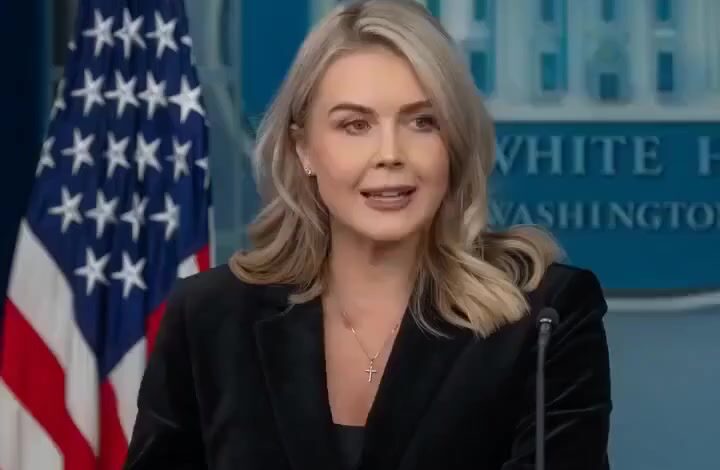
Inside the briefing room, reporters described crouching beneath desks while one lone agent guarded the entrance listening for additional shots echoing across the compound. That image lingered afterward precisely because of its simplicity:
journalists hiding,
phones buzzing,
silence interrupted by distant commands,
one armed figure standing between uncertainty and catastrophe.
The vulnerability felt unusually human.
Washington often projects itself through abstractions:
policy,
strategy,
diplomacy,
national security doctrine.
But crises reduce institutions back into bodies and instincts very quickly. Beneath every title exists an ordinary nervous system reacting to danger the same way humans always have:
heart rate accelerating,
adrenaline flooding,
attention narrowing toward survival.
No political ideology changes biology.
Outside the White House perimeter, security tightened rapidly. Tactical units swept surrounding streets while law enforcement established expanding cordons around the area. Tourists who minutes earlier had been taking photographs suddenly found themselves redirected by officers carrying rifles and issuing sharp instructions.
Modern security responses depend heavily on speed because uncertainty itself can become dangerous if left uncontrolled too long. Authorities must secure space before they fully understand threat level, motive, or whether additional attackers exist.
That creates strange emotional environments during unfolding incidents.
Cities pause mid-motion.
Traffic stops.
Pedestrians freeze.
Information fragments.
Rumors spread faster than official updates.
People refresh phones compulsively searching for clarity while sirens multiply across streets suddenly stripped of normal rhythm.
Washington understands this choreography intimately because the city lives under constant awareness of symbolic vulnerability. Every threat near the White House carries significance beyond immediate physical danger because attacks against symbolic centers resonate psychologically nationwide.
The White House is not merely an office building.
It represents continuity.
Executive authority.
National identity.
State stability.
When violence approaches it, even unsuccessfully, the emotional impact spreads far wider than the actual perimeter involved.
And yet what made this particular moment especially surreal was what continued simultaneously behind reinforced walls elsewhere inside the complex.
Diplomatic discussions over a potential Iran peace framework reportedly continued while the lockdown unfolded around the compound.
That contrast felt almost cinematic:
outside,
sirens,
weapons,
uncertainty.
Inside,
negotiations,
documents,
carefully measured geopolitical language attempting to prevent violence on a much larger scale elsewhere in the world.
The disconnect revealed something fundamental about modern governance.
Power rarely pauses cleanly for crisis.
Presidents continue receiving intelligence briefings during emergencies.
Diplomats continue negotiating while security threats unfold.
Military systems remain active while uncertainty spreads publicly.
Institutions are designed precisely to continue functioning under pressure because national stability depends partly on projecting continuity even during disruption.
Still, continuity does not erase vulnerability.
The reinforced walls protecting presidential spaces symbolize extraordinary security capability, yet moments like these remind everyone involved that no system entirely eliminates unpredictability. Security works probabilistically, reducing risk through layers rather than abolishing danger completely.
That realization unsettles people because modern societies often confuse preparedness with invulnerability.
They are not the same thing.
Even the most heavily protected locations in the world remain vulnerable to sudden disruption because absolute certainty does not exist in open societies. Democracies especially operate through constant tension between accessibility and protection.
The White House itself embodies that contradiction.
It must remain symbolically open enough to represent democratic government while simultaneously becoming fortified enough to survive modern threat environments. Tourists stand photographing a building surrounded quietly by counter-sniper teams, anti-drone systems, ballistic glass, emergency bunkers, encrypted communication networks, and rapid-response tactical units operating mostly unseen.
Most days the balance feels stable.
Incidents like this expose how delicate that balance actually is.
And afterward, when the immediate danger passes, another emotional phase begins:
the strange anticlimax of survival.
The all-clear eventually arrived.
Streets reopened.
Traffic resumed.
Briefings continued.
Phones stopped vibrating quite so urgently.
Washington returned to motion.
But psychologically, something had shifted slightly beneath the surface.
Because near-misses alter perception even when catastrophe never fully materializes.
People who experienced the lockdown would likely remember small details vividly afterward:
the sound of chairs scraping quickly across floors,
the unnatural silence between radio transmissions,
the look on someone’s face during uncertainty,
the surreal realization that routine had disappeared in seconds.
Trauma researchers often note that human memory preserves emotional atmosphere more powerfully than chronological detail during high-stress events. The body remembers tension physically even after facts become organized later through reporting and official timelines.
And institutions remember too.
Security reviews follow incidents like these relentlessly:
response times,
communication flow,
perimeter vulnerabilities,
tactical coordination,
evacuation procedures,
surveillance footage,
behavioral analysis.
Modern security culture evolves largely through studying moments where systems were tested unexpectedly.
Yet beyond procedural analysis lies something more philosophical.
Events like this force societies to confront the uncomfortable reality that symbols of stability remain inhabited by fragile human beings operating inside uncertain worlds.
Governments project permanence.
Security systems project control.
Power projects confidence.
But all of it still exists inside reality — a reality where unpredictability can arrive suddenly through one person, one decision, one burst of violence echoing across a lawn tourists crossed casually minutes earlier.
That vulnerability is not uniquely American either.
Every major political center throughout history has struggled with the same paradox:
how to remain open enough to symbolize legitimacy while protected enough to survive threat.
Too much openness invites danger.
Too much fortification erodes democratic symbolism itself.
The White House sits directly inside that tension every day.
Perhaps this is why incidents near symbolic centers feel emotionally larger than their immediate tactical dimensions. They expose the invisible labor required to maintain ordinary public confidence.
Most citizens rarely think about contingency planning while watching press briefings or presidential speeches. Stability appears natural from the outside. Yet beneath every appearance of calm exists enormous infrastructure designed specifically to manage moments when calm disappears abruptly.
Security agents train endlessly for seconds like these.
Communication systems exist for seconds like these.
Emergency protocols exist for seconds like these.
And still, fear enters anyway.
Because no preparation fully removes the psychological shock of hearing gunfire near the symbolic center of national power.
In the aftermath, commentators often focus heavily on politics:
motives,
security implications,
policy questions,
institutional critiques.
Those conversations matter.
But beneath them remains something simpler and deeply human:
for several minutes, ordinary people inside one of the most protected compounds in the world experienced uncertainty together.
Reporters.
Agents.
Staffers.
Officials.
All suddenly reminded that history can intrude without warning into routine afternoons.
That realization lingers precisely because it feels universal.
No city is fully immune from disruption.
No institution fully escapes vulnerability.
No symbol remains permanently insulated from the unpredictability surrounding modern public life.
And perhaps that is what felt most unsettling after the streets reopened and Washington resumed its familiar rhythm.
The buildings remained standing.
The government continued functioning.
Diplomacy resumed.
Yet everyone involved understood something more clearly than before:
certainty itself is often temporary,
maintained carefully through systems that work remarkably well most of the time —
until one sudden burst of gunfire reminds an entire nation how fragile normality can become in a matter of seconds.