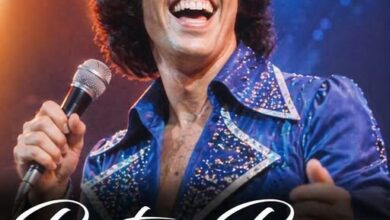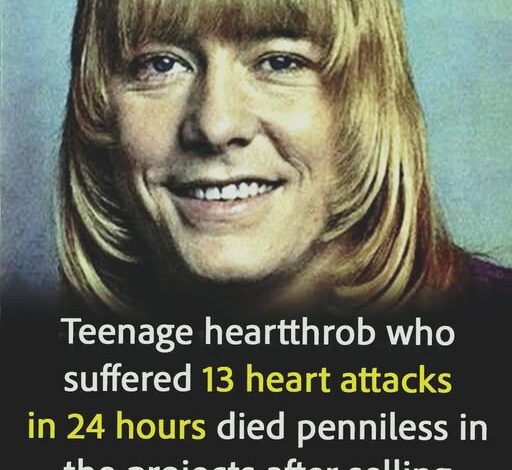
Brian Connolly entered the world long before fame found him, a Scottish boy named Brian MacManus whose future gave no obvious hint of stadium lights, screaming crowds, or glitter-covered stages. Yet by the 1970s, under the name Lou Christie—wait, no, under the blazing banner of The Sweet—he had become one of glam rock’s most unforgettable voices, a frontman capable of turning chaos into theater and heartbreak into pure electricity. With songs like “Ballroom Blitz” and “Block Buster!”, Connolly helped create the soundtrack of an era that wanted music louder, brighter, and unapologetically larger than life.
But behind the makeup, platform boots, and explosive choruses stood a man carrying wounds far older than fame itself. His difficult childhood, complicated identity, and relentless search for belonging never fully disappeared once success arrived. The stage gave him applause, but not peace. And as the years passed, the same industry that crowned him slowly watched him unravel under the weight of exhaustion, addiction, illness, and financial ruin.
Still, what makes Brian Connolly’s story linger is not simply tragedy. It is persistence. Even as his body weakened and his voice lost some of its former power, he kept stepping onto stages because performing remained one of the few places where he still felt fully alive. Fans did not come only to hear old hits anymore; they came to witness the man himself, fragile yet determined, still trying to reconnect with the energy that once made arenas shake.
Before the fame, before the glam rock explosion, Connolly’s life had already been shaped by instability. Born in Scotland in 1945 and later adopted, he grew up navigating questions about identity and belonging that would shadow him throughout adulthood. The discovery of hidden family connections later in life only deepened that sense of fragmented personal history. For children raised amid uncertainty, performance often becomes more than ambition—it becomes escape, reinvention, and survival all at once.
Music offered Connolly exactly that.
In the 1960s, Britain’s rock scene pulsed with transformation. Young musicians moved through clubs, dance halls, and touring circuits chasing impossible dreams powered by cheap amplifiers and stubborn hope. Connolly performed in several groups before finding the combination that would eventually change everything. When The Sweet emerged in the early 1970s alongside Andy Scott, Mick Tucker, and Steve Priest, they entered a music landscape hungry for spectacle.
And spectacle was exactly what they delivered.
The Sweet did not simply perform songs; they detonated them.
Their music fused infectious pop hooks with harder-edged rock guitars, creating a sound that appealed both to radio audiences and to teenagers desperate for something rebellious enough to feel dangerous. Songs exploded with swagger, rhythm, and theatrical energy. Glam rock itself lived in contradiction:
flashy but aggressive,
commercial yet rebellious,
playful while still emotionally intense.
Connolly stood directly at the center of that storm.
With his blonde hair, commanding stage presence, and instantly recognizable voice, he became the emotional focal point of the band. He could sound flirtatious one moment and ferocious the next, delivering choruses with the kind of urgency that made audiences feel swept into something larger than ordinary life.
“Ballroom Blitz” especially captured that chaos perfectly.
Even decades later, the opening still feels like a door being kicked open. The song surges forward with manic energy, creating the sensation of a live performance already spiraling gloriously out of control. Connolly’s vocals cut through the noise with confidence and theatrical tension, embodying exactly what glam rock represented at its peak:
escape,
volume,
freedom,
performance.
The Sweet quickly became one of the defining acts of the decade.
Millions of records sold worldwide.
Chart success across multiple countries.
Television appearances.
Tours.
Screaming fans.
Endless pressure.
And pressure changes people.
Behind every explosive stage performance existed exhausting realities audiences rarely considered:
constant travel,
industry expectations,
financial disputes,
creative tensions,
substance abuse,
physical exhaustion.
For Connolly, fame amplified vulnerabilities already living quietly beneath the surface. The same emotional intensity that fueled his performances also left him exposed to the darker side of rock stardom. Alcohol gradually shifted from social ritual to destructive dependency, affecting both his health and his relationships within the band.
By the late 1970s, cracks inside The Sweet became impossible to ignore.
Musical tastes were changing. Internal conflicts intensified. Years of nonstop touring and fame had strained relationships between members. Eventually, Connolly left the group in 1979, marking the end of the classic era fans associated most strongly with the band’s success.
For many artists, leaving the group that made them famous creates an identity crisis difficult to survive emotionally.
Audiences often connect frontmen permanently to one era, one sound, one image frozen in time. Moving beyond that image becomes brutally difficult, especially when the industry itself has already started shifting attention elsewhere.
Connolly attempted solo work, but commercial success never fully returned.
That failure hurt more deeply than people realized.
Because for performers whose identities become fused with applause, declining visibility can feel emotionally devastating. The world that once celebrated you loudly grows quieter. Crowds shrink. Opportunities narrow. Nostalgia replaces momentum.
Meanwhile, financial pressures mounted.
Legal complications and tax-related problems reportedly forced Connolly into increasingly difficult situations. Assets were sold. Stability disappeared. At the same time, years of alcohol abuse began leaving undeniable physical consequences.
His health deteriorated steadily through the 1980s and 1990s.
Heart problems.
Neurological complications.
Declining stamina.
Visible physical weakening.
Watching aging rock stars struggle publicly often unsettles audiences because music preserves people artificially in youth. Old records freeze voices permanently at their peak. Fans remember performers as invincible figures bathed in stage lights, not as fragile human beings confronting illness and regret.
But Connolly kept performing anyway.
That persistence says something important about him.
He could have disappeared entirely from public life. Instead, he continued touring through smaller venues and later incarnations connected to The Sweet’s legacy. One version performed under the name Brian Connolly’s Sweet, while other former members pursued separate projects tied to the band’s history.
These later performances carried a very different emotional atmosphere from the roaring heights of 1970s fame.
The audiences were smaller.
The energy more bittersweet.
The body onstage visibly worn.
Yet fans still came.
And perhaps they came for more than nostalgia.
There is something deeply moving about artists who continue performing despite obvious vulnerability. Watching Connolly in his later years meant confronting time itself visibly. The glitter had faded. The physical strength diminished. But traces of the old fire still surfaced in moments:
a vocal phrase,
a grin,
a sudden flash of charisma surviving beneath illness.
Fans recognized the effort behind every appearance.
A 1996 television documentary especially revealed how severe his physical decline had become. The contrast between the vibrant glam rock icon of the 1970s and the weakened man onscreen decades later felt heartbreaking. Yet the documentary also revealed honesty. Connolly did not fully hide from the consequences of his lifestyle. He acknowledged the damage done by years of alcohol abuse and physical strain with painful openness.
There was courage in that too.
Around this same period, the birth of his son brought renewed emotional meaning into his life. In interviews, Connolly spoke about fatherhood with genuine tenderness, suggesting that amid career disappointments and illness, family became one of the few remaining anchors holding him emotionally steady.
Still, his health continued collapsing.
By late 1996, performances had become physically exhausting ordeals. Audiences watching him near the end often described mixed emotions:
gratitude,
admiration,
sadness.
Because beneath the music stood a man visibly fighting his own body simply to remain connected to the stage one last time.
His final performances now feel almost unbearably symbolic in retrospect.
A once-electric frontman still stepping into spotlights despite visible suffering.
Still trying.
Still singing.
Still refusing complete surrender.
Brian Connolly died on February 9, 1997, at only fifty-one years old. Kidney and liver failure, compounded by long-term cardiovascular disease, finally ended the struggle his body could no longer sustain.
Fifty-one.
Young enough that many fans still cannot fully process how quickly his life unraveled after such extraordinary success.
Yet death did not erase his influence.
Glam rock itself owes part of its identity to The Sweet’s sound and theatricality. Later hard rock and metal bands borrowed heavily from their combination of catchy hooks and aggressive guitar energy. Their music bridged worlds:
pop and hard rock,
performance and rebellion,
commercial success and emotional chaos.
And Connolly’s voice remained central to that identity.
Even today, hearing “Ballroom Blitz” explode through speakers still feels alive rather than archival. The urgency remains intact. The swagger remains intact. For younger listeners discovering the band decades later, the songs do not sound like museum pieces. They sound immediate, restless, and strangely modern in emotional energy.
That is the mark of music that truly survives.
Not simply popularity.
Persistence.
Brian Connolly’s life ultimately became a story about both brilliance and fragility. Fame magnified his gifts while also accelerating his destruction. He reached heights most musicians only dream of, then spent years wrestling publicly with decline, illness, and loss of control.
But reducing him only to tragedy misses something essential.
Because despite everything—the addiction, the financial struggles, the failing health—he kept returning to music. Kept performing. Kept trying to reconnect with audiences who still saw value in what he created.
That persistence matters.
It transforms his story from simple downfall into something more human:
a man chasing connection through the only language that ever fully made sense to him.
And maybe that is why his voice still lingers so powerfully decades later.
Not because it was flawless.
Because it was alive.
Wild.
Emotional.
Defiant.
Wounded.
A voice built for songs about chaos, heartbreak, longing, and survival.
The stage lights eventually dimmed.
The crowds eventually faded.
The body eventually failed.
But every time Brian Connolly’s voice rises again through old speakers, something refuses to disappear completely.
For a few minutes, glam rock still burns bright.
The ballroom still erupts.
And somewhere inside the noise, the boy from Scotland still sounds immortal.