My Husband Announced Our Divorce at My Retirement Party – But Before I Could Leave, My Boss Took the Microphone and Made Him Regret Every Word

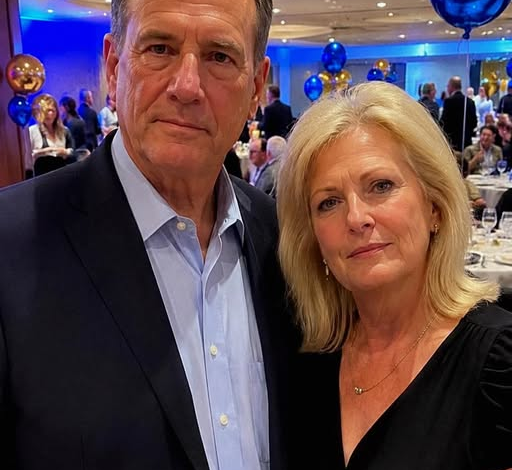
My retirement party was supposed to be simple.
A few speeches.
Some cake.
Awkward applause.
The usual collection of coworkers trying to balance sincerity with office humor.
After nearly four decades at the company, I expected gratitude, perhaps a plaque, maybe a few stories about difficult clients and long afternoons spent untangling paperwork no one else wanted to touch.
I certainly didn’t expect my marriage to end before dessert.
But life has a strange sense of timing.
Especially when the truth has been waiting years for an audience.
The banquet room buzzed with the comfortable energy of people who had known each other a long time. Tables were decorated with photographs from company events stretching back decades. Some of the younger employees laughed at pictures from the 1980s as though they belonged in a museum.
In a way, they did.
My entire career felt like a museum exhibit that afternoon.
Thirty-eight years reduced to framed photos, speeches, and memories.
I wasn’t sad.
Not exactly.
There was nostalgia, certainly.
A sense of closing a chapter.
But mostly there was gratitude.
I had spent most of my adult life helping people navigate a system that rarely felt designed for human beings.
Insurance claims.
Benefits.
Appeals.
Paperwork.
Policies.
Forms.
Endless forms.
The work was never glamorous.
Nobody becomes a child dreaming about spending their life explaining deductibles and regulations.
Yet somewhere along the way, I discovered something important.
People rarely come to you on their best day.
Most of the people sitting across my desk arrived frightened.
Confused.
Angry.
Overwhelmed.
A spouse had died.
A business was struggling.
A medical crisis had changed everything.
A denial letter had arrived in the mail.
A family was running out of options.
The paperwork was never really the point.
The people were.
And for thirty-eight years, I tried to remember that.
I didn’t cure diseases.
I didn’t save lives.
I didn’t invent anything.
I simply sat with people when they felt lost and helped them understand what came next.
Most days, that felt like enough.
My husband never understood that.
To him, my career existed in the broad category of things that happened while he was doing more important work.
When people asked what I did, he often answered for me.
“She works in an office.”
“She handles paperwork.”
“Desk-job stuff.”
The descriptions weren’t technically wrong.
They were just painfully incomplete.
Like describing a surgeon as someone who uses knives.
Or a teacher as someone who grades papers.
The details were accurate.
The truth was missing.
For years, I told myself it didn’t matter.
Not everyone has to understand your work.
Not everyone has to celebrate it.
Not everyone has to see what you see.
Marriage requires compromise.
Patience.
Perspective.
At least that’s what I believed.
What I didn’t realize was how much of myself I had slowly adjusted to fit inside his understanding.
How often I minimized my accomplishments before he could.
How often I translated my own life into smaller language.
How often I accepted being overlooked because challenging it felt exhausting.
That afternoon, I thought we were celebrating retirement.
My husband apparently thought we were celebrating something else entirely.
The speeches had barely begun when he stood.
At first, I assumed he was going to say something kind.
A memory.
A joke.
A story from our early years.
The room quieted.
People smiled politely.
Then he cleared his throat and announced that after thirty-two years of marriage, he wanted a divorce.
For a moment, I genuinely thought I had misheard him.
The room froze.
Forks stopped moving.
Conversations died mid-sentence.
Even the servers seemed to pause.
The silence felt physical.
Heavy.
Impossible.
I remember staring at him and wondering how someone could choose that moment.
Not the divorce itself.
The timing.
The setting.
The audience.
The deliberate public nature of it.
Years later, I would understand something I couldn’t see then.
The announcement wasn’t simply about ending a marriage.
It was about control.
It was about ownership of the narrative.
He believed my retirement party belonged to him now.
That he could redefine the event.
Redirect the attention.
Transform a celebration of my life into a commentary on our marriage.
And for a few seconds, it worked.
All eyes shifted.
Shock rippled across the room.
The story changed.
Except something unexpected happened.
Nobody followed his script.
My supervisor stood first.
Then another colleague.
Then another.
Instead of discussing the divorce, they continued the retirement celebration.
Only now the speeches sounded different.
More personal.
More honest.
Almost urgent.
As though people suddenly realized they might never again have the chance to say what needed saying.
One former coworker described a widow who arrived in tears after receiving a stack of incomprehensible paperwork following her husband’s death.
Apparently, she had spoken about me for years.
Not because I solved a problem.
Because I sat with her for three hours and explained every page until she understood.
Another colleague remembered a small-business owner convinced he was about to lose everything after an administrative error triggered months of complications.
He still sent holiday cards.
Not because I performed a miracle.
Because I answered the phone every time he called.
A manager shared statistics about client satisfaction.
Retention.
Appeals.
Numbers.
Then he stopped reading and said something I will never forget.
“The numbers don’t actually explain what she did.”
And suddenly story after story began emerging.
People I barely remembered.
Conversations I had forgotten.
Moments I assumed were insignificant.
A frightened father trying to secure coverage for his daughter’s treatment.
An elderly couple overwhelmed by paperwork.
A family struggling after a sudden diagnosis.
A woman navigating benefits after losing her spouse.
I sat there listening, stunned.
Not because these things happened.
Because I had never viewed them as remarkable.
They were simply my job.
The workday.
Tuesday mornings.
Thursday afternoons.
Ordinary moments repeated thousands of times.
Yet hearing them reflected back through other people’s experiences revealed something I had never fully understood.
The impact of a life is often invisible to the person living it.
We experience our actions one conversation at a time.
One task at a time.
One problem at a time.
We rarely see the larger pattern.
Other people do.
And for the first time, I heard my own story without my husband’s interpretation layered over it.
Without minimization.
Without dismissal.
Without someone quietly translating my accomplishments into something smaller.
Then came the biggest surprise of all.
The company’s president took the microphone.
He spoke about a new initiative being launched across the organization.
A client-support program designed around empathy, accessibility, and personalized guidance.
A formal effort to teach future employees the very approach I had spent decades developing informally.
Then he announced the name.
The Margaret Initiative.
My name.
Attached permanently to a program built around work I never realized anyone was paying attention to.
The room erupted.
Applause.
Cheers.
People standing.
Some crying.
I sat completely still.
Because at that moment, two realizations collided.
The first was joy.
The overwhelming realization that my work mattered.
That the countless unrecorded conversations mattered.
That kindness mattered.
That patience mattered.
That showing up consistently for people mattered.
The second realization hurt much more.
My husband leaned toward me and quietly said something.
“I guess I always felt invisible.”
The sentence should have inspired sympathy.
Instead, it revealed everything.
Invisible.
He felt invisible.
And suddenly I understood the truth.
He wasn’t invisible.
I was.
For years, I had adjusted myself to accommodate his need to be the center of every room.
Every achievement became smaller.
Every success became shared.
Every dream became negotiable.
Every accomplishment became something not worth mentioning.
Not because he demanded it directly.
Because I learned that shrinking myself kept the peace.
The problem with shrinking yourself is that eventually people stop seeing you altogether.
Not because you disappeared.
Because you’ve spent years helping them look past you.
Sitting there surrounded by people describing the impact of my career, I realized something profound.
The woman they were celebrating wasn’t new.
She had always existed.
The difference was that everyone else could see her.
Everyone except the person sitting beside me.
The divorce papers came later.
The logistics came later.
The difficult conversations came later.
But emotionally, the marriage ended in that ballroom.
Not because he asked for a divorce.
Because I finally understood what I had been living inside.
Walking away wasn’t dramatic.
There were no shouting matches.
No revenge.
No public confrontations.
Just clarity.
The kind that arrives once and refuses to leave.
People often describe major life changes as acts of courage.
I understand why.
But courage wasn’t what carried me forward.
Alignment was.
For the first time in years, my external life matched my internal truth.
I wasn’t leaving in search of applause.
The applause had already faded.
I wasn’t leaving because strangers validated me.
Validation is temporary.
I was leaving because I finally recognized myself.
Because I understood that honoring who you are sometimes requires walking away from people committed to misunderstanding you.
Retirement turned out to be less of an ending than a beginning.
The company launched the program.
I stayed involved as a consultant.
Young employees trained through a system built around empathy rather than efficiency alone.
Stories continued arriving.
Letters.
Emails.
Phone calls.
People sharing how a conversation had helped during a difficult time.
Not because I was extraordinary.
Because human beings remember being treated like human beings.
The lesson wasn’t about career success.
It wasn’t about recognition.
It wasn’t even about divorce.
It was about visibility.
The danger of spending so many years adapting yourself to someone else’s perception that you lose sight of your own.
The danger of believing a life only matters if it looks impressive from the outside.
And the extraordinary freedom that comes when you stop asking people to understand your value and start living as though it already exists.
My husband thought he was stealing my moment.
Perhaps he genuinely believed that.
Perhaps he thought a divorce announcement would reduce me back to the role he always assigned me.
The woman with the office job.
The woman with the paperwork.
The woman whose life fit neatly into the margins of his own.
Instead, he gave me something unexpected.
A chance to hear my story clearly.
A chance to see myself through the eyes of people whose lives I had touched.
A chance to recognize that my work, my voice, and my purpose had always been larger than the space he reserved for them.
In the end, I didn’t walk away toward applause.
Applause fades.
I walked toward truth.
Toward work that reflected my values.
Toward relationships built on mutual respect.
Toward a future that no longer required me to become smaller for someone else’s comfort.
And for the first time in a very long time, I felt perfectly visible.