At Our Family Gathering, Most People Thought My 6-Year-Old Daughter Was Just Upset—Then A Relative Noticed Something That Changed The Conversation.

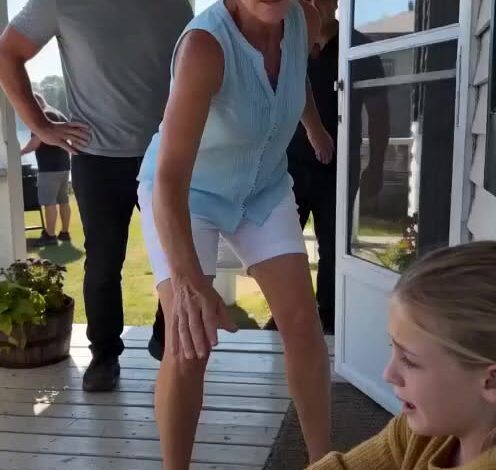
What started as a joyful family reunion beside a quiet lake nearly ended in tragedy—and it all began with a little girl wearing a sweater on one of the hottest days of the summer.
At first, nobody thought much of it.
Children raced across the grass, laughter echoed from the shoreline, and relatives gathered around picnic tables beneath the bright July sun. The annual family reunion at the old lakeside cabin in upstate New York was unfolding exactly as it had for generations.
The weather was perfect.
The food was plentiful.
The atmosphere was cheerful.
Yet hidden beneath the celebration was a danger no one saw coming.
For Mark, family gatherings had never felt quite the same after the death of his wife several years earlier. Raising his daughter Lily alone had changed every part of his life. Every decision, every sacrifice, every plan revolved around one goal: giving his little girl a safe and happy childhood.
It wasn’t always easy.
Some relatives often questioned his parenting. They believed he worried too much, checked on Lily too often, and protected her more than necessary.
Mark ignored the criticism.
Because if there was one thing he knew with absolute certainty, it was his daughter.
And that afternoon, something about her felt wrong.
While dozens of children ran between the lake and the yard, Lily sat alone beneath the shaded porch.
She wasn’t laughing.
She wasn’t playing.
She wasn’t talking to anyone.
Instead, she sat curled into herself with her knees pulled tightly against her chest.
The sight immediately caught Mark’s attention.
Then he noticed the sweater.
A thick yellow sweater.
In July.
On a day so hot that nearly everyone else wore shorts and light clothing.
A knot formed in his stomach.
Lily hated being overdressed in warm weather. She always had.
So why was she covering herself now?
As he approached, his concern deepened.
Tears were sliding down her cheeks.
His heart dropped.
“Lily?” he asked softly, kneeling beside her. “Sweetheart, what’s wrong?”
Instead of answering, she pulled away.
Quickly.
Fearfully.
She clutched one arm tightly against her body as though protecting it.
Mark felt a surge of alarm.
“Lily, look at me.”
When he gently touched her shoulder, she cried out.
The scream was sharp and immediate.
Pain.
Real pain.
Not frustration.
Not attention-seeking behavior.
Pain.
Several relatives turned toward the porch.
But rather than sharing Mark’s concern, many immediately offered explanations.
“She’s probably upset the other kids aren’t paying attention to her.”
“She’s always been sensitive.”
“Maybe she just wants everyone looking at her.”
One relative shook their head.
“Mark, you’re too protective. She’ll be fine.”
The comments infuriated him.
Because the fear on Lily’s face wasn’t fake.
The trembling wasn’t fake.
The way she guarded her arm wasn’t fake.
Something was seriously wrong.
Yet the criticism continued.
Some suggested she needed discipline.
Others argued she was simply being dramatic.
The conversation grew increasingly uncomfortable until one unexpected observation changed everything.
Mark’s brother-in-law, David, had been watching quietly.
Then he noticed something near Lily’s sleeve.
A stain.
Dark.
Spreading.
At first, it appeared insignificant.
Then David stepped closer.
His expression immediately changed.
“Oh my God.”
The words silenced everyone.
Carefully, he lifted the edge of the sweater sleeve.
What lay underneath transformed the entire gathering in an instant.
Lily’s arm was badly injured.
The skin was swollen.
Discolored.
Angry red.
Fluid had soaked through the fabric.
Even worse, red streaks stretched upward from the wound toward her shoulder—a warning sign that infection was spreading through her body.
Nobody spoke.
Moments earlier, people had accused a frightened child of seeking attention.
Now they stood frozen in horror.
Mark felt sick.
Without hesitation, he scooped Lily into his arms.
Her body felt unnaturally hot.
She was weak.
Exhausted.
Barely able to keep her eyes open.
The reality was terrifying.
As panic replaced skepticism, questions came pouring out.
“What happened?”
“When did this happen?”
“Why didn’t anyone know?”
The answers were heartbreaking.
In a trembling voice, Lily explained that several days earlier she had been bitten by a large dog while staying with an elderly neighbor who occasionally watched her.
The injury had frightened her.
But what happened afterward frightened her even more.
Instead of receiving immediate medical treatment, the wound had simply been cleaned and bandaged at home.
According to Lily, she had been strongly discouraged from telling anyone.
Confused and scared, she obeyed.
As the days passed, she hid the injury beneath her sweater.
She didn’t want to cause trouble.
She didn’t want anyone to be angry.
And she didn’t understand how dangerous the situation was becoming.
While she suffered in silence, the infection continued spreading.
By the time the family discovered the truth, her condition had become critical.
Someone called 911.
Paramedics arrived within minutes.
One look at Lily’s arm told them everything they needed to know.
This was serious.
Very serious.
The medical team worked quickly.
As they assessed her condition, concern spread across their faces.
The signs pointed toward a rapidly progressing infection requiring immediate intervention.
Within moments, Lily was loaded into an ambulance.
Mark climbed in beside her.
He never let go of her hand.
The ride to the hospital felt endless.
Every second stretched into eternity.
Fear consumed him.
The possibility that the infection had spread farther than anyone realized haunted every thought.
For a parent, there are few experiences more terrifying than watching your child suffer while feeling powerless to stop it.
At the hospital, doctors immediately began treatment.
Tests revealed the infection had already spread beyond the initial wound site.
The delay in treatment had allowed dangerous bacteria to invade surrounding tissue.
Emergency procedures became necessary.
Doctors explained that animal bites can become severe infections surprisingly quickly when left untreated.
Lily underwent surgery.
Then additional treatments.
Then more monitoring.
Hour after hour passed.
Mark sat in waiting rooms, hospital corridors, and uncomfortable chairs, praying for good news.
The uncertainty was unbearable.
Although doctors remained hopeful, they warned that serious complications can develop when infections are allowed to progress unchecked.
Meanwhile, authorities launched an investigation into the circumstances surrounding the injury.
Questions needed answers.
How had the bite occurred?
Why wasn’t medical care sought immediately?
Why had a frightened child been left carrying such a burden alone?
Back at the cabin, the atmosphere had completely changed.
The celebration was over.
Relatives who had dismissed Lily’s distress now replayed the afternoon repeatedly in their minds.
Many were overwhelmed by guilt.
They remembered the tears.
The fear.
The sweater.
The cries of pain.
All the signs had been there.
And they had ignored them.
Several family members later apologized to Mark.
Others admitted they had been wrong.
The experience became a painful lesson for everyone involved.
Children don’t always communicate distress the way adults expect.
Sometimes fear looks like silence.
Sometimes pain looks like withdrawal.
And sometimes the child who seems quietest is the one suffering the most.
Lily’s recovery was slow.
Weeks of treatment followed.
Doctors monitored the infection carefully to ensure it was fully eliminated.
Physical healing took time.
Emotional healing took even longer.
Medical professionals recognized that the trauma extended beyond the injury itself.
Lily needed reassurance.
Patience.
Support.
She needed to feel safe again.
Fortunately, she wasn’t alone.
Mark remained beside her every step of the way.
Through every procedure.
Every setback.
Every small victory.
Gradually, signs of improvement began appearing.
The fever disappeared.
Her strength returned.
The spark in her eyes slowly came back.
And then, one day, the smile that everyone feared might be lost forever finally returned as well.
When doctors eventually cleared her to leave the hospital, it felt like a miracle.
But Mark knew they needed more than physical recovery.
They needed a fresh start.
Soon afterward, father and daughter moved to a different community.
A new home.
A new beginning.
A chance to leave painful memories behind and focus on healing.
The change transformed their lives.
Lily made new friends.
She returned to school.
She laughed more often.
Little by little, childhood returned.
Then came a moment Mark would never forget.
Months later, on a bright afternoon, Lily ran across a field chasing butterflies.
She wore a short-sleeved shirt.
No sweater.
No hiding.
No fear.
Her laughter carried through the air as she raced through the sunshine.
Mark watched from nearby.
For a moment, emotion overwhelmed him.
Because he knew how close he had come to losing her.
He knew how easily the story could have ended differently.
And he understood something that everyone from that family reunion would carry with them forever.
Children deserve to be heard.
Their fears matter.
Their pain matters.
Their silence matters.
The quietest cries for help are often the ones that need our attention most.
What initially appeared to be ordinary behavior turned out to be a medical emergency hiding in plain sight.
Thankfully, one person chose to look closer.
One person noticed.
One person asked questions.
And because someone finally paid attention, a little girl received the help she desperately needed.
Lily’s story is more than a story about an injury.
It is a reminder.
A reminder to listen.
To observe.
To trust our instincts when something feels wrong.
Because sometimes the truth is hidden beneath a smile, a quiet voice, or even a yellow sweater on a hot summer day.