Two years after the heartbreak of her divorce, Valerie Bertinelli has found love again at 63… better sit down before you see her new man, because there’s a chance you’ll recognize him Wow…

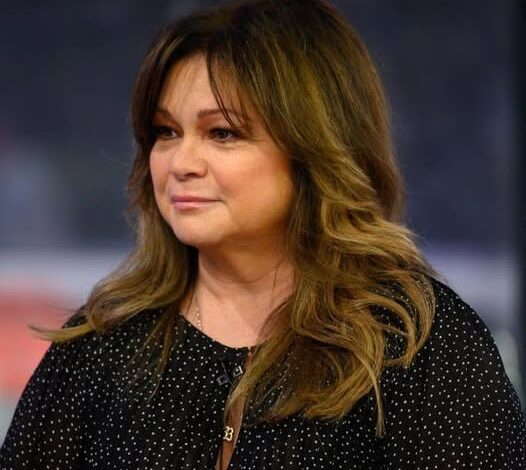
For a long time, Valerie believed the most tender chapters of her life had already been written.
She had known love in ways that were beautiful, complicated, public, and painful. She had also known the kind of loss that doesn’t simply pass with time, but settles quietly into the bones. Eddie Van Halen’s death left a grief that could not be neatly explained or easily put away. Even after their marriage had ended, the bond between them remained part of her story—woven through memories, family, music, and a history no one else could fully understand.
Then came another ending.
Her marriage to Tom Vitale fell apart, bringing with it a different kind of heartbreak. Not the shock of death, but the slow ache of realizing that something once built with hope could no longer hold. Between grief and divorce, Valerie found herself standing in the ruins of two major losses, trying to understand who she was without the relationships that had shaped so much of her life.
So she turned inward.
She focused on healing.
She poured herself into her work, her animals, her home, and the small routines that helped her feel steady again. She learned to find comfort in quieter things: a peaceful morning, a loyal pet beside her, a project that gave her purpose, a laugh shared with a friend. Little by little, she rebuilt a life that belonged fully to her.
But love?
Romantic love felt like something behind her.
Not because she was bitter.
Not because she had stopped believing it existed.
But because her heart was tired.
After so much pain, it seemed safer to imagine that the deepest kind of partnership had already come and gone. She could still love people. She could still be grateful. She could still live fully. But the idea of opening herself again—to trust, to vulnerability, to the possibility of being hurt—felt almost impossible.
Then someone unexpected entered her life.
He was a writer she had admired from a distance at first. Someone whose words had caught her attention before his presence ever did. What began as interest slowly became conversation. Conversation became friendship. Friendship became trust.
There was no dramatic entrance.
No sweeping announcement.
No instant fairytale.
Just two people finding each other carefully, honestly, and gently.
He made her laugh.
That mattered.
After years of carrying sorrow, laughter felt like sunlight returning to a room she had forgotten how to open. He did not rush her. He did not demand a version of her she was not ready to give. Instead, he became a steady presence—someone who listened, understood, and made ordinary moments feel warm again.
And somewhere along the way, without fanfare or warning, something inside her began to soften.
The walls she had built for survival did not collapse all at once.
They opened slowly.
One conversation at a time.
One laugh at a time.
One quiet act of care at a time.
By the time Valerie finally admitted, “I’m in love,” the words carried more than romance. They carried disbelief. Gratitude. Wonder. The tender astonishment of someone who thought that door had closed forever, only to find it gently opening again.
This love was not the loud kind built for cameras.
It was not a whirlwind designed for headlines, red carpets, or public spectacle.
It was slower than that.
Deeper.
More careful.
It belonged to two people who had lived enough life to understand that joy is precious because it is never guaranteed. They knew how fragile happiness could be. They knew what it meant to lose, to heal, and to begin again with trembling hands.
That made the love feel even more meaningful.
Not careless.
Not naïve.
Chosen.
When Valerie later described him as her “partner in life,” the phrase felt earned. It was not the language of someone swept away by fantasy. It was the voice of a woman who had walked through grief, disappointment, and reinvention—and still found the courage to let her heart turn toward someone new.
That is what made the story so moving.
Not simply that Valerie found love again.
But that she found it after believing she might not.
After loss.
After endings.
After learning how to stand on her own.
Her happiness became something more powerful than a romance story. It became proof that the heart, even when bruised, does not always stay closed. Sometimes it rests. Sometimes it protects itself. Sometimes it waits until the right kind of tenderness comes along.
And then, quietly, almost miraculously, it remembers how to open.
Valerie’s new chapter is not about replacing what came before. Nothing could erase the people, memories, or heartbreaks that shaped her. Instead, it is about discovering that life can still hold beauty after sorrow. That love can arrive later than expected. That healing does not mean forgetting the past—it means making room for light beside it.
For years, she carried grief.
Then she found peace.
And when she least expected it, she found love again.
Not as a rescue.
Not as an escape.
But as a hard-won miracle.
A reminder that even after the deepest losses, the heart can still recognize warmth.
It can still reach.
It can still hope.
And sometimes, when the world feels most certain that a story is over, life quietly begins writing a new one.