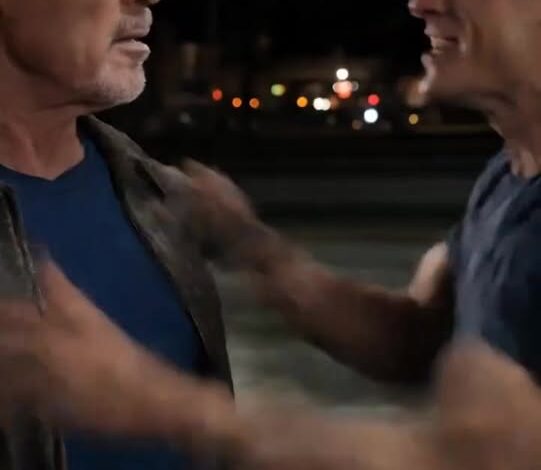
The highway was almost completely empty that night, the kind of deep late-night silence that makes even small sounds feel amplified. Far beyond the edge of town, where the last clusters of streetlights disappeared into darkness, a lonely gas station stood glowing beneath harsh fluorescent lights. It looked frozen in time — one of those forgotten roadside stops where truckers grabbed coffee at midnight and exhausted travelers paused only long enough to refill their tanks before vanishing back into the dark.
Cold wind swept across the pavement in uneven gusts, carrying the smell of gasoline and distant rain. The station’s faded sign buzzed softly overhead while insects circled lazily around the lights. Inside the tiny convenience store, the cashier sat half-asleep behind the counter scrolling through his phone between customers. Nights out there were usually uneventful. Hours often passed without anything more dramatic than someone buying cigarettes or asking for directions.
That was exactly why nobody noticed the old white van at first.
It pulled slowly beside pump number three, its engine rattling faintly before shutting off. The vehicle looked ancient beneath the lights — faded paint, rust spreading along the lower panels, dents scattered across the doors like scars collected over decades of hard miles. It was the kind of van most people ignored automatically, assuming it belonged to some tired traveler trying to reach the next town before dawn.
The driver stepped out carefully.
An elderly man, probably somewhere in his seventies, wearing a worn leather jacket zipped halfway against the cold and a dark cap pulled low over gray hair. His movements were slow but steady, not fragile exactly, just deliberate in the way older people sometimes move after years of injuries and exhaustion settle permanently into the body.
He didn’t look dangerous.
If anything, he looked tired.
The old man inserted the fuel nozzle calmly and stared out toward the highway while the tank filled. His face carried the expression of someone deeply accustomed to solitude. The kind of loneliness road travelers wear after too many silent miles.
Inside the station, the cashier barely glanced up.
Nothing about the scene seemed unusual.
Then the black sports car arrived.
It exploded into the parking lot with loud music shaking the windows, tires screeching slightly as it cut across empty spaces before stopping abruptly beside the old van. Bright headlights swept violently across the pumps, shattering the stillness instantly.
Two young men climbed out laughing loudly.
One wore a backward red baseball cap and expensive sneakers too clean for the dusty highway stop. The other was taller, thinner, carrying himself with the restless arrogance of someone who had spent too many years believing consequences belonged to other people.
Even from inside the store, the cashier immediately sensed trouble.
The pair were already loud before they even reached the pumps — shoving each other, cursing casually, throwing energy into the empty night simply because they needed attention from something.
Then they noticed the old man.
The taller one burst out laughing first.
“Look at this thing,” he shouted, pointing at the van. “That vehicle survived the Stone Age.”
His friend laughed harder.
“I think the driver did too.”
The comments echoed sharply across the silent station.
The old man didn’t respond.
He simply kept pumping gas calmly as though he hadn’t heard them at all.
That somehow irritated them more.
Mocking people only feels satisfying to certain kinds of men when they get a reaction. Silence forces them to confront themselves instead, and many people cannot tolerate that discomfort for long.
The young men drifted closer.
“You driving this thing across the country or escaping a museum?” the taller one asked loudly.
Still no response.
The one in the red cap circled slowly around the van inspecting it dramatically.
“Man, this thing probably doesn’t even have airbags.”
Then, grinning:
“Do you even see well enough to drive at night anymore?”
The cashier inside the station finally looked up fully now.
The atmosphere had changed.
Not explosive yet.
But wrong.
The old man slowly replaced the fuel nozzle into the pump and turned toward them for the first time.
His expression remained completely calm.
Not fearful.
Not angry.
Steady.
For a brief second, both young men actually looked uncomfortable beneath the weight of that stare. There was something unsettling about how composed he seemed. Most people in that situation would’ve reacted emotionally somehow — embarrassment, irritation, fear.
This man looked none of those things.
“I’m just trying to finish my stop peacefully,” he said quietly.
His voice wasn’t weak either.
Low.
Controlled.
Certain.
The taller one smirked.
“And what if we’re trying to have some fun?”
The old man held his gaze for another second before answering.
“Then I’d suggest finding it somewhere else.”
The words weren’t threatening.
But something underneath them carried warning anyway.
The one in the red cap stepped closer now, smiling wider in the way insecure men often do when trying to reclaim confidence in front of friends.
“You know,” he said casually, “you should show a little respect to the younger generation.”
Then his tone shifted colder.
“Maybe hand over your wallet.”
Silence dropped instantly across the gas station.
Even the music from the sports car suddenly felt distant beneath the tension settling into the night air.
Inside the store, the cashier slowly lowered his phone and reached beneath the counter toward the emergency line.
The old man didn’t move.
Neither young man seemed fully committed yet — not really. Like many opportunistic criminals, they were testing the situation more than executing a carefully planned robbery. They expected fear. Compliance. Weakness.
What they saw instead confused them.
“You boys should leave,” the old man said quietly.
The taller one laughed nervously.
“Or what?”
That’s when the red-capped kid pulled out the knife.
The blade caught the fluorescent light instantly.
Small.
Sharp.
Real.
And suddenly the situation stopped feeling like stupid late-night bullying and became something far more dangerous.
The cashier froze completely behind the glass.
Outside, the old man looked down briefly at the knife, then back at the young man holding it.
Still calm.
Almost strangely calm.
“This is your last chance,” he said softly.
But arrogance is often loudest seconds before fear arrives.
The young man stepped forward aggressively.
“What are you gonna do about it, old man?”
What happened next unfolded so quickly neither attacker understood it at first.
The old man moved.
Not wildly.
Not emotionally.
Precisely.
His hand shot forward, locking onto the wrist holding the knife before twisting sharply sideways. Bone cracked loudly enough for the cashier to hear inside the store. The young man screamed as the blade flew from his hand, skidding violently across the pavement.
Before the second attacker could react, the old man pivoted smoothly, driving the first against the hood of the sports car with terrifying efficiency.
The taller one rushed forward instinctively.
Bad decision.
Within seconds he hit the concrete hard, gasping for air after one brutal movement folded him downward helplessly.
The entire fight lasted maybe seven seconds.
Then silence returned.
Real silence this time.
The old man stood between them breathing steadily while both attackers stared upward in shock, struggling to process what had just happened.
Gone was the harmless elderly traveler they mocked moments earlier.
In his place stood someone terrifyingly controlled.
The red-capped kid clutched his wrist, eyes wide with fear now.
“Who… who are you?”
The old man bent down calmly, picked up the knife, and tossed it several feet farther away.
Then he answered.
“I spent thirty-two years in special operations.”
The words landed heavier than shouting ever could.
Suddenly everything about him made sense:
the posture,
the calmness,
the eyes that never panicked.
The young men realized too late they hadn’t cornered a weak old stranger.
They had threatened someone who survived situations far worse than them long before they were even born.
The old man adjusted his jacket slowly.
“Now both of you are going to stay exactly where you are,” he said firmly, “until the police get here.”
Neither argued.
Fear had replaced arrogance completely now.
Inside the station, the cashier finally stepped outside cautiously, staring at the old man with open disbelief.
“You okay, sir?”
The old man nodded once.
“I’m fine.”
The cashier glanced at the attackers lying helplessly beside the pumps.
“You did all that by yourself?”
The old man looked down briefly at his shaking hands.
Then quietly:
“I learned a long time ago that staying calm matters more than staying strong.”
Minutes later, police lights appeared flashing across the empty highway.
Officers arrived expecting chaos and instead found two terrified young men sitting silently on the pavement while an elderly driver waited beside his old van with perfect composure.
Security footage later confirmed everything.
Attempted armed robbery.
Self-defense.
Controlled force.
One officer recognized the old man’s name immediately after checking identification.
His entire expression changed.
“Sir…” the officer said carefully, almost respectfully, “you served overseas?”
The old man nodded slightly.
“A long time ago.”
The officer looked at him differently after that.
Not because violence impressed him.
Because restraint did.
Most people in dangerous situations panic.
Escalate.
Lose control.
This man hadn’t.
Even after being threatened with a knife, he responded with discipline instead of rage.
As statements finished and the attackers were placed into police vehicles, the taller one looked back toward the old man one final time.
“You could’ve seriously hurt us.”
The old man studied him quietly before answering.
“I was trying not to.”
That sentence stayed with the cashier long after everyone left.
Because beneath the fear and adrenaline, something deeper lingered from the encounter:
the realization that real strength rarely announces itself loudly.
The old man never bragged.
Never threatened anyone.
Never acted powerful.
He simply carried decades of experience quietly beneath tired eyes and worn clothing while strangers mistook silence for weakness.
By sunrise, the gas station looked ordinary again.
The police lights were gone.
The highway returned to stillness.
The fluorescent lights buzzed softly over empty pumps like nothing had happened at all.
Only the cashier still replayed the image in his mind:
an old white van beneath cold midnight lights,
two reckless young men learning fear for the first time,
and a tired-looking elderly stranger reminding everyone there that strength is not always visible until the moment it absolutely has to be.