For years, J.K. Rowling was known first as a storyteller.
Her name became inseparable from the world of Harry Potter, a literary universe that shaped childhoods, filled bookstores, inspired films, and created one of the most successful cultural franchises in modern history. Her books sold in the hundreds of millions. Her characters became global icons. Her imagination built a legacy that crossed generations.
But in recent years, the public conversation around Rowling has shifted dramatically.
Today, discussions about her often focus less on magic, fiction, or literary achievement, and more on her outspoken views about sex, gender, women’s rights, and public policy.
What began as a series of posts and essays has grown into one of the most heated cultural debates in the United Kingdom and beyond. To her supporters, Rowling is defending women’s sex-based rights and insisting that biological sex must remain legally and socially meaningful. To her critics, her comments have contributed to harmful attitudes toward transgender people and intensified an already painful public debate.
The divide has become sharp.
And Rowling has remained at the center of it.
Her involvement began when she started publicly questioning proposed gender-related policies and legal changes. She argued that sex remains an important category in law, sports, single-sex spaces, and public life. She also expressed concern that some policy shifts could weaken protections created for women.
Because of her enormous platform, her comments immediately drew global attention.
Some praised her for speaking openly about a controversial issue.
Others condemned her views and accused her of using her influence in ways they believed harmed transgender communities.
The debate quickly moved far beyond the literary world.
Politicians, activists, academics, journalists, celebrities, and advocacy groups all entered the conversation. In the United Kingdom especially, disputes over gender recognition laws, single-sex spaces, equality policy, prisons, sports, and workplace protections became recurring national issues.
Rowling’s name appeared again and again in those discussions.
Several actors associated with the Harry Potter franchise publicly distanced themselves from her views. Daniel Radcliffe, Emma Watson, and Rupert Grint each released statements supporting transgender people and emphasizing the importance of respecting transgender identities.
Their responses attracted major attention because of their long connection to the fictional world Rowling created.
For many fans, the disagreement felt deeply personal.
The franchise that had once seemed like a shared cultural home had become tied to a painful and polarizing real-world debate.
Despite the criticism, Rowling did not retreat.
She continued defending her position, arguing that open discussion about sex-based rights should not be treated as hateful or forbidden. She has repeatedly said that people must be able to discuss law, language, safety, and women’s spaces without fear of professional punishment or social exile.
As the controversy grew, legal and political developments gave the debate even greater visibility.
Court cases, government consultations, workplace disputes, public campaigns, and policy proposals became part of a wider struggle over how society should balance women’s rights, transgender rights, free expression, and institutional protections.
Rowling frequently commented on these developments, using her social media accounts to share her perspective with millions of followers.
One of the most high-profile controversies involved Algerian Olympic boxer Imane Khelif during the Paris Olympics. Khelif became the subject of widespread online speculation and debate about eligibility and gender. Rowling was among several prominent public figures who commented on the issue, helping intensify an already explosive international conversation.
After the Olympics, Khelif filed a complaint in France concerning alleged online harassment. Reports indicated that Rowling and other public figures were mentioned in connection with the complaint, and French authorities opened an investigation. The case drew global attention because of the people involved and the sensitive issues at stake.
Through it all, Rowling continued to argue that questions about sex, gender, and women’s protections must remain open to public debate.
Her supporters see this as a defense of free expression and legal clarity.
Her critics see it as part of a broader campaign they believe undermines transgender equality.
That disagreement has only deepened over time.
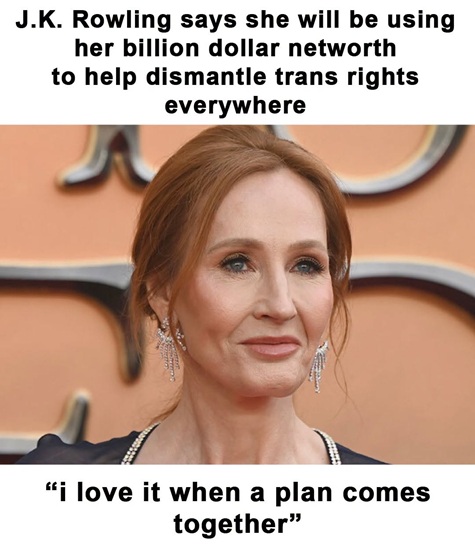
In recent years, Rowling’s involvement has expanded beyond commentary. She has increasingly directed attention toward legal advocacy and financial support for causes she describes as defending women’s sex-based rights.
Public announcements have indicated that her initiatives are intended to support individuals and organizations involved in legal disputes over workplace rights, public participation, female-only spaces, and related policy questions. Rowling has suggested she is willing to use her personal wealth and continuing earnings to support these efforts.
That marks a significant shift.
The debate is no longer confined to social media arguments or opinion columns.
It has moved into courts, workplaces, universities, sporting bodies, regulatory systems, and legislatures.
Supporters of Rowling view this legal activism as necessary. They argue that women who raise concerns about sex-based rights often face institutional pressure and need resources to defend their positions.
Critics argue that such funding may strengthen efforts that they believe restrict transgender rights or make public life more hostile for transgender people.
Both sides believe fundamental rights are at stake.
That is what makes the issue so emotionally charged.
For some, Rowling has become a symbol of courage against cultural pressure.
For others, she has become a symbol of exclusion.
What is undeniable is her influence.
Few writers in modern history have been able to shape public conversation at this scale outside their literary work. Rowling’s statements regularly generate international headlines. Her views are analyzed by politicians, challenged by activists, defended by supporters, and debated across news programs, social media platforms, and legal forums.
At the same time, her literary legacy remains enormous.
The Harry Potter series continues to sell, stream, entertain, and inspire new audiences. Films, merchandise, theme parks, stage productions, games, and future projects ensure that the world she created remains deeply embedded in global culture.
That creates a complicated public reality.
For many readers, Rowling’s books remain beloved.
For others, the controversy has changed how they engage with her work.
Some separate the art from the artist.
Others cannot.
As debates over sex, gender identity, law, and public policy continue, Rowling appears unlikely to step away. Her recent advocacy suggests she intends to remain active not only as a commentator, but as a financial and cultural force within the movement she supports.
Whether people view her as a defender of women’s rights or as a controversial critic of modern gender policy, her role in the debate is now firmly established.
The broader conversation is far from over.
Courts will continue hearing cases.
Governments will continue reviewing policy.
Advocacy groups will continue campaigning.
Public opinion will continue shifting, hardening, or dividing.
And J.K. Rowling will likely remain one of the most visible figures in that ongoing conflict.
Her story has become larger than literature.
It is now part of a defining cultural argument of the modern age—one about identity, law, speech, rights, and who gets to shape the boundaries of public life.
For better or worse, Rowling is no longer only the author of a fantasy world.
She has become a central figure in one of the real world’s most contentious debates.