Some stories are difficult to read because they force us to confront two very different sides of human nature at the same time. On one side is cruelty—acts so senseless and heartbreaking that they leave people struggling to understand how they could happen. On the other is compassion—the determination of strangers, veterinarians, and animal advocates who refuse to give up on a life that others have nearly destroyed.
Few stories illustrate that contrast more powerfully than the story of Buddy.
His journey began with an act of unimaginable cruelty and evolved into one of the most remarkable recoveries animal rescuers had ever witnessed.
In 2021, animal welfare organizations in Mississippi shared the heartbreaking details of a case that quickly attracted national attention. At the center of the story was Buddy, a friendly and affectionate dog known for his gentle temperament. According to those who knew him, Buddy was not aggressive. He wasn’t dangerous. He was simply a loving dog whose life would be changed forever by a horrific act of violence.
When rescuers first found him, the sight was devastating.
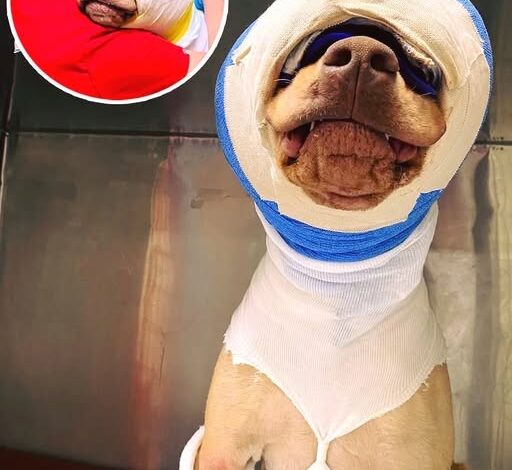
Buddy had suffered severe burns across much of his face, leaving him in critical condition and requiring immediate emergency treatment. The injuries were so extensive that experienced rescuers struggled to process the severity of what they were seeing. Adding to the horror, an extension cord had reportedly been found around his neck, underscoring the seriousness of the abuse he had endured.
For many involved in the rescue, it was one of the most disturbing cases they had ever encountered.
As details emerged, investigators determined that a child under the age of twelve was believed to be responsible for the incident. Because of the individual’s age, criminal prosecution was not legally possible.
The revelation sparked widespread public discussion.
People questioned how such a tragedy could occur, while others focused on broader conversations about animal welfare, empathy education, and the importance of teaching compassion from an early age. Although legal options were limited, one priority became clear to everyone involved:
Saving Buddy’s life.
The dog was placed under the care of the Tunica Humane Society, whose staff immediately began coordinating emergency treatment. Recognizing the severity of his injuries, they partnered with specialists at the Mississippi State University College of Veterinary Medicine, where a team of veterinarians and medical professionals prepared for what would become a long and uncertain battle.
The road ahead was daunting.
Severe burn injuries are among the most complex wounds veterinarians can treat. Recovery often requires months of intensive care, repeated procedures, pain management, infection prevention, and constant monitoring.
For Buddy, every day mattered.
Veterinarians worked tirelessly to clean and treat his wounds while keeping him as comfortable as possible. During the earliest stages of treatment, survival itself remained uncertain. Burn injuries can trigger a wide range of complications, and even small setbacks can become life-threatening.
Yet amid the grim circumstances, there were reasons for hope.
Despite the extensive damage to his face, Buddy’s vital signs remained stable.
And perhaps most encouraging of all, veterinarians believed his eyesight might be saved.
Although the tissue surrounding his eyes had been severely injured, specialists determined that his eyes themselves appeared intact. With careful treatment and future surgical intervention, there was a possibility that Buddy would retain at least some of his vision.
For his caregivers, that possibility became a powerful source of motivation.
As the weeks passed, Buddy began showing signs that he was not ready to give up.
The Tunica Humane Society regularly shared updates with supporters who had become emotionally invested in his recovery. Thousands of people followed his progress, celebrating every small victory along the way.
Bandage changes remained painful and challenging.
Skin graft procedures required careful monitoring.
Healing progressed slowly.
But progress was happening.
Each successful procedure represented another step forward.
Each improvement brought renewed hope.
Over time, the transformation became increasingly visible.
The swelling began to decrease.
His wounds slowly healed.
His strength gradually returned.
Veterinarians who had once focused entirely on survival could now begin planning for his future.
Perhaps the most emotional milestone came when Buddy reached a stage where portions of his bandages could be removed, allowing him to experience light and visual awareness again.
For months, much of his world had existed through pain, treatment, and limited sensory experiences.
Now, for the first time in a long while, he could begin seeing the world around him.
The moment was deeply moving for everyone involved.
Veterinary staff reported that Buddy’s behavior changed noticeably after regaining partial vision. He appeared more engaged, more curious, and more connected to his surroundings.
Simple activities suddenly became major victories.
He began exploring.
He responded more enthusiastically to caregivers.
He showed interest in toys.
His personality—hidden beneath months of trauma and recovery—was slowly reemerging.
Those who cared for him often described these moments as emotional reminders of why they had fought so hard to save him.
The dog who had arrived frightened, injured, and struggling to survive was beginning to rediscover joy.
As recovery continued, Buddy’s resilience became impossible to ignore.
Day by day, he regained confidence.
Week by week, his quality of life improved.
The playful and affectionate nature that had once defined him gradually returned.
Yet veterinarians were careful to remind supporters that his journey was far from over.
The injuries he suffered would leave permanent effects.
Buddy would require ongoing medical care for the rest of his life. His skin remained highly sensitive. His eyes required continued monitoring and protection. Exposure to sunlight needed to be carefully managed to prevent further complications.
In many ways, his recovery would become a lifelong process.
But that reality did little to diminish the remarkable progress he had achieved.
Medical healing was only one part of the journey.
Emotional healing mattered just as much.
Caregivers worked patiently to help Buddy rebuild trust and confidence. Every positive interaction, every walk, every play session, and every moment of affection helped him move further away from the trauma he had endured.
His ability to continue loving people despite everything that had happened to him touched countless hearts.
For many supporters, that resilience became the most inspiring part of his story.
Public interest in Buddy’s recovery remained strong throughout the process.
Animal lovers from across the country followed updates, donated to support his treatment, and celebrated each new milestone. His story sparked important conversations about animal welfare, abuse prevention, and the responsibilities humans have toward vulnerable animals.
Yet beyond the headlines and discussions, Buddy’s story remained deeply personal.
It was the story of a dog who suffered unimaginable pain.
A dog who faced overwhelming odds.
And a dog who refused to stop fighting.
Months after his rescue, updates from the Tunica Humane Society continued to reflect positive progress. Caregivers frequently shared stories of Buddy’s growing confidence, playful spirit, and improving health.
The moments that once seemed impossible were becoming reality.
He was playing.
He was exploring.
He was enjoying life again.
Today, Buddy’s story continues to stand as a powerful example of resilience, recovery, and the extraordinary impact that compassion can have on a life.
The scars he carries will never completely disappear.
Neither will the memories of what happened to him.
But thanks to the dedication of veterinarians, rescuers, animal advocates, and countless supporters, Buddy was given something that once seemed uncertain:
A second chance.
His journey serves as a reminder that while cruelty can leave lasting wounds, kindness has the power to create healing. It demonstrates how patience, medical care, and unwavering compassion can help even the most severely injured animals recover and thrive.
Against overwhelming odds, Buddy survived.
And in doing so, he became a symbol of hope for animal lovers everywhere—a living reminder that even after unimaginable suffering, healing is possible.