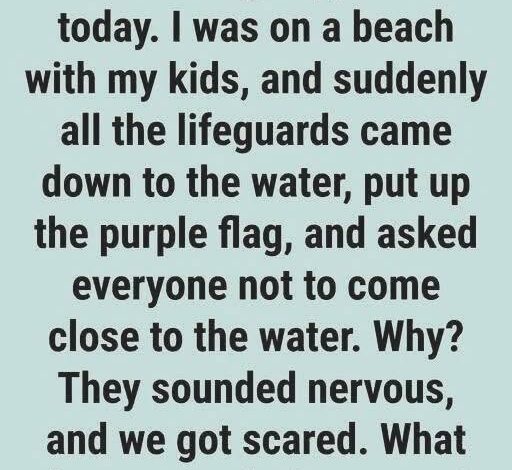
A small purple flag fluttering along the shoreline may not seem as dramatic as the red warning flags many beachgoers recognize immediately, but its message is no less important. While the ocean can appear calm, inviting, and perfectly safe on the surface, conditions beneath the water are constantly changing. The purple flag serves as a quiet reminder that the natural world operates on its own terms and that awareness is one of the most valuable safety tools any beach visitor can have.
Unlike flags that warn of dangerous surf or closed swimming conditions, a purple flag is typically used to alert the public to the presence of potentially hazardous marine life in the area. It does not necessarily mean the beach is closed or that entering the water is prohibited. Instead, it signals that lifeguards or coastal authorities have observed conditions that increase the likelihood of encountering sea creatures capable of causing injury, irritation, or discomfort.
For many beach visitors, the warning comes as a surprise. People often associate ocean hazards with rough waves, rip currents, or severe weather. Yet marine life can pose its own unique challenges, even on beautiful days when the water looks crystal clear and the shoreline seems peaceful.
The purpose of the purple flag is simple: to encourage caution without creating unnecessary alarm.
Marine life moves constantly with the rhythms of the ocean. Tides shift, currents change direction, temperatures fluctuate, and food sources migrate. These natural changes influence where sea creatures gather and how close they come to shore. As a result, conditions that seem perfectly normal one day may be very different the next.
Among the most common creatures associated with purple flag warnings are jellyfish. While many species are relatively harmless, others can cause painful stings that range from mild skin irritation to more severe reactions. Even when jellyfish themselves are not immediately visible, currents may carry their tentacles or remnants into swimming areas, creating unexpected hazards for swimmers and waders.
Portuguese man o’ war are another frequent concern in coastal regions. Although often mistaken for jellyfish, they are actually colonies of specialized organisms working together as a single unit. Their striking appearance can be beautiful, but their tentacles are capable of delivering painful stings that may require medical attention in some cases.
Stingrays are also commonly associated with purple flag warnings, particularly in warmer coastal waters. These creatures often rest quietly beneath the sand in shallow areas, making them difficult to see. Most stingrays are not aggressive and prefer to avoid human contact. However, if accidentally stepped on, they may react defensively, resulting in injuries that can be painful and require treatment.
Depending on the region, other marine animals or organisms may also trigger the display of a purple flag. Certain fish species, sea lice, or seasonal marine blooms can increase the likelihood of encounters that affect swimmers and beachgoers.
Importantly, the appearance of these creatures does not mean the ocean has become dangerous overall.
Marine life is a natural and essential part of healthy ocean ecosystems. The purple flag simply recognizes that people share these waters with wildlife and should remain aware of that reality while enjoying recreational activities.
When lifeguards raise a purple flag, they are relying on observations, environmental conditions, reports from swimmers, and their understanding of local marine patterns. Their goal is not to discourage visitors from entering the water but to provide information that allows individuals and families to make informed choices.
Knowing how to respond to the warning can significantly reduce risk.
One of the simplest and most effective safety recommendations involves shuffling your feet when walking through shallow water. This technique creates vibrations that alert stingrays to your presence, giving them an opportunity to move away before accidental contact occurs. In many coastal communities, this “stingray shuffle” has become a widely recommended safety habit.
Parents should also pay close attention to children when a purple flag is displayed. Young swimmers may be less aware of potential hazards and may not recognize warning signs if they encounter marine life. Keeping children within sight and staying close to designated swimming areas can help minimize unnecessary risks.
Another smart practice is speaking directly with lifeguards before entering the water. Lifeguards often have the most current information about local conditions and can explain exactly why the purple flag is flying that day. Their guidance may include recommendations about specific areas to avoid or additional precautions based on recent observations.
The ocean itself is constantly evolving throughout the day.
A beach that appears completely calm during the morning may experience different currents, water temperatures, or marine activity by afternoon. Wind patterns can shift unexpectedly. Tides can bring new organisms closer to shore. These natural changes are part of what makes coastal environments both fascinating and unpredictable.
Understanding this dynamic nature helps people approach the water with the respect it deserves.
Beach safety experts frequently emphasize that awareness is more effective than fear. Most encounters with marine life can be avoided through simple precautions and informed decision-making. Remaining calm, observing posted warnings, and respecting local safety guidance allow visitors to continue enjoying the beach while minimizing unnecessary exposure to hazards.
The purple flag is part of a larger system designed to communicate important information quickly and clearly. Like traffic signals on a roadway, beach warning flags help create a shared understanding among everyone using the shoreline. When visitors recognize and respect these signals, beaches become safer environments for swimmers, surfers, families, and marine wildlife alike.
Perhaps the most important lesson the purple flag offers is that nature deserves both appreciation and caution.
The ocean provides recreation, beauty, relaxation, and adventure. It invites millions of people into its waters every year. At the same time, it remains a living environment filled with creatures that have inhabited these ecosystems long before humans arrived. Respecting that reality allows people to enjoy the coast responsibly without losing sight of the natural forces at work.
Ultimately, a purple flag is not a reason to panic or avoid the beach altogether. It is simply a reminder to stay alert, informed, and mindful of your surroundings. By understanding what the flag represents and following basic safety recommendations, beachgoers can continue to enjoy the water while reducing the likelihood of unwanted encounters with marine life.
In the end, the purple flag represents something larger than a warning. It reflects the balance between recreation and responsibility, reminding us that the safest and most enjoyable beach experiences come from understanding the environment we are privileged to enjoy. Awareness, preparation, and respect for nature remain the best tools for ensuring every day at the shore is both memorable and safe.