Charlie Kirk’s death on September 10, 2025, sent shockwaves far beyond the political world. At just 31 years old, the Turning Point USA founder had become one of the most recognizable conservative voices in America, known for his campus appearances, media presence, and efforts to engage young voters. What was supposed to be the opening event of his “American Comeback Tour” at Utah Valley University instead became the final chapter of a life that had already left a significant mark on modern politics.
The event began like many of Kirk’s public appearances—students gathering under a campus tent, questions being exchanged, and political ideas debated openly. Then, in an instant, everything changed. A gunman opened fire, striking Kirk in the neck. Panic spread through the crowd as what had been an ordinary campus gathering turned into a scene of confusion, fear, and tragedy.
The attack stunned supporters and critics alike. Regardless of political affiliation, many viewed the shooting as another disturbing example of how political tensions can escalate into violence. A public forum intended for conversation and debate had ended in a way few could have imagined.
Authorities arrested 22-year-old Tyler Robinson the following day. Investigators later described the shooting as a planned and politically motivated attack. Prosecutors announced their intention to seek the death penalty, underscoring the gravity of the case. Additional protective measures were granted to Kirk’s widow, Erika, reflecting the ongoing concerns surrounding the tragedy and its aftermath.
Tributes poured in from across the country. President Donald Trump praised Kirk’s influence on conservative politics and his role in mobilizing younger generations of voters. Friends and colleagues remembered him as an energetic organizer, a devoted husband, and a father who balanced public activism with private family life. Even many who disagreed with his political views expressed sympathy for his family and condemned the violence that ended his life.
Yet beyond the headlines and public statements lay a much more personal story.
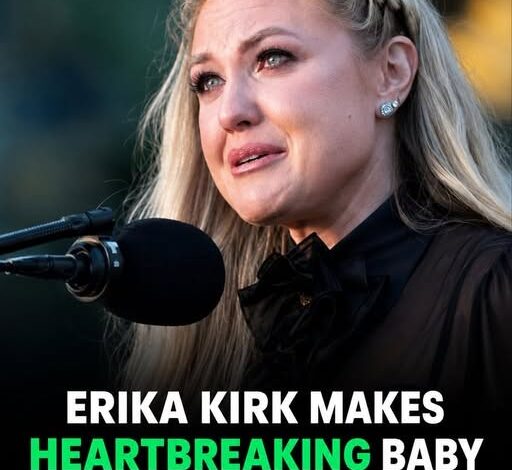
For Erika Kirk, the loss was not measured in political accomplishments or media coverage. It was measured in the future she and her husband had planned together. During an emotional appearance on The Megyn Kelly Show, she spoke openly about the family they were building and the dreams that now remain unfinished.
The couple already shared two young children, but they had hoped to grow their family further. Erika revealed that they had dreamed of welcoming at least two more children in the years ahead. Those plans, once ordinary conversations between spouses, suddenly became part of the grief she now carries.
One of her most heartbreaking admissions was that after Charlie’s death, she found herself hoping she might already be pregnant. The possibility represented more than another child—it felt like one final piece of the life they had envisioned together. Her words resonated with many because they captured a dimension of loss that often goes unspoken: the mourning not only of a person, but of all the future moments that person would have shared.
Now raising their children without their father, Erika has spoken about the milestones Charlie will never witness—the birthdays, school events, celebrations, and everyday moments that make up family life. While the public remembers a political figure, she remembers a husband and father whose absence will be felt in countless private ways for years to come.
In the months following the tragedy, Erika has encouraged young couples not to assume they have unlimited time. Her message is not rooted in politics but in perspective. Careers, ambitions, and achievements matter, she says, but family is built in the present, not in some guaranteed future. Life can change without warning, and the opportunities people expect to have tomorrow may never arrive.
As a result, the story of Charlie Kirk’s death became more than a political assassination or a national news event. It became the story of a family forced to navigate unimaginable loss, a widow finding strength amid heartbreak, and children growing up with memories preserved through stories rather than shared experiences.
The legal proceedings will continue, and public debates surrounding the case may endure for years. But for those closest to Charlie Kirk, the deepest impact cannot be measured by court decisions or political consequences. It lives in empty seats at family gatherings, in plans that will never be fulfilled, and in the daily reality of moving forward without someone they expected to have beside them.
Through her openness, Erika Kirk has transformed personal grief into a reminder that resonates far beyond politics. Love, family, and time are often taken for granted until they are suddenly gone. Her message is simple but powerful: do not postpone the people and relationships that matter most.
Because in the end, the greatest losses are often not the lives we lived, but the futures we believed we still had ahead of us.