On Mother’s Day, a little girl arrived with my son’s backpack — and a shocking secret that changed everything

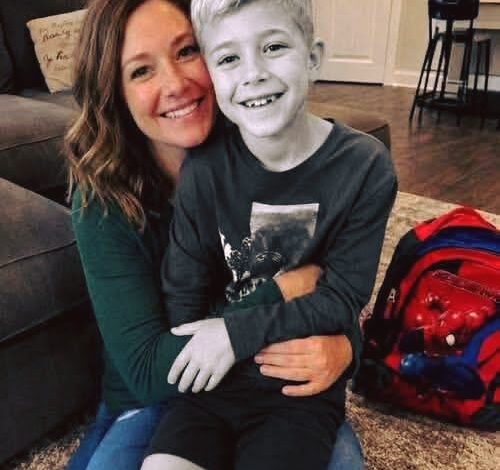
I lost my eight-year-old son, Randy, one week before Mother’s Day.
People kept calling it a tragedy.
A terrible accident.
One of those things no one could have predicted.
The kind of sentence adults say when they need the world to remain orderly, even after something unbearable happens.
They meant well.
I know they did.
Neighbors brought casseroles I never ate. Teachers sent sympathy cards filled with careful handwriting and phrases about heaven gaining another angel. The school counselor sat across from me in my living room speaking softly about grief stages, support systems, and “taking things one day at a time.”
But none of their words reached the place inside me where the real pain lived.
Because grief is strange.
People think it arrives as one enormous emotion.
But often it hides inside details.
A missing shoe.
A toothbrush still damp beside the sink.
A half-finished drawing taped crookedly to the refrigerator.
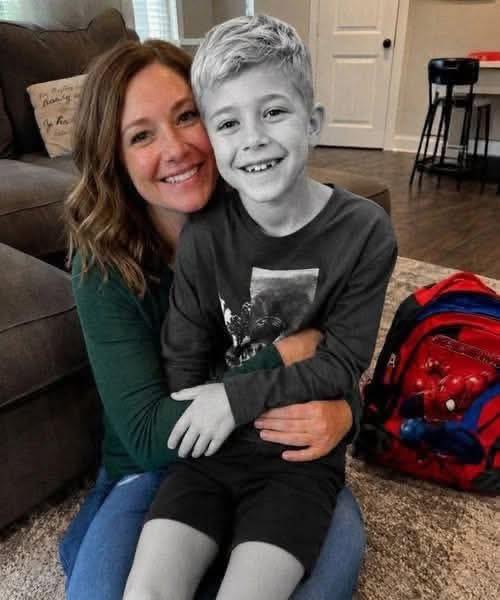
For me, grief attached itself to my son’s bright red Spider-Man backpack.
That backpack followed Randy everywhere.
Everywhere.
He carried it like treasure, even when it held almost nothing. He slept with it beside his bed before the first day of school every year because he worried he might somehow forget it in the morning. Sometimes I would trip over it in the hallway late at night and hear him call sleepily from his bedroom:
“Be careful with Spidey, Mom.”
After the accident, the backpack disappeared.
At first, I tried convincing myself it didn’t matter.
Compared to losing my child, what was a backpack?
But the longer it stayed missing, the heavier its absence became.
It felt wrong.
Incomplete.
Like some final piece of Randy had been erased before I could hold onto it properly.
So I started asking questions.
Quietly at first.
Then obsessively.
Ms. Bell, his teacher, told me she remembered seeing it beside his desk before emergency responders arrived. The principal assured me the staff searched the classroom thoroughly afterward.
Nothing.
The police officer assigned to the case became visibly uncomfortable every time I mentioned it.
“Things sometimes get misplaced during emergencies,” he explained gently.
Misplaced.
The word made me irrationally angry.
Children misplace crayons.
Adults misplace receipts.
My son died.
And somehow the one thing he carried every single day had simply vanished into thin air afterward.
One evening after speaking to the officer again, I sat alone at the kitchen table staring at Randy’s empty chair across from me.
That chair destroyed me more than the funeral did sometimes.
At funerals, grief feels public. Structured. Shared.
But empty chairs?
Empty chairs are intimate.
They remind you that someone is missing not just from life, but from ordinary moments nobody else sees.
The house itself had started forgetting how to sound alive.
No cartoons blaring too loudly from the living room.
No cereal spilling across the counter.
No footsteps running down the hallway at six in the morning because Randy believed sleeping late wasted weekends.
The silence became unbearable.
Then Mother’s Day arrived.
And something inside me finally broke.
Every year before, Randy treated Mother’s Day like a national emergency requiring weeks of secret planning. He made terrible breakfasts proudly:
burnt toast,
orange juice with eggshells floating inside,
dry cereal poured directly onto trays because he got “creative.”
One year he picked flowers from Mrs. Patterson’s yard because “ours weren’t blooming enough yet.”
He looked horrified when I explained stealing technically still counted on Mother’s Day.
“But they were for love,” he argued seriously.
That morning, none of it happened.
No tiny footsteps.
No whispered giggles.
No handmade cards hidden badly behind his back because he could never wait until I “discovered” them naturally.
Just silence.
I sat wrapped in his dinosaur blanket staring at nothing while grief pressed against my chest so hard I physically struggled to breathe.
Then the doorbell rang.
I almost ignored it.
I didn’t want visitors.
Didn’t want pity.
Didn’t want anyone saying “he’s in a better place” while my child was buried underground instead of here making a mess in my kitchen where he belonged.
But the knocking came again.
Softer this time.
Persistent.
When I finally opened the door, I froze.
A little girl stood there clutching something tightly against her chest.
She looked around Randy’s age.
Dark curls soaked slightly from drizzle outside.
Eyes swollen red from crying.
For one disorienting second, my brain genuinely thought:
Randy knows her.
Then reality returned.
“Are you Randy’s mom?” she asked quietly.
I nodded because words suddenly felt impossible.
Then she lifted the object in her arms.
The Spider-Man backpack.
My knees nearly gave out instantly.
I stared at it in disbelief.
The worn zipper.
The tiny ink stain near the strap from when Randy exploded a pen inside it last fall.
The faded Spider-Man patch peeling at one corner because he refused to let me replace it.
It was his.
“Oh my God…”
The little girl held it tighter suddenly.
“My name is Sarah,” she whispered.
“He told me to keep it safe.”
Nothing about that sentence made sense.

“What?”
She swallowed hard.
“He said it was important.”
I stepped aside automatically without remembering deciding to.
Sarah walked into the kitchen slowly carrying the backpack with both hands, treating it almost reverently, like something sacred.
Then she placed it gently onto the table.
“Open it,” she whispered.
My hands shook violently as I unzipped it.
Inside sat yarn, knitting needles, folded papers, scraps of felt fabric, and craft supplies bundled carefully together.
At the very bottom rested a tiny handmade unicorn.
Crooked.
Uneven.
Beautiful.
One leg was shorter than the others.
The horn leaned sideways awkwardly.
Pink thread stuck loose from the tail.
It looked exactly like something an eight-year-old boy would make while trying desperately to create perfection with hands still learning coordination.
I stared at it in confusion through tears.
“Randy hated unicorns,” I whispered automatically.
Sarah shook her head immediately.
“No he didn’t.”
I looked up.
“He said you liked them.”
The sentence hit me so hard I had to sit down.
Because when Randy was younger — before dinosaurs and superheroes consumed his entire personality — I used to tell him bedtime stories about unicorns. Magical ones. Brave ones. Silly ones.
I hadn’t thought about those stories in years.
But he remembered.
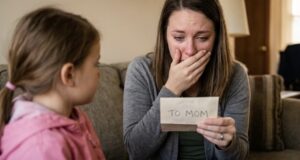
Beneath the unicorn sat a folded card.
My vision blurred opening it.
Inside, in Randy’s messy uneven handwriting, were the words:
Mom,
It’s not done yet so don’t laugh okay.
Sarah helped with the hard part because sewing is stupid hard.
I know it doesn’t look like a real unicorn but I tried.
I love you more than dinosaurs.
Love,
Randy
Something inside me shattered completely.
Not loudly.
Quietly.
Like glass collapsing inward.
Because grief had spent days convincing me I would never hear from my son again.
And suddenly here he was:
apologizing for imperfections,
making jokes,
loving me through crooked handwriting and uneven stitching.
Sarah started crying beside me.
Then she said softly:
“There’s something else.”
At the bottom of the backpack rested another folded paper.
This one looked different immediately.
Heavier somehow.
I opened it carefully.
And my heart stopped.
It was an apology note.
Written by Randy.
He apologized for ruining the Mother’s Day display at school.
Said he didn’t mean to make anyone angry.
Insisted repeatedly:
I’m not bad.
I didn’t do it.
Confusion turned quickly into unease.
“What is this?”
Sarah wiped tears from her face.
“The paint accident,” she whispered.
“Everyone blamed Randy.”
I stared at her blankly.
“What paint accident?”
Sarah looked shocked.
“They never told you?”
Then slowly, between tears and shaking breaths, she explained.
Earlier that week, someone knocked over paint containers and ruined the Mother’s Day decorations drying near the classroom windows. Ms. Bell became furious because the students had spent days making them.
And somehow, blame landed on Randy.
“He kept saying he didn’t do it,” Sarah whispered.
“But nobody listened because he was closest to the table.”
My chest tightened painfully.
“Why didn’t they call me?”
Sarah lowered her eyes.
“Ms. Bell said it was already handled.”
Handled.
My son had been accused, humiliated, and pressured into writing an apology for something he didn’t do —
and nobody even informed me.
Then Sarah said the words I will hear for the rest of my life.
“He kept holding his chest.”
The room went still.
“What?”
“During class,” she whispered.
“He said his chest hurt really bad.”
My blood turned cold instantly.
“He told Ms. Bell?”
Sarah nodded slowly.
“She said maybe he was trying to avoid getting in trouble.”
I physically stopped breathing for a second.
Randy had complained of chest pain.
And they thought he was lying.
Sarah cried harder now.
“He kept saying, ‘My mom knows I don’t lie.’”
The sentence destroyed me.
Not because it made me proud.
Because my little boy spent his final hours trying desperately to convince adults he was telling the truth.
About the paint.
About the pain.
About himself.
And nobody believed him.
The backpack suddenly felt heavier than anything I had ever held.
Not because of what was inside it.
Because of what it proved.
The unfinished unicorn.
The apology note.
The chest pain ignored as manipulation.
Tiny fragments of my son’s final day stitched together into a truth nobody bothered uncovering because it was easier to dismiss him.
I looked at Sarah through tears.
“Why didn’t you bring this sooner?”
Her face crumpled immediately.
“I was scared.”
She admitted Ms. Bell told students not to discuss the incident because everyone was already “upset enough.” Sarah hid the backpack afterward because Randy asked her to keep it safe.
“He said if something happened, you should have it.”
Something happened.
God.
Some part of him knew.
The next morning, I went to the school carrying the backpack.
Every step through those hallways felt surreal. Children laughed somewhere nearby while my own child existed now only through objects:
yarn,
paper,
a crooked unicorn.
Ms. Bell looked startled seeing me.
Then pale when I placed the apology note onto her desk.
“You blamed him,” I said quietly.
Her eyes filled immediately.
“It was chaotic that day—”
“He said his chest hurt.”
Silence.
I will never forget that silence.
Because inside it lived guilt.
Real guilt.
Ms. Bell sat down slowly like her legs stopped functioning.
“I thought…” she whispered weakly.
“I thought he was trying to avoid punishment.”
I stared at her.
“My son died trying to convince adults he wasn’t lying.”
She broke then.
Crying openly.
Apologizing repeatedly.
But apologies become strange after funerals.
They arrive too late to save anyone.
Still, something unexpected happened afterward.
The school held a memorial assembly the following week.
And in front of students, parents, and staff, Ms. Bell admitted publicly that Randy had been treated unfairly.
She cleared his name completely.
Some people later told me that moment helped them heal.
Honestly?
Nothing healed me.
But something shifted slightly.
Because my son was no longer carrying blame he never deserved.
And Sarah…
Sweet frightened Sarah…
started visiting every Sunday afterward.
At first she sat quietly at the kitchen table clutching crayons while we ate cereal together in silence.
Eventually she smiled more.
Talked more.
One afternoon she looked at the crooked unicorn sitting beside the window and whispered:
“He worked really hard on that.”
I smiled through tears.
“I know.”

The unicorn still sits in my living room today.
Crooked.
Uneven.
Perfect.
Not because it’s beautiful craftsmanship.
Because it carries proof of who Randy really was:
gentle,
funny,
sensitive,
and trying so hard to be understood.
People think grief is about learning how to let someone go.
They’re wrong.
Grief is learning how to carry someone forward after the world insists they are gone.
And sometimes,
the thing carrying them back to you arrives quietly…
in the hands of a trembling little girl,
holding a red Spider-Man backpack against her chest like a promise she refused to break.