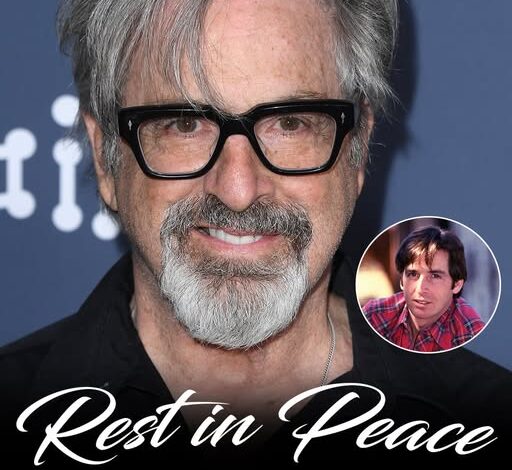
Robert Carradine spent most of his career playing the kind of man audiences instinctively trusted.
Not the loudest character.
Not the most glamorous.
Not the one demanding the spotlight in every scene.
He was something rarer and, in many ways, more enduring:
the emotional stabilizer.
The face that made chaotic stories feel grounded.
The gentle presence tucked inside louder narratives.
The actor who could make awkwardness feel lovable and kindness feel believable without ever seeming to force it.
For generations of viewers, he existed almost like a familiar relative drifting quietly through American film and television history. Children of the 1970s remembered the vulnerable resilience he carried in The Cowboys. Teenagers of the 1980s saw him become part of pop-culture immortality through Revenge of the Nerds, where his performance transformed social alienation into something unexpectedly triumphant and human. Younger audiences later knew him as Sam McGuire on Lizzie McGuire — the warm, slightly bewildered father whose steady affection anchored the chaos of adolescence.
Across decades, he kept returning in roles that carried the same emotional quality:
safe.
Gentle.
Dependable.
And perhaps that consistency made the revelations surrounding his death feel even more heartbreaking.
Because behind the warmth audiences recognized so easily was a private battle his family now says lasted more than twenty years.
Bipolar disorder.
By sharing that truth publicly after his passing, his loved ones made a deliberate decision not to allow silence, speculation, or vague language to consume the narrative around his death. In doing so, they transformed personal grief into something larger:
a plea for awareness,
for honesty,
for intervention,
for compassion deep enough to reach beyond appearances.
That choice matters profoundly because mental illness still occupies a strange and uncomfortable place in public culture. Despite decades of advocacy, education, and medical advancement, society continues treating emotional suffering differently from physical suffering. People understand cancer. They understand broken bones, surgeries, visible injuries.
But psychological pain remains harder for many people to recognize, especially when carried by someone outwardly functional, successful, or kind.
And Robert Carradine’s public image embodied exactly that kind of hidden contradiction.
He did not fit the stereotype many people unconsciously attach to severe mental illness. He was working. Acting. Smiling in interviews. Appearing at conventions. Building relationships. Existing publicly as someone audiences associated with humor and emotional steadiness.
But bipolar disorder often operates invisibly for long periods.
That invisibility becomes part of the danger.
People experiencing it may appear completely composed externally while internally enduring violent emotional shifts difficult to explain even to those closest to them. Periods of energy, optimism, and productivity can collapse suddenly into crushing depression, emotional numbness, hopelessness, or exhaustion. The instability itself becomes exhausting because individuals begin fearing not only pain, but unpredictability.
Who will I be next month?
Next week?
Tomorrow?
For many families, bipolar disorder creates years of emotional whiplash:
hope during stable periods,
fear during episodes,
guilt afterward,
silence in between.
And because mental illness still carries stigma, many people become experts at disguising their suffering. They smile automatically. They reassure loved ones. They say “I’m fine” because explaining the truth feels too complicated, too exhausting, or too frightening.
That reality appears painfully central to the way Carradine’s family now speaks about him. Their message is not only mourning. It is warning.
A warning against assuming that kindness equals emotional safety.
A warning against mistaking humor for wellness.
A warning against believing someone who comforts others automatically knows how to ask for comfort themselves.
Public reactions to his death reflected this emotional tension immediately. Fans shared memories not only of his performances, but of how his characters made them feel:
understood,
accepted,
less alone.
That emotional connection mattered because Carradine often portrayed outsiders and gentle souls without mocking them. In Revenge of the Nerds especially, his performance helped transform what could have been a one-dimensional comedy into something culturally resonant for people who spent much of their lives feeling socially invisible.
Lewis Skolnick was awkward.
Anxious.
Different.
But Carradine played him with sincerity rather than cruelty.
For countless viewers, especially those who grew up feeling excluded or misunderstood themselves, that mattered enormously. He gave dignity to characters often dismissed by society — people who did not fit traditional standards of masculinity, popularity, or power.
Ironically, many actors who excel at portraying emotional vulnerability publicly spend years hiding their own privately.
The entertainment industry itself likely intensified those pressures. Hollywood has historically rewarded performance over honesty when it comes to mental health. Actors are expected to remain employable, charismatic, energetic, and emotionally accessible even during periods of profound private struggle.
There is little room inside celebrity culture for visible instability.
Especially for men.
Male emotional suffering remains heavily stigmatized culturally because masculinity is still often associated with control, stoicism, and self-sufficiency. Men struggling mentally frequently fear appearing weak, burdensome, unstable, or incapable if they speak openly about emotional pain.
So many stay silent.
Some become experts at functioning while suffering.
Some self-medicate.
Some isolate emotionally.
Some continue smiling publicly long after they stop feeling connected internally to the life everyone else believes they are living.
That is why Carradine’s family framing his illness openly matters so deeply.
They are refusing the comfortable mythology that tragedy appears suddenly without warning signs. Instead, they are acknowledging a long, exhausting illness deserving the same seriousness and compassion society offers physical disease.
Because bipolar disorder is not moodiness.
Not weakness.
Not personality.
It is a medical condition capable of reshaping perception, emotional regulation, sleep, cognition, relationships, and self-worth in devastating ways.
And unlike many physical illnesses, it often actively interferes with the sufferer’s ability to seek consistent help. During manic periods, people may feel invincible, energized, or resistant to treatment. During depressive periods, hopelessness itself becomes immobilizing.
Loved ones often spend years trying to distinguish:
What is the illness?
What is the person?
Where does one end and the other begin?
Those questions can quietly exhaust entire families emotionally.
Yet alongside the pain, Carradine’s family also seems determined not to let illness erase the fullness of who he was. They continue describing his humor, gentleness, creativity, and love rather than reducing his life to suffering alone.
That distinction matters too.
Mental illness is part of a person’s story.
It is not the entirety of their identity.
And perhaps what makes his death resonate so painfully for many people is that it forces confrontation with an uncomfortable truth:
some of the warmest people we know may be carrying invisible battles we barely notice.
The friend who always checks on others.
The funny coworker.
The reliable parent.
The person making everyone else comfortable.
Sometimes those individuals become so practiced at supporting others emotionally that nobody realizes how fragile they themselves have become underneath the performance.
Modern life worsens this invisibility in many ways. People communicate through curated fragments now — texts, social media posts, quick check-ins, brief interactions where vulnerability gets compressed into acceptable shorthand:
“Tired.”
“Busy.”
“Stressed.”
Real suffering often hides beneath language designed not to alarm anyone.
That is why Carradine’s family repeatedly emphasizes listening more carefully and asking deeper questions. Not performatively.
Persistently.
How are you really doing?
Have you been sleeping?
Do you feel safe?
Do you need help?
Can I stay with you tonight?
Intervention often begins with refusing to accept automatic reassurances at face value when someone’s emotional state feels concerning.
Of course, even love and vigilance cannot always save someone from mental illness. That reality remains one of the most painful truths families confronting suicide or psychiatric crisis must eventually face. Human beings naturally search for moments they could have acted differently:
a missed sign,
an unanswered call,
a conversation they wish they had pushed further.
Grief after mental-health-related loss often becomes tangled with guilt because survivors replay history endlessly trying to locate the precise point where intervention might have changed the outcome.
Sometimes there is no clear answer.
Only heartbreak.
Still, stories like Carradine’s matter because they chip away slowly at the silence surrounding mental illness — especially among older generations and men who grew up in cultures discouraging emotional openness. Visibility does not erase suffering, but it can reduce isolation.
And isolation is often where mental illness becomes most dangerous.
What remains most striking about Robert Carradine’s legacy is not only the sadness surrounding his death, but the gentleness people consistently associate with his life.
Again and again, colleagues and fans describe warmth.
Humility.
Patience.
Kindness.
Traits that rarely dominate Hollywood mythology because they are quieter than scandal or ego.
Yet those quieter qualities are often what people remember longest after someone is gone.
Not fame.
Not box-office numbers.
Not celebrity status.
How they made others feel.
And perhaps that is why the image of him lingers so powerfully now:
not as a distant star,
but as a comforting presence woven into childhoods, family living rooms, awkward adolescence, late-night reruns, and stories where compassion mattered more than coolness.
His family’s final message ultimately reaches beyond mourning one actor. It asks something difficult of everyone listening:
to stop assuming suffering always looks dramatic,
to stop treating emotional pain as weakness,
to stop waiting for perfect certainty before checking on someone who seems lost.
Because many people disappear quietly long before anyone realizes how close they are to breaking.
And sometimes the person making everyone else feel safe is desperately hoping someone will notice they no longer feel safe inside themselves.
Robert Carradine spent decades playing characters audiences trusted instinctively.
In death, perhaps his most important role becomes something even more human:
a reminder that kindness does not protect people from mental illness,
that laughter can coexist with despair,
and that love sometimes requires asking harder questions before silence becomes permanent.