Missouri teen Kayla Huff’s disappearance takes a heartbreaking turn after authorities make a major discovery

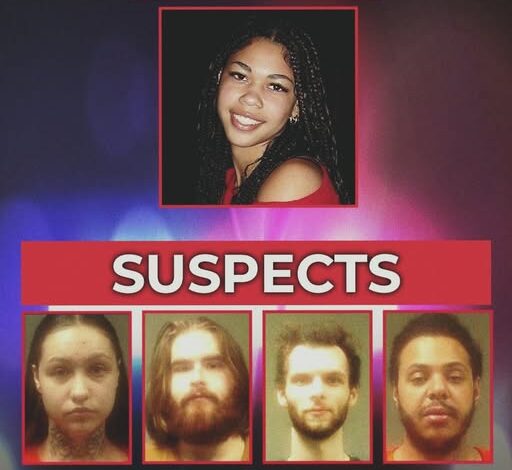
In the weeks after Kayla Rose Huff disappeared, Moberly stopped feeling like the kind of town people once described with easy confidence. The rhythms that had defined daily life for generations—Friday night football games, unlocked front doors, pickup trucks idling outside grocery stores while owners ran inside for “just a minute”—suddenly felt fragile, almost naïve. Parents who once waved casually as their children biked across neighborhoods now watched clock hands with growing panic whenever someone came home late. Porch lights stayed on longer. Curtains shifted more often. Conversations lowered whenever unfamiliar cars rolled slowly down residential streets.
Because once violence enters a small town like Moberly, it rarely arrives alone.
It brings suspicion with it.
Fear.
Second-guessing.
The unbearable realization that ordinary places can still hide extraordinary cruelty.
At first, people clung desperately to hope. Missing-person posters appeared in diner windows, gas stations, school hallways, and church vestibules almost overnight. Her smiling photograph spread across social media feeds accompanied by prayers, theories, and promises that she would be found safe. Volunteers combed gravel roads and wooded areas carrying flashlights through freezing evenings. Teenagers skipped parties to help organize searches. Farmers checked barns and abandoned structures on their property before dawn.
For a while, the entire town seemed united by one stubborn belief:
Kayla would come home.
But hope began deteriorating slowly as investigators uncovered more details.
Court documents later painted a picture so calculated and disturbing that longtime residents struggled to reconcile it with the town they thought they knew. According to filings, this was not random violence erupting suddenly in a moment of rage. Authorities alleged stalking. Surveillance. Deliberate planning. Kayla’s movements reportedly watched closely enough that routines became vulnerabilities. Even her vehicle, prosecutors claimed, may have been tampered with beforehand.
Each revelation deepened the horror because it transformed the case from tragedy into betrayal.
People could emotionally survive the idea of chaos more easily than intention.
Chaos feels external.
Bad luck.
Terrible fate.
But intention means someone nearby looked at another human being and chose harm repeatedly, patiently, consciously.
That possibility unsettled Moberly more than headlines ever captured.
Residents started replaying ordinary memories differently:
a strange car parked too long near the school,
someone lingering outside a convenience store,
a conversation once dismissed as awkward now feeling sinister in retrospect.
Fear has a way of rewriting the past after trauma. Entire communities begin interrogating their own memories, searching desperately for signs they missed that might restore some sense of control.
And because the accused were young themselves, the emotional confusion deepened further.
People wanted monsters.
Small towns always do after violence.
Monsters are emotionally convenient because they arrive clearly separated from “normal” society. They allow communities to preserve comforting illusions:
We would have known.
We would have seen it.
Evil looks different.
But real violence often emerges from ordinary faces and familiar neighborhoods. The accused in Kayla’s case were not strangers passing through town unseen. They were woven into the same schools, roads, stores, and social circles everyone else shared. That reality forced Moberly to confront something profoundly destabilizing:
sometimes danger grows quietly inside communities long before anyone recognizes it.
The additional charges only intensified that feeling.
Kidnapping.
Evidence tampering.
Alleged involvement of another minor.
Every new update seemed to widen the emotional crater beneath the town. Adults who once worried primarily about weather forecasts and utility bills now found themselves discussing digital surveillance, coercion, manipulation, and violence among teenagers barely old enough to vote.
Parents looked at their own children differently afterward.
Not with distrust exactly.
But with sudden awareness of how much inner life remains hidden even inside familiar homes.
Teachers described classrooms that felt emotionally heavier after the news broke. Students moved through hallways speaking in whispers. Some cried openly between periods. Others buried themselves in anger because anger felt easier to carry publicly than fear. Counselors worked overtime helping teenagers process grief mixed with confusion, especially as rumors spread faster online than facts could keep pace.
And the internet made everything worse.
It always does eventually.
Within days, social media transformed Kayla’s death into spectacle. Amateur investigators dissected timelines. Strangers posted theories disguised as certainty. Edited videos circulated stripped of context. Comment sections filled with cruelty, conspiracy, and voyeuristic fascination masquerading as concern.
That secondary violence—the violence of public consumption—often follows tragedy now as predictably as news coverage itself.
A grieving family loses not only privacy, but ownership over memory.
Suddenly everyone feels entitled to speculate about someone they never met.
That was what Kayla’s father fought hardest against in the weeks afterward.
While reporters camped outside courthouses and online discussions spiraled into rumor, he spoke carefully and consistently about preserving his daughter’s humanity. Again and again, he urged patience. Truth. Dignity. He asked people to stop reducing Kayla into evidence, headlines, or gossip.
And in many ways, his voice became the emotional center holding the community together.
Because grief can easily mutate into spectacle unless someone anchors it back to love.
Kayla was not born as a true-crime narrative.
She was not created to become viral content.
She was a daughter first.
A girl who laughed with friends at football games.
Who argued with family members over ordinary things.
Who made plans for futures she expected to live long enough to reach.
Her father seemed determined to force the town—and eventually the broader public—to remember that truth even while the legal process slowly transformed her life into court exhibits and prosecutorial timelines.
At vigils across Moberly, that humanity remained painfully visible.
Candlelight gatherings filled school parking lots and church lawns. Teenagers stood wrapped in blankets holding trembling flames against the cold while classmates shared memories through tears. Coaches organized memorial games where players wore ribbons bearing Kayla’s initials. At makeshift roadside shrines, handwritten notes accumulated beneath photographs and flowers:
We miss you.
You mattered.
We won’t forget.
The notes written by younger children were somehow the hardest to read.
Simple sentences.
Uneven handwriting.
Questions without answers.
One card left beside a cluster of candles read:
“I hope heaven feels safe.”
That single line captured what adults struggled to articulate publicly:
the crime shattered more than one family.
It damaged the town’s sense of safety itself.
Small communities often survive emotionally through shared assumptions:
children are protected,
neighbors are trustworthy,
people intervene when something feels wrong.
Cases like this fracture those assumptions permanently. Even after arrests are made and trials conclude, ordinary life rarely returns exactly as it existed before. Parents become more cautious. Teenagers become more aware of danger. Trust develops cracks invisible from a distance but deeply felt by those living inside them.
And yet, despite the fear and fury, something quieter also emerged inside Moberly during those weeks:
resolve.
Not loud political resolve.
Not performative outrage.
Something more human.
Teachers checking in more carefully with isolated students.
Parents having harder conversations they once postponed.
Neighbors paying attention again instead of assuming someone else would notice trouble first.
Tragedy often exposes the invisible threads binding communities together—not only through grief, but through responsibility.
Justice, of course, will move slowly now.
Courtrooms operate through procedure, evidence, motions, timelines, and legal standards emotionally incapable of matching the immediacy of loss. Months may become years before every question receives official answers. Appeals and hearings will likely stretch the case far beyond the moment public attention moves elsewhere.
That is another cruelty grieving families endure:
the world eventually continues,
while they remain trapped living beside absence permanently.
Long after headlines fade, Kayla’s family will still wake each morning carrying the same silence at breakfast tables, the same untouched bedroom, the same milestones she no longer reaches.
And perhaps that is why her father’s words continue resonating so deeply across Moberly.
Because he refuses to let the community remember Kayla only through violence.
Not the crime scene.
Not the rumors.
Not the horror.
Her life.
That distinction matters.
It matters because violence already steals enough.
It should not also steal identity.
So now, across Moberly, memory itself has become a form of resistance.
People tell stories about her laugh instead of only discussing the investigation.
Friends share photographs from ordinary afternoons instead of viral courtroom clips.
Coaches speak about her kindness, her humor, her stubbornness, her future.
The town cannot undo what happened.
No verdict ever truly restores what was taken.
But communities still choose what kind of story survives afterward.
And Moberly, despite its grief, seems determined to ensure Kayla Rose Huff is remembered not simply as the victim of something monstrous—
but as a girl deeply loved,
deeply missed,
and far larger than the cruelty that ended her life.