The Machala Massacre: Inside the Terrifying Prison Riot That Left 31 Inmates Executed in Cold Blood

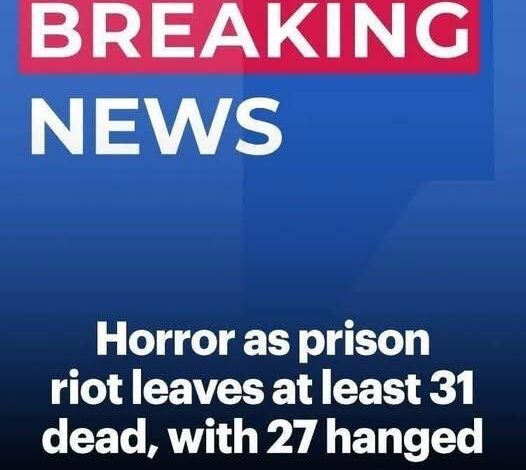
The dawn sky above Ecuador’s Machala prison did not arrive quietly. Long before sunrise, the facility was engulfed by a wave of violence that would leave dozens of inmates dead and expose once again the deep crisis gripping the country’s prison system. What began as reports of unrest quickly evolved into one of the most shocking prison incidents in recent memory, drawing national attention and raising urgent questions about security, organized crime, and the state’s ability to maintain control within its own institutions.
According to early reports, the violence erupted during the early morning hours when rival groups inside the prison allegedly clashed in a coordinated and highly organized confrontation. Witness accounts and preliminary investigations suggested that the incident was far more serious than a spontaneous prison fight. Authorities were forced to deploy emergency personnel and security forces as chaos spread throughout sections of the facility.
As information slowly emerged, the scale of the tragedy became clearer. Dozens of inmates were reported killed, while many others suffered injuries. The violence unfolded so rapidly that prison officials struggled to regain control before significant loss of life had already occurred. Families gathered outside the prison walls seeking information about relatives inside, many spending hours waiting for official confirmation regarding the fate of loved ones.
The incident has once again highlighted long-standing concerns surrounding Ecuador’s prison system. For years, experts have warned that many correctional facilities have become battlegrounds for criminal organizations competing for influence and control. Overcrowding, limited resources, insufficient staffing, and the growing power of organized crime have created conditions that make violent outbreaks increasingly difficult to prevent.
Security analysts note that prisons have evolved beyond their intended purpose in some regions. Rather than functioning solely as correctional facilities, they have become extensions of criminal networks operating both inside and outside prison walls. Rival groups often continue directing activities from within prisons, using incarcerated members to maintain influence and coordinate operations.
Officials have indicated that recent inmate transfers may have contributed to rising tensions. Government efforts to separate high-profile gang leaders and disrupt criminal structures have been part of broader security strategies aimed at weakening organized crime. However, such measures can also generate resistance among criminal groups seeking to preserve existing power structures.
In the aftermath of the violence, government representatives pledged a full investigation into the circumstances surrounding the incident. Authorities stated that they would examine security failures, review prison management procedures, and determine whether additional measures are necessary to prevent similar tragedies in the future.
The response from families has been marked by frustration, grief, and anger. Many relatives expressed concerns about delays in receiving information and questioned whether adequate precautions had been taken to protect inmates. For those waiting outside prison gates, uncertainty often became almost as painful as the tragedy itself.
Human rights organizations have also weighed in, calling for greater transparency regarding the events that unfolded. Advocacy groups argue that regardless of an individual’s legal status, the state maintains a responsibility to ensure the safety and basic human rights of those in custody. The scale of the deaths has intensified calls for reforms and independent oversight.
Beyond the immediate tragedy, the incident reflects broader challenges facing Ecuador. In recent years, the country has experienced increasing levels of organized criminal activity, much of it linked to international drug trafficking routes. Security experts warn that prison violence cannot be viewed in isolation because it often mirrors conflicts occurring outside prison walls.
The Machala prison deaths therefore represent more than a single violent episode. They have become a symbol of deeper structural issues involving crime, governance, institutional capacity, and public security. Addressing these challenges will likely require long-term investments in prison reform, intelligence gathering, staff training, infrastructure improvements, and broader strategies aimed at reducing the influence of criminal organizations.
As investigators continue their work, many questions remain unanswered. Authorities must determine how the violence began, whether warning signs were missed, and what measures can be implemented to reduce the risk of future outbreaks. Families continue seeking closure, while policymakers face growing pressure to demonstrate that meaningful action will follow.
For now, Machala stands as a stark reminder of the dangers created when prison systems become overwhelmed by forces they struggle to control. The tragedy has left communities mourning, officials under scrutiny, and a nation once again confronting difficult questions about security, justice, and the rule of law.
Whether this incident becomes a turning point or simply another chapter in a continuing cycle of prison violence remains to be seen. What is certain is that the lives lost have intensified the debate over the future of Ecuador’s correctional system and the urgent need to address the conditions that allow such devastating events to occur.