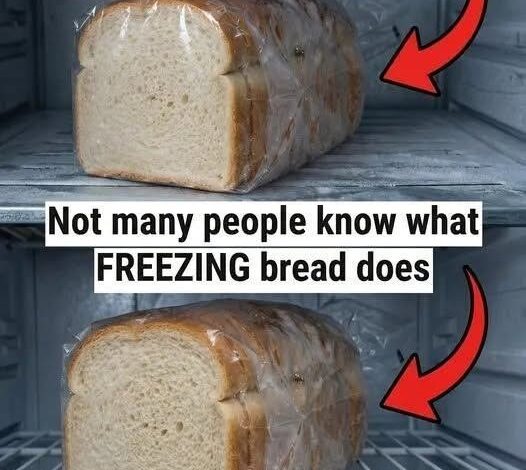
In a house with two growing boys, bread seems to vanish almost as quickly as I bring it home.
One day there’s a full loaf sitting on the kitchen counter, and by the next morning it’s practically gone. Sandwiches disappear into lunchboxes. Toast becomes breakfast before school. Hamburger buns vanish during weekend cookouts. Bagels and English muffins somehow find their way into every quick snack and rushed morning meal.
If it’s made with bread, my family will eat it.
That’s why I never ignore a good sale at the grocery store.
Whenever I find bread marked down or offered in a buy-one-get-one deal, I stock up. Over the years, I’ve learned that buying extra can save a surprising amount of money. The challenge, however, is making sure the bread stays fresh until we need it.
Like many people, I used to toss entire loaves directly into the freezer and assume everything would work out fine.
It didn’t.
More often than not, I would pull out a loaf weeks later only to discover that it had transformed into something completely different. The bread would be dry, crumbly, stale, or covered in patches of freezer burn. Sometimes the slices would freeze together into one solid block, making it impossible to remove just one or two slices without thawing the entire loaf.
Instead of saving money, I often ended up wasting food.
After ruining more loaves than I care to admit, I finally discovered a simple method that changed everything.
The secret begins with timing.
The best time to freeze bread is when it is at its freshest. Ideally, freeze it the same day you bring it home from the store. The fresher the bread is when it goes into the freezer, the fresher it will taste when you take it out later.
If the loaf is not already sliced, cut it into even slices before freezing.
This extra step makes life much easier later.
Once sliced, arrange the pieces in a single layer on a baking sheet lined with parchment paper. Make sure the slices do not overlap or touch each other too much.
Then place the entire tray into the freezer.
Allow the slices to freeze for approximately one to two hours.
This process is often called “flash freezing,” and it makes a huge difference.
Instead of freezing together into one large clump, each slice freezes individually. That means you can remove only the amount you need later without disturbing the rest of the loaf.
After the slices have become firm, transfer them into a freezer-safe storage bag.
At this stage, one detail becomes incredibly important.
Remove as much air from the bag as possible before sealing it.
Air is the enemy of frozen bread.
Excess air creates freezer burn, causes moisture loss, and speeds up the deterioration of texture and flavor. Press the bag flat while sealing or use a straw to gently remove extra air if necessary.
Some people go a step further by placing the sealed freezer bag inside a second freezer bag or wrapping it in aluminum foil.
This additional layer provides extra protection against temperature fluctuations and moisture loss.
Once sealed, store the bag flat in the freezer.
A flat package takes up less space and makes it easier to grab slices whenever you need them.
One of the biggest advantages of freezing bread this way is convenience.
You never need to thaw an entire loaf.
If you only need two slices for a sandwich, remove two slices.
If you need four pieces for breakfast toast, take out four.
The remaining bread stays safely frozen.
Most slices thaw at room temperature within just a few minutes. If you’re in a hurry, many frozen slices can go directly into the toaster using the defrost setting.
The result is surprisingly close to fresh bread.
The texture stays soft.
The flavor remains intact.
And the bread doesn’t develop that unpleasant dry taste often associated with freezer storage.
Beyond convenience, freezing bread properly offers several practical benefits.
It reduces food waste.
Instead of throwing away stale bread, you preserve it while it’s still fresh.
It saves money.
Buying bread in bulk during sales becomes a smart financial decision rather than a gamble.
It simplifies meal preparation.
Busy mornings become easier when breakfast ingredients are always available.
And it reduces unnecessary trips to the grocery store.
Many people are surprised to learn how long bread can remain in good condition when frozen correctly.
While bread is best enjoyed within the first few months, properly wrapped bread can maintain excellent quality for several months in the freezer.
Of course, the exact timeline depends on the type of bread, storage conditions, and freezer temperature, but the difference compared to leaving bread on the counter is remarkable.
Whole-grain breads, sandwich loaves, buns, rolls, bagels, English muffins, and many homemade breads freeze exceptionally well using this method.
Even specialty breads often retain their quality when properly protected from air exposure.
For families, busy professionals, and anyone trying to reduce waste, this simple habit can make a meaningful difference.
What seems like a small kitchen trick often becomes one of those practical routines that saves both time and money week after week.
In our house, it has become second nature.
When bread goes on sale, I buy extra without hesitation.
I know that every loaf can be frozen properly, preserved at its peak freshness, and ready whenever we need it.
No stale slices.
No freezer-burned disappointment.
No giant frozen brick of bread stuck together.
Just fresh-tasting bread waiting for breakfast, lunch, dinner, or a quick snack.
Sometimes the most valuable kitchen tips aren’t complicated recipes or expensive gadgets.
Sometimes they’re simple habits that quietly make everyday life a little easier.
And freezing bread the right way is one of those habits I’ll never stop using.