Ann Robinson’s life unfolded like one of the old Hollywood films she once inhabited: glamorous on the surface, unpredictable underneath, full of reinvention, sacrifice, and quiet endurance. Long before she became permanently linked to one of science fiction’s most enduring classics, she was simply a young woman born into the strange gravity of Los Angeles in 1929, growing up near the machinery of dreams while still uncertain whether she truly belonged inside it. Hollywood at that time was less an industry than an ecosystem — a place where ambition drifted through restaurants, studio gates, beauty salons, and backlots like smoke. Everyone seemed to know someone chasing stardom, yet only a handful ever managed to touch it.
Robinson entered that world from an unusual angle.
Before audiences recognized her face on movie posters, she worked as a stunt performer — a role demanding fearlessness in an era when safety standards were often little more than hopeful suggestions. It was dangerous, physically punishing work, especially for women trying to establish themselves in an industry that still expected actresses to appear delicate even while enduring exhausting productions behind the scenes. But stunt work taught Robinson something valuable early:
how to move through fear without freezing inside it.
That resilience would follow her throughout her life.
Then came 1953.
War of the Worlds arrived during a period when America itself felt suspended between fascination and dread. The Cold War had transformed fear into part of everyday consciousness. Nuclear anxiety lingered beneath ordinary life. Headlines spoke constantly about destruction, invasion, annihilation, and forces beyond human control. Science fiction exploded culturally because it gave audiences a way to process collective unease indirectly through aliens, monsters, and apocalyptic fantasy.
Into that atmosphere stepped Ann Robinson as Sylvia Van Buren.
At the time, neither Robinson nor many around her fully grasped what the film would become historically. Production schedules moved quickly. Studios treated many science-fiction projects as profitable entertainment rather than future cultural landmarks. Yet something about War of the Worlds struck audiences differently. Its vivid destruction, eerie atmosphere, and emotional urgency felt unusually intense for the era.
Robinson later recalled watching audiences leave early screenings stunned into silence.
Not cheering.
Not chatting excitedly.
Silent.
As though they had witnessed something unsettlingly close to possible.
Her performance as Sylvia helped anchor that emotional impact. While many genre films of the period leaned heavily on spectacle, Robinson brought vulnerability and humanity into the chaos unfolding onscreen. She wasn’t merely reacting to Martian destruction mechanically; she embodied genuine fear, uncertainty, and emotional disorientation. Viewers believed her terror because she never treated the danger like fantasy.
That authenticity became part of why the film endured.
And although Robinson likely could not have known it then, Sylvia Van Buren would follow her for the rest of her life.
Decades later, audiences still approached her at conventions with deep affection for the role. Fans who first saw War of the Worlds as children often described the film as transformative — one of those rare cinematic experiences that permanently imprints itself onto memory. Robinson embraced that connection warmly rather than resisting it. Unlike some actors who grow frustrated being linked forever to one iconic project, she seemed genuinely grateful that the work continued resonating across generations.
But while her professional legacy strengthened, her personal life pulled her in another direction entirely.
In 1957, at the height of rising momentum in Hollywood, Robinson made a decision that would alter the trajectory of her career permanently:
she walked away.
The reason was love.
She married Jaime Bravo, a celebrated matador whose world could not have been more different from Hollywood’s carefully manufactured glamour. Bullfighting carried its own mythology — danger, passion, masculinity, ritualized violence. Robinson later spoke openly about how completely that relationship redirected her life. Looking back years afterward, she admitted the marriage effectively “blew” her Hollywood prospects “right out of the water.”
There was no bitterness in the way she said it.
Only realism.
Women in mid-century Hollywood often faced brutal choices between career and personal life, especially once marriage entered the equation. The industry moved quickly and rarely waited patiently for actresses stepping away from visibility. Momentum mattered enormously. Once interrupted, it could disappear almost overnight.
Robinson understood that too late.
Her marriage to Bravo eventually ended in divorce, leaving her not only emotionally wounded but professionally displaced as well. By then, Hollywood itself had begun changing rapidly. New stars emerged. Styles shifted. Audiences evolved. Returning after years away proved difficult for countless actresses whose absence studios interpreted as replaceability.
Yet Robinson refused disappearance.
That determination may define her legacy as much as War of the Worlds itself.
Rather than surrendering quietly to nostalgia, she fought her way back into acting through persistence and adaptability. She appeared in films like Imitation of Life and steadily accumulated television work across decades. The roles may not always have carried the same iconic status as Sylvia Van Buren, but Robinson kept working — something far harder than outsiders often realize in an industry obsessed with youth and novelty.
She adapted because survival demanded it.
And survival became one of the defining themes of her life.
There is something deeply fitting about the actress remembered for outrunning Martian destruction onscreen spending much of her real life outrunning irrelevance, disappointment, and the industry’s tendency to abandon women once they no longer fit specific fantasies.
What makes Robinson’s later years especially moving is how little resentment seemed to harden her publicly. Many actors from Hollywood’s older generations carried visible bitterness toward changing culture or vanished fame. Robinson instead appeared to approach aging with surprising grace and humor. Fan conventions became opportunities for connection rather than obligations. She spoke warmly about audiences who continued cherishing her work decades later.
That emotional openness kept her relevant long after many contemporaries faded entirely from public consciousness.
Remarkably, she continued acting into her nineties.
Her final credited film, The Last Page of Summer in 2020, served as quiet proof of that endurance. Long after many assumed her career belonged solely to history books and classic-movie retrospectives, Robinson still found herself in front of cameras doing the work she once feared she had lost forever.
That persistence carried its own quiet dignity.
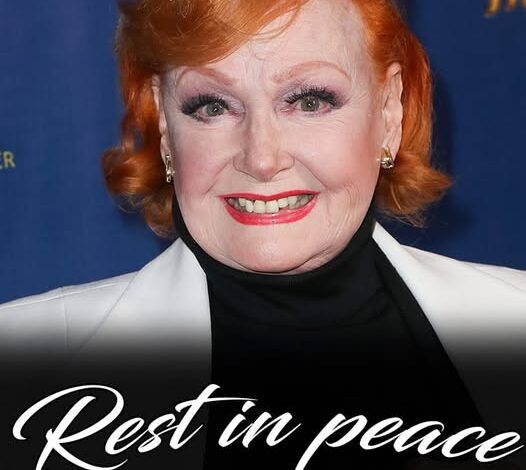
Then, on September 26, 2024, Ann Robinson died at home in Los Angeles at the age of ninety-six.
The announcement arrived softly.
No dramatic media frenzy followed.
No immediate flood of details.
Her family chose privacy regarding the circumstances surrounding her final months, and no official cause of death has been publicly released. That silence feels strangely appropriate somehow. After spending a lifetime visible onscreen, perhaps the final chapter belonged only to those closest to her.
Still, her absence echoed deeply through classic film communities and among generations of science-fiction fans who never forgot the red-haired actress running through burning cities beneath alien skies.
Because what Ann Robinson ultimately left behind was larger than one role.
She represented a particular kind of Hollywood survivor:
someone who tasted immense success,
walked away from it for love,
lost more than expected,
and still fought her way back repeatedly rather than allowing herself to become merely a memory.
Her story carries both triumph and regret.
Fame and sacrifice.
Reinvention and unfinished longing.
And perhaps that complexity is why her legacy endures so powerfully.
Audiences do not remember her simply because she appeared in a famous film.
They remember her because beneath the science fiction spectacle and old Hollywood glamour, she always felt unmistakably human:
fearful yet brave,
hopeful yet wounded,
resilient without pretending life had been easy.
Even now, decades after Martians first descended onto movie screens, Ann Robinson’s image still lingers in cinematic history:
a flame-haired woman running toward survival while chaos burns around her,
never fully disappearing,
never fully surrendering,
still finding her way back into the light long after others expected her story to end.