Beneath all the casual jokes about “types,” dating preferences, and physical attraction, people often reveal far more about themselves than they realize. Height, in particular, has become one of those strangely loaded traits that many pretend is superficial while quietly attaching enormous emotional meaning to it. On the surface, a man saying he prefers tall women or shorter women may sound harmlessly personal — just chemistry, just aesthetics, just attraction. But underneath those preferences often live deeper psychological negotiations involving identity, confidence, status, comfort, vulnerability, and the role he unconsciously wants to play in relationships.
Tall women, for many men, carry symbolic weight beyond appearance alone.
Society frequently codes height as power.
Authority.
Visibility.
Presence.
A tall woman often enters rooms differently whether she intends to or not. People notice her more quickly. She may appear more commanding, more self-assured, more difficult to diminish socially. Even posture changes how others interpret confidence, and taller women are often projected onto as ambitious, assertive, intimidating, elegant, or “high status” long before they even speak.
Men drawn strongly toward tall women are sometimes responding not only to physical attraction, but to what that presence represents emotionally.
For some, standing beside a woman who commands attention feels exciting because it reflects confidence back onto them. Being chosen by someone perceived as powerful can feel validating, almost aspirational. In those dynamics, attraction becomes tied to admiration. The relationship offers emotional stimulation because the woman feels impressive, formidable, or socially elevated in ways the man wants proximity to.
In other cases, the attraction carries an undercurrent of challenge.
Some men are deeply drawn to women who feel difficult to impress because earning their affection becomes psychologically tied to achievement. Height then becomes symbolic shorthand for dominance, sophistication, or emotional strength. The relationship feels energizing partly because it activates competition, pursuit, or the desire to prove oneself worthy beside someone visibly striking.
And sometimes, though people rarely admit it openly, attraction to tall women can contain traces of rivalry too.
Not hostility necessarily —
but tension.
A man may admire powerful women while simultaneously negotiating insecurity around them. The attraction becomes emotionally charged because it forces confrontation with questions he already carries internally:
Am I enough?
Do I measure up?
Can I keep her attention?
Will I disappear beside her?
That complexity explains why some men fetishize tall women publicly while privately struggling in relationships with women who feel too independent, too visible, or too self-possessed.
The fantasy of power is easier than living beside it daily.
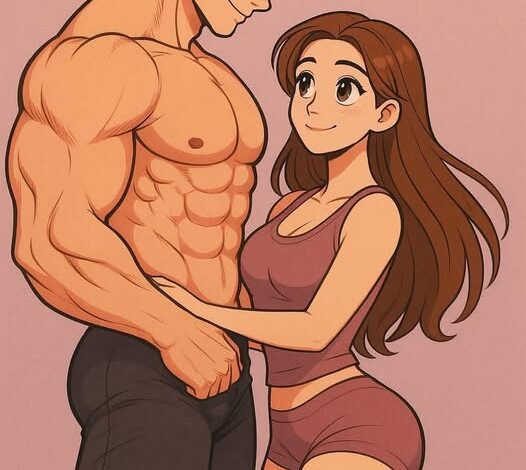
Short women, meanwhile, are often assigned an entirely different symbolic role in cultural imagination.
Where tallness gets associated with dominance or visibility, shortness is frequently coded as softness:
approachable,
cute,
protective,
warm,
safe.
Men strongly drawn toward shorter women may genuinely love physical contrast aesthetically, but emotional meaning often exists underneath that attraction too. A smaller partner can unconsciously activate feelings of protectiveness, competence, or emotional control. The dynamic may feel comforting because it reinforces a role many men are socially conditioned to value:
the caretaker,
the stabilizer,
the physically dominant presence.
For some, that dynamic creates emotional ease.
A shorter partner may appear less intimidating socially, less competitive psychologically, or less likely to challenge fragile insecurities around masculinity and authority. The relationship can feel emotionally safer because traditional gender expectations remain visually intact without effort.
But again, none of this automatically makes the attraction shallow or unhealthy.
Human attraction is layered.
People respond to symbolism instinctively long before logic enters the room.
A man who loves shorter women may genuinely crave tenderness, intimacy, emotional warmth, or the feeling of being needed. Physical size differences become emotionally charged because they reinforce a comforting identity within the relationship itself.
Likewise, some men deeply enjoy relationships where the woman is taller specifically because it dissolves rigid expectations around masculinity. Being physically dwarfed can feel liberating rather than threatening. It allows vulnerability, playfulness, or emotional surrender in ways traditional gender dynamics often discourage.
That’s why height preferences reveal less about objective beauty and more about emotional storytelling.
People rarely fall in love with measurements alone.
They fall in love with how someone makes them feel about themselves.
A man insisting he must tower over his partner may unconsciously be expressing a need for control, certainty, or traditional masculine reassurance. A man attracted to women taller than him may feel energized by confidence, challenged by power, or comforted by relationships that loosen rigid expectations.
Neither preference is inherently noble or shallow.
Both become revealing only when obsession enters.
Because once someone treats height as emotionally non-negotiable, the preference often stops being about attraction and starts becoming about identity maintenance. The person is no longer simply choosing a partner. They are choosing a psychological role they want reinforced every day.
That role may involve feeling:
protective,
dominant,
desired,
impressive,
safe,
small,
powerful,
needed,
admired,
or emotionally secure.
Height becomes shorthand for emotional architecture.
Modern dating culture intensifies these dynamics dramatically because social media and dating apps encourage people to reduce attraction into lists, filters, and measurable traits. Height gets transformed into public discourse — argued over, mocked, fetishized, politicized — until people forget how symbolic the topic really is underneath.
Men joke about wanting “short queens.”
Women joke about “six-foot minimums.”
Entire conversations become performances masking much more vulnerable emotional truths.
Because at the center of many height preferences sits a simple human question:
How do I want to feel beside the person I love?
Protected?
Desired?
Admired?
Equal?
Powerful?
Safe enough to soften?
People often answer that question physically before they answer it emotionally.
Yet real relationships eventually complicate all those fantasies anyway.
Tall women can be deeply nurturing.
Short women can be fiercely dominant.
A physically imposing person may crave reassurance constantly.
A smaller partner may emotionally command every room they enter.
Reality rarely obeys symbolic expectations for long.
That’s why the healthiest relationships tend to emerge not from rigid preferences alone, but from emotional flexibility — the ability to let another person exist fully outside the role your insecurities originally assigned them.
Because when attraction hardens into emotional dependence on a fantasy, disappointment becomes inevitable.
No partner can permanently maintain someone else’s internal balance through physical traits alone.
Still, the symbolism remains fascinating precisely because it exposes how deeply people connect love with identity. Height itself is biologically ordinary. Yet entire emotional worlds become projected onto it:
strength,
softness,
status,
submission,
protection,
desirability.
And in those projections, people quietly reveal the emotional experiences they crave most.
In the end, a man’s fixation on height says less about inches and far more about longing.
The longing to feel secure.
The longing to feel admired.
The longing to feel powerful or protected or chosen.
Height may be measurable.
But the emotional story attached to it rarely is.