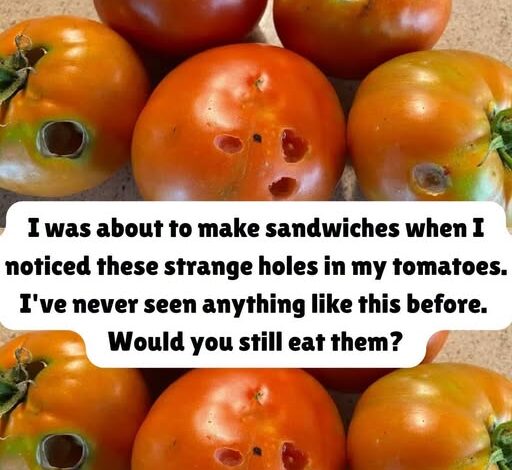
That small hole in your tomato may look harmless at first, but it is rarely random.
In the garden, little marks often tell a bigger story.
A tiny puncture, a shallow bite, or a soft spot near the skin can be a clue that something has been feeding, nesting, or taking advantage of a weak place in the fruit.
Most of the time, a hole in a tomato points to one of a few common causes.
Insects are often the first suspects. Caterpillars, beetles, worms, and other garden pests can chew through the skin or burrow into ripening fruit, leaving behind small openings that may grow worse over time. Sometimes the evidence is obvious. Other times, the damage appears minor on the outside while the inside has already begun to spoil.
Animals can also be responsible.
Birds, squirrels, chipmunks, and other garden visitors may peck or bite into a tomato, especially during dry weather when ripe fruit becomes a source of moisture as well as food. They may not eat the entire tomato. Often, they take just enough to leave behind a frustrating little wound before moving on to the next one.
But pests are not always the original problem.
Sometimes the tomato itself becomes vulnerable because of environmental stress. Uneven watering, long dry spells followed by heavy rain, extreme heat, or rapid growth can cause tomatoes to crack, split, or develop weak spots. Once the skin breaks—even slightly—that opening becomes an invitation. Insects, bacteria, mold, and rot can move in quickly.
That is why the first step is always inspection.
Before deciding whether to keep or discard the tomato, take a closer look. Examine the area around the hole for chew marks, dark edges, soft spots, mold, or slimy patches. Check for tiny droppings, often called frass, which can indicate insect activity. If you are unsure, cut the tomato open and look for tunnels, larvae, discoloration, unpleasant odors, or signs of decay inside the flesh.
If the damage is small and localized, and the rest of the tomato remains firm, clean, and healthy-looking, you may be able to cut away the affected section and use the remaining portion.
However, if the fruit smells sour, feels mushy, contains insects, shows mold growth, or has rot spreading through the interior, it is safest to throw it away.
Once you understand what caused the damage, you can take steps to protect the rest of your crop.
If birds or squirrels are the problem, garden netting, row covers, or lightweight protective fabric can create a barrier while still allowing sunlight and airflow to reach the plants. Make sure the covering is secured properly so animals cannot crawl underneath it.
If insects are responsible, regular inspections become your best defense. Check under leaves, around stems, and near developing fruit. Many pests hide during the day, so early detection can prevent a minor issue from becoming a major infestation. Removing damaged fruit promptly can also help stop pests from spreading to healthier tomatoes.
Companion planting may provide additional support.
Basil, marigolds, and other aromatic plants are commonly used by gardeners to discourage certain pests and attract beneficial insects. While companion planting is not a complete solution, it can contribute to a healthier garden ecosystem when combined with good maintenance practices.
Watering habits also play an important role.
Tomatoes perform best with steady, consistent moisture. When plants experience periods of drought followed by excessive watering, the fruit can expand rapidly and split. Those cracks may seem minor at first, but they can quickly become entry points for insects and disease.
Watering deeply and evenly, along with applying mulch around the base of the plants, can help stabilize soil moisture and reduce stress on developing fruit.
Garden cleanliness matters as well.
Fallen tomatoes, dead leaves, weeds, and rotting plant material can attract pests and create hiding places for insects and small animals. Removing damaged fruit from the ground and keeping the growing area tidy can make your garden less inviting to unwanted visitors.
It also helps to harvest tomatoes as soon as they begin to ripen, particularly if animals are already visiting your garden. Many tomatoes will continue ripening indoors on a countertop, safely away from birds, squirrels, and insects. Picking them slightly early can save a significant portion of your harvest.
In the end, a holey tomato does not mean you have failed as a gardener.
It means your garden is providing information.
Something is hungry.
Something is stressed.
Something needs attention.
The important thing is to listen.
A tiny hole can reveal where pests are entering, how watering patterns are affecting the fruit, or whether your plants need additional protection. Once you learn what to look for, you can respond with confidence rather than frustration.
Your tomato plant is not simply producing food.
It is communicating.
And when you learn to read the signs, you become better equipped to protect the harvest still waiting on the vine.