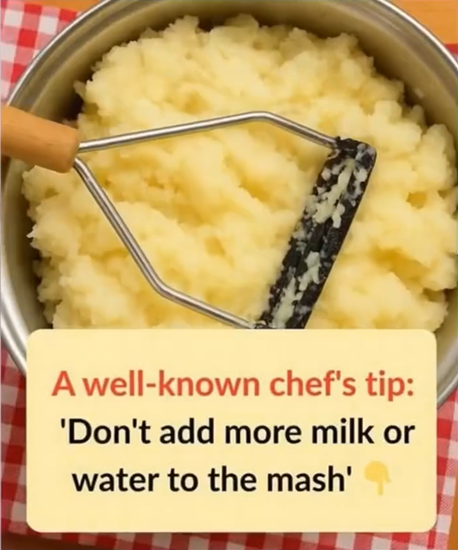
There are few dishes in the world capable of triggering memories as quickly as a bowl of perfectly made mashed potatoes.
One spoonful can transport someone back to a crowded holiday table, a family dinner after a long day, or a grandmother’s kitchen filled with the scent of butter and warmth.
Mashed potatoes have earned their place as one of the most beloved comfort foods in culinary history—not because they are complicated, but because they prove that simple ingredients, treated with care, can become something extraordinary.
Yet despite their reputation as an easy side dish, truly exceptional mashed potatoes require far more attention than most people realize.
The difference between a bland, gluey bowl of potatoes and a silky, restaurant-quality mash often comes down to a handful of critical decisions made throughout the cooking process.
Professional chefs understand this well.
To them, mashed potatoes are not an afterthought.
They are a showcase of technique.
A lesson in balance.
And a reminder that the smallest details often make the biggest difference.
Everything begins with one essential choice: the potato itself.
Many home cooks assume all potatoes behave the same way once cooked.
They do not.
The variety you choose will determine the final texture long before the potatoes ever reach the stove.
For generations, chefs have favored starchy varieties such as Russet potatoes.
Their high starch content and low moisture levels allow them to break down easily when cooked, producing the light, fluffy texture that defines exceptional mashed potatoes.
Yukon Gold potatoes are another favorite.
Slightly creamier and naturally buttery in flavor, they create a richer, silkier mash while still maintaining enough starch to remain light and smooth.
Some chefs even combine the two varieties, using Russets for fluffiness and Yukon Golds for richness.
The result is often the best of both worlds.
By contrast, waxy potatoes tell a different story.
Varieties such as Red Bliss or fingerling potatoes contain more moisture and less starch.
While excellent for roasting or potato salads, they tend to become dense and gummy when mashed.
Their structure simply isn’t designed for the airy texture most people expect.
Choosing the right potato may seem like a minor detail, but it forms the foundation of everything that follows.
Once the potatoes are selected, preparation becomes equally important.
Many chefs prefer peeling potatoes for classic mashed potatoes because it creates the smoothest possible texture.
Others leave some or all of the skin intact for a rustic presentation and added flavor.
Neither approach is wrong.
The choice depends on the desired result.
What matters most is consistency.
Potatoes should be cut into evenly sized pieces before cooking.
Uniform chunks ensure that every piece cooks at the same rate.
If some pieces are significantly larger than others, the smaller pieces may become waterlogged before the larger ones finish cooking.
That imbalance can affect both texture and flavor.
Most professionals aim for chunks approximately one-and-a-half to two inches in size.
The next step surprises many home cooks.
Contrary to popular belief, potatoes should not be dropped directly into boiling water.
Instead, chefs almost always begin with cold water.
The potatoes are placed into a pot, covered with cold water, and gradually brought to a simmer.
This method allows heat to penetrate evenly from the outside inward.
The result is more consistent cooking and a better final texture.
Salt is equally important during this stage.
Adding salt directly to the cooking water seasons the potatoes from within rather than merely coating the exterior later.
Many people underestimate how much flavor potatoes absorb while cooking.
Properly salted water lays the groundwork for a more flavorful finished dish.
Temperature control matters as well.
A vigorous rolling boil may seem efficient, but it often creates problems.
Potatoes can break apart prematurely, absorbing excess water that eventually leads to watery or gummy mashed potatoes.
A gentle simmer works far better.
It cooks the potatoes thoroughly while preserving their structure.
The goal is tenderness without disintegration.
Testing for doneness is simple.
A fork should slide easily through the center of a potato piece without resistance.
At the same time, the pieces should still hold their shape when lifted.
Once cooked, moisture management becomes the next crucial step.
Too much water is one of the most common reasons mashed potatoes fail.
After draining, many chefs allow the potatoes to sit briefly in the warm pot.
The residual heat helps evaporate excess moisture trapped inside.
This simple technique often makes the difference between watery potatoes and beautifully creamy ones.
Then comes the stage where many cooks unintentionally sabotage their efforts.
Mashing.
The temptation to use electric mixers is understandable.
They seem fast and convenient.
Unfortunately, they often create one of the most dreaded mashed-potato textures imaginable: gluey paste.
Potatoes contain starch.
When overworked, those starches become sticky and elastic.
Instead of light and fluffy, the result becomes dense and gummy.
Professional kitchens avoid this problem by using potato ricers, food mills, or traditional hand mashers.
These tools break down the potatoes gently while preserving their natural texture.
The goal is smoothness without overprocessing.
Just enough mashing.
No more.
No less.
Then comes one of the chef’s most valuable secrets.
Warm the dairy.
Many home cooks pull milk, cream, or butter directly from the refrigerator and add them to hot potatoes.
The sudden temperature difference can cause the potatoes to tighten and lose their silky texture.
Chefs warm their dairy first.
Butter melts more evenly.
Cream incorporates more smoothly.
Everything blends together effortlessly.
The potatoes remain soft, luxurious, and velvety.
Typically, butter enters first.
As it melts, it coats the potato particles and contributes richness.
Milk or cream follows gradually.
This allows the cook to control consistency carefully.
Some people prefer a thicker mash.
Others enjoy a softer, creamier version.
Adding liquid slowly prevents accidental over-thinning.
Seasoning is where mashed potatoes truly come alive.
Salt remains essential, but thoughtful additions can elevate the dish without overwhelming it.
Many chefs prefer white pepper instead of black pepper because it preserves the potatoes’ clean appearance.
Roasted garlic adds sweetness and depth.
Sour cream contributes tanginess.
Cream cheese increases richness.
Fresh herbs such as chives, parsley, rosemary, or thyme provide brightness and color.
The key is restraint.
Mashed potatoes should remain the star.
Enhancements should support the flavor, not dominate it.
Timing also plays an important role.
Mashed potatoes begin thickening almost immediately as they cool.
Professional kitchens often hold them over gentle heat or in a double boiler until service.
This keeps them warm without drying them out or overcooking them.
When it comes time to serve, presentation matters more than many people realize.
A smooth swirl created with the back of a spoon.
A scattering of fresh herbs.
A final pat of butter slowly melting across the surface.
These small details transform a simple side dish into something memorable.
Part of what makes mashed potatoes so beloved is their versatility.
They pair effortlessly with countless meals.
A roasted chicken dinner feels incomplete without them.
They complement grilled steak beautifully.
They provide balance alongside roasted vegetables.
And during holidays, they often occupy a place of honor beside turkey, ham, stuffing, and gravy.
Few side dishes adapt so easily to different cuisines and occasions.
Yet perhaps their greatest strength extends beyond flavor.
Mashed potatoes carry emotional weight.
They represent comfort.
Tradition.
Family.
Connection.
Many people associate them with childhood memories, celebrations, and gatherings around the table.
A bowl of mashed potatoes can feel like home, even when home is far away.
That emotional connection helps explain why cooks care so deeply about getting them right.
Of course, mistakes happen.
Choosing waxy potatoes.
Overboiling.
Using cold dairy.
Overmixing.
Underseasoning.
Each mistake can diminish the final result.
Fortunately, each one is also easily avoided with a bit of knowledge and attention.
For those who enjoy experimentation, mashed potatoes offer endless opportunities for creativity.
Garlic mashed potatoes remain a classic favorite.
Cheddar, Parmesan, or Gruyère can introduce savory complexity.
Fresh herbs create seasonal variations.
Even dairy-free versions made with olive oil and plant-based milk can achieve impressive creaminess.
The possibilities are nearly limitless.
Yet despite all the variations available, the most memorable mashed potatoes often remain the simplest.
Good potatoes.
Good butter.
Good technique.
Careful preparation.
That combination has endured for generations because it works.
Ultimately, mashed potatoes teach an important culinary lesson.
Great cooking is rarely about complexity.
It is about attention.
Patience.
Respect for ingredients.
And understanding that even the humblest dish deserves care.
When prepared thoughtfully, mashed potatoes become far more than a side dish.
They become an experience.
A source of comfort.
A centerpiece of tradition.
And proof that some of the most satisfying foods in the world are also among the simplest.
That is why, generation after generation, mashed potatoes continue to appear on dinner tables around the world.
Not because they are fashionable.
Not because they are complicated.
But because they remind us that comfort, when crafted with care, never goes out of style.