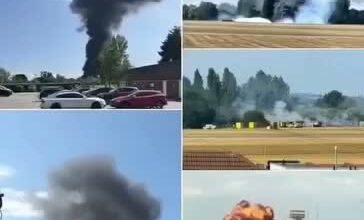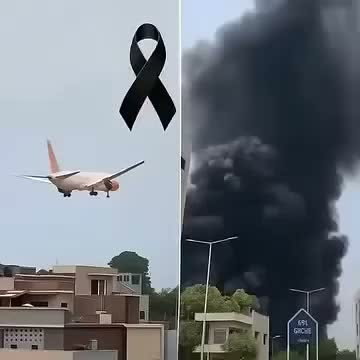
When a headline suddenly claims that a plane carrying more than 244 people has crashed, it is almost impossible not to react.
Your heart races.
You immediately wonder where it happened, which airline is involved, and whether someone you know could be affected. Within minutes, social media fills with dramatic posts, urgent notifications, and emotional reactions. Messages are forwarded from group to group, videos begin circulating, and countless people share the same alarming claim—often before anyone knows whether it is true.
In today’s digital world, breaking news moves faster than ever.
Unfortunately, misinformation often travels just as quickly.
Posts about aviation disasters are especially effective at capturing attention because they involve events that people instinctively fear. A headline mentioning hundreds of passengers, a possible crash, or an unfolding emergency naturally creates a sense of urgency. Some posts amplify that urgency with capital letters, dramatic wording, or phrases such as “Breaking,” “Developing,” or “See more,” encouraging readers to click or share before taking time to verify the information.
That emotional reaction is understandable.
Large aviation accidents are among the most devastating disasters that can occur. Throughout history, crashes involving commercial aircraft have left lasting scars on families, communities, and entire nations. Images from those tragedies remain etched into public memory for years, making any report of another possible crash immediately feel believable and deeply unsettling.
But during the earliest moments of breaking news, information is often incomplete.
Initial reports may contain errors.
Passenger numbers can change.
Aircraft models may be misidentified.
Locations may be confused.
In some cases, the event being shared may not have happened at all.
Old photographs from previous crashes are frequently reposted as though they depict a new incident. Videos from unrelated emergencies are sometimes presented without context. In other situations, completely fabricated stories circulate online, designed primarily to attract attention, generate advertising revenue, or encourage widespread sharing.
This is why official confirmation matters.
When a significant aviation emergency occurs, aviation authorities, emergency management agencies, airlines, and accident investigation organizations begin gathering verified information immediately. Reputable news organizations rely on those official sources before reporting key facts such as the airline involved, the location of the incident, the number of passengers and crew, and the status of rescue or recovery efforts.
Those details are released carefully because accuracy is essential.
Early assumptions can prove wrong.
Witness accounts may conflict.
Even experienced investigators require time to confirm exactly what has occurred.
Responsible journalism reflects that reality by distinguishing confirmed information from speculation.
Patience during these moments is difficult, but it serves an important purpose.
Sharing unverified claims can unintentionally cause real harm.
Families with loved ones traveling may experience unnecessary panic.
Airline employees and emergency responders may face increased confusion.
False information can spread so widely that correcting it later becomes far more difficult than preventing it in the first place.
Media literacy experts have long observed that breaking-news situations create ideal conditions for misinformation. Strong emotions encourage rapid sharing, while the lack of immediate verified information leaves room for rumors to fill the gaps. The result is an environment where confidence often spreads faster than certainty.
That is why critical thinking becomes especially valuable during unfolding events.
Before sharing a dramatic claim, consider a few simple questions.
Has the information been confirmed by the airline or relevant aviation authority?
Are multiple established news organizations independently reporting the same verified facts?
Does the post provide credible sources, or does it rely primarily on emotional language and speculation?
Are the accompanying photographs or videos clearly connected to the reported event?
Taking a few extra moments to answer those questions can prevent inaccurate information from spreading further.
Reliable updates are most likely to come from official aviation authorities, emergency management agencies, airlines, and established news organizations that clearly distinguish confirmed facts from developing reports. As investigations continue, those sources typically update their reporting as new information becomes available, allowing the public to follow events without relying on rumors.
It is equally important to remember the people at the center of these stories.
Behind every report of a possible aviation incident are real passengers, flight crews, families, airport workers, and emergency responders. Whether the initial reports prove accurate or not, speculation can increase the emotional burden on those waiting for reliable information about loved ones.
Responding with empathy is just as important as responding with caution.
Sharing verified information rather than rumors, avoiding sensational speculation, and respecting the uncertainty of developing situations helps create a more responsible public conversation during moments of crisis.
Commercial aviation remains one of the safest forms of transportation, with major accidents being exceptionally rare. When serious incidents do occur, they receive extensive global attention precisely because they are so uncommon and because their human impact is so profound.
That is why every breaking headline deserves careful attention—but not immediate belief.
The strongest response to alarming news is neither panic nor denial.
It is patience.
Allow investigators to gather evidence.
Allow authorities to confirm facts.
Allow responsible journalism to separate verified information from rumor.
In moments when fear spreads faster than certainty, thoughtful restraint becomes one of the most valuable forms of public responsibility. By choosing verified information over speculation, we not only protect ourselves from misinformation but also show respect for the people whose lives may be directly affected by the events we are trying to understand.